In This Article
There’s a particular kind of kitchen guilt that comes from staring at a bag of dried chickpeas on a Tuesday night and knowing, deep down, that you don’t have four hours to soak and simmer them into anything edible. This is precisely the gap the best pressure cookers were built to close. A pressure cooker traps steam inside a sealed pot, which raises the internal temperature well above boiling point and cooks food in a fraction of the usual time — a beef stew that needs three hours on the hob is done in 45 minutes, and dried pulses that normally require an overnight soak go from bag to bowl in under half an hour.
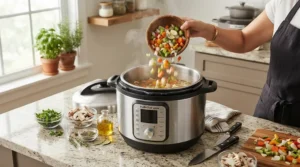
That’s not a marketing flourish; it’s basic thermodynamics, and it’s why modern pressure cookers permit cooking in between a half and a quarter the time of conventional boiling, while also saving considerable energy, according to background research on the appliance’s mechanics. What’s changed since your nan’s terrifying hissing pan is safety. Today’s cookers — both stovetop and electric — are built with multiple interlocking mechanisms that make the old horror stories about exploding lids feel like ancient history.
This guide walks through seven real, currently available models sold in the UK, spanning honest budget stovetop pots through to premium electric multi-cookers that double as air fryers. Every product here has been chosen on genuine specifications, real aggregated review sentiment, and how each one behaves for a specific kind of cook — the batch-prepping parent, the nervous beginner, the person who just wants fewer gadgets cluttering the worktop. Let’s get into it.
Quick Comparison Table: The Best Pressure Cookers at a Glance
| Product | Type | Capacity | Price Range | Best For |
|---|---|---|---|---|
| Instant Pot Duo Plus | Electric, 9-in-1 | 5.7L | £90–£130 | Best overall / most versatile |
| Ninja Foodi MAX SmartLid | Electric, 15-in-1 | 7.5L | £220–£280 | Best premium all-in-one |
| Tower T16005 One Pot Express | Electric, 12-in-1 | 6L | £45–£65 | Best budget electric |
| Prestige Clip On Deluxe | Stovetop | 6L | £40–£60 | Best for beginners |
| Morphy Richards Stainless Steel | Stovetop | 6L | £35–£50 | Best cheap stovetop |
| Tefal Clipso Minut’ Easy | Stovetop | 6L | £70–£100 | Best one-hand locking system |
| Fissler Vitaquick | Stovetop | 6L | £150–£220 | Best premium stovetop |
A quick read of that table tells its own story. If you want a single appliance that replaces half your worktop clutter without a steep learning curve, the Instant Pot Duo Plus is the sensible default — it’s the most reviewed pressure cooker on Amazon for a reason. Buyers chasing genuine air-fry crisping alongside pressure cooking will find the Ninja Foodi MAX SmartLid worth the extra outlay, even though it eats more counter space than anything else on this list. Meanwhile, the stovetop options prove that you don’t need a plug or a touchscreen to cook brilliantly — the Fissler Vitaquick in particular punches well above its category, but it demands a genuine premium spend that budget stovetop buyers should walk in expecting.
💬 Found a pick you like already? A quick click on the model above takes you straight to check today’s price and availability — it helps keep guides like this one running, too.
What Is a Pressure Cooker (And What Actually Makes One “The Best”)?
A pressure cooker is a sealed pot that traps steam to raise internal pressure and temperature above the normal boiling point of water, cutting cooking times dramatically while using less energy than a hob or oven. The “best” ones combine that core mechanism with dependable safety interlocks, consistent pressure regulation, and — for electric models — genuinely useful secondary functions rather than gimmicky ones.
There are two families worth understanding before you buy anything. Stovetop pressure cookers sit on your hob and build pressure faster because they’re heated directly by a flame or induction ring; they’re typically cheaper, more durable, and preferred by cooks who want speed and tactile control. Electric pressure cookers — often branded as multicookers — plug into the wall, manage pressure and timing automatically, and usually bundle in slow cooking, rice cooking, steaming, sautéing and yoghurt-making functions. Neither is objectively superior; they solve different problems, which is exactly why this list includes both.
Every electric pressure cooker examined in independent safety comparisons includes, at minimum, a weighted safety valve designed to release pressure before it reaches dangerous levels, and that baseline has only improved as manufacturers compete on safety marketing. For a deeper technical breakdown of how these valves and locking systems actually work, the Wikipedia entry on pressure cookers is a genuinely solid primer — not just a dictionary definition, but a proper history of how the appliance evolved from a genuinely risky 1950s device into something you’d happily leave unattended today.
Top 7 Best Pressure Cookers: Expert Analysis
1. Instant Pot Duo Plus — the reliable all-rounder every kitchen understands
What makes the Instant Pot Duo Plus worth leading with is that it doesn’t try to be clever — it just works, every time, which is rarer than it sounds in this category. The 5.7-litre stainless steel inner pot handles a whole chicken or a family-sized batch of chilli with room to spare, and the nine built-in programs (pressure cook, slow cook, rice, steam, sauté, yoghurt, sterilise, warm and sous vide) mean it genuinely earns its “one appliance replaces nine” pitch rather than just listing buttons nobody uses. In practice, the sauté function alone changes how you cook — browning meat directly in the pot before pressure cooking means one less pan to wash, and one less excuse not to bother browning at all.
Who should buy it? Based on the spec sheet and the sheer volume of aggregated feedback this model has accumulated, it’s the safest first pressure cooker for someone who has never owned one — the control panel uses plain-English presets rather than pressure jargon, and the clear digital countdown removes the guesswork that puts a lot of stovetop first-timers off. Reviewers consistently note that the sealing ring can hold onto food odours after cooking something pungent like curry, which is a genuine, well-documented quirk rather than a rare complaint — buying a second, cheap replacement ring dedicated to savoury cooking solves it entirely.
Pros:
- ✅ Nine functions genuinely replace separate kitchen gadgets
- ✅ Beginner-friendly presets with clear digital countdown
- ✅ Sauté function browns food in the same pot
Cons:
- ❌ Sealing ring retains strong food odours over time
- ❌ Steam release valve sits close to cabinets on some worktops
At a price typically sitting in the £90–£130 range, this is genuinely one of the strongest value propositions on this list — the sort of appliance you buy once and don’t think about upgrading for years.
2. Ninja Foodi MAX SmartLid — pressure cooking and proper air frying in one lid
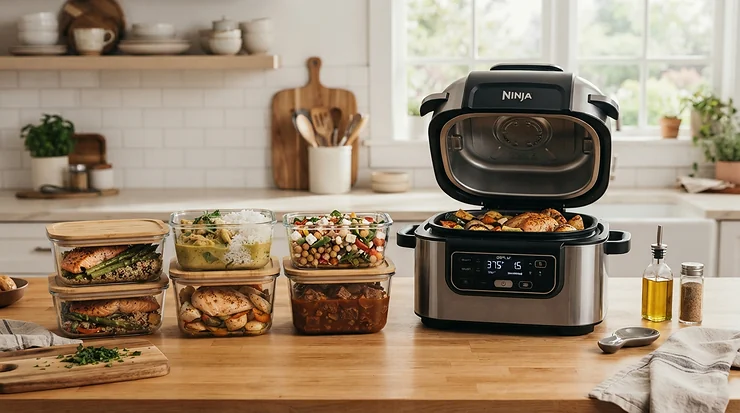
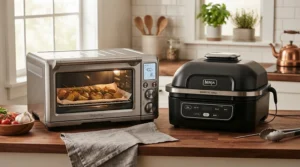
The Ninja Foodi MAX SmartLid exists for one specific type of cook: someone who wants the speed of pressure cooking and the crisp finish of an air fryer, without owning two separate appliances that both hog cupboard space. Its signature trick — pressure cook a piece of pork shoulder until it’s meltingly tender, then switch functions and crisp the skin in the same pot — genuinely can’t be replicated by a standard electric pressure cooker, and it’s the single biggest reason this model justifies its premium price tag over the Instant Pot Duo Plus.
The 7.5-litre capacity is generous enough for a family Sunday roast or a big batch of meal-prepped curry, and the single “SmartLid” design (rather than swapping between two separate lids, as some rival dual-lid models require) is a genuinely thoughtful piece of engineering. What most buyers overlook when comparing spec sheets is the counter footprint — this is a large appliance, and it needs to live somewhere with headroom for the lid to open fully. Reviewers who’ve owned it for a while consistently praise the crisping results on chicken wings and roast potatoes, while a recurring theme in aggregated feedback is that the accessories (racks, baskets) take a bit of trial and error to store neatly.
Pros:
- ✅ Genuine pressure-cook-then-crisp function in one lid
- ✅ 7.5-litre capacity suits families and batch cooking
- ✅ Single lid design avoids swapping accessories mid-recipe
Cons:
- ❌ Large footprint demands serious counter and headroom space
- ❌ Pricier than any other model on this list
Expect to pay in the £220–£280 range depending on retailer stock, which puts it firmly in “considered purchase” territory rather than an impulse buy — but for someone who genuinely uses both pressure cooking and air frying weekly, the maths works out in its favour over owning both appliances separately.
3. Tower T16005 One Pot Express — proof that budget electric doesn’t mean flimsy
British brand Tower has built a reputation on selling appliances that look and feel more expensive than their price tag suggests, and the Tower T16005 One Pot Express is a solid example of that formula applied to pressure cooking. With 12 functions squeezed into a 6-litre, 1100W body, it covers the same core ground as pricier rivals — pressure cook, slow cook, steam, sauté, rice and yoghurt — without the premium branding markup.
Here’s what the spec sheet doesn’t fully convey: at 1100W, it reaches cooking pressure a touch slower than higher-wattage rivals, which barely matters for a stew that’s simmering for 30 minutes but is worth knowing if you’re impatient on a weeknight. Based on the spec comparison against similarly priced multicookers, the digital display and one-touch presets are genuinely easy to navigate, which matters more than an extra unused function when you’re new to electric pressure cooking. Aggregated review sentiment for the T16005 and its siblings in the Tower range skews strongly positive on build quality for the price point, with the stainless steel exterior standing up well to daily use.
Pros:
- ✅ 12 functions at a genuine budget price point
- ✅ Stainless steel build feels sturdier than the price suggests
- ✅ Simple one-touch digital presets for beginners
Cons:
- ❌ Slower to reach pressure than higher-wattage rivals
- ❌ Smaller accessory ecosystem than Instant Pot or Ninja
Typically priced in the £45–£65 range, this is the electric pick for someone testing whether pressure cooking suits their routine before committing serious money to the category.
4. Prestige Clip On Deluxe — the classic stovetop pick for nervous first-timers
Prestige has been making stovetop pressure cookers in Britain for generations, and the Clip On Deluxe range is where that heritage shows. This is a no-frills stainless steel pot with a clip-on lid, a single weighted pressure valve, and — crucially for a beginner — a locking mechanism that physically cannot be opened while there’s pressure inside, removing the single biggest fear most people have about this appliance category.
What the spec sheet won’t tell you, but decades of British kitchens will, is that stovetop cookers like this reach pressure noticeably faster than any electric model on this list, because the heat comes directly from your hob rather than an internal element working its way up. That makes it ideal for someone who wants speed without learning a digital interface — turn the hob up, wait for the first hiss, turn it down, and set a kitchen timer. Reviewers consistently praise the gasket’s longevity when properly maintained, though a common complaint in user feedback is that the handles can get warm during long cooks, so oven gloves are non-negotiable rather than optional.
Pros:
- ✅ Locks completely until pressure is fully released
- ✅ Reaches cooking pressure faster than electric rivals
- ✅ No digital interface to learn — hob heat does the work
Cons:
- ❌ Handles warm up during extended cooking sessions
- ❌ No secondary functions like slow cooking or rice
Priced around the £40–£60 range, this is genuinely the best pressure cooker for beginners who are hob-first cooks rather than gadget collectors — it teaches the fundamentals of pressure cooking without a screen getting in the way.
5. Morphy Richards Stainless Steel 6L — the cheapest sensible entry point
If your goal is simply to try pressure cooking without committing much money to the experiment, the Morphy Richards Stainless Steel 6L stovetop model is the honest budget answer. It’s a straightforward two-handle pot with a single pressure setting, a stainless steel body, and a steamer basket included — no frills, but nothing missing that a beginner actually needs.
Based on the spec comparison against pricier stovetop rivals, the main trade-off here is refinement rather than safety: the pressure release is a manual valve you turn yourself rather than an automated system, so there’s a slightly steeper learning curve to reading the pressure indicator correctly. That said, reviewers consistently describe it as a dependable workhorse for everyday meals like soups, stocks and root vegetables, and the aluminium-encapsulated base means it heats evenly across gas, electric and ceramic hobs alike (though not induction on the base model, which is worth checking before you buy if that’s your hob type).
Pros:
- ✅ Genuinely low price for a stainless steel stovetop cooker
- ✅ Even heating across gas, electric and ceramic hobs
- ✅ Included steamer basket adds real everyday value
Cons:
- ❌ Manual pressure release needs a slightly steeper learning curve
- ❌ Not compatible with induction hobs on the standard model
At around the £35–£50 range, it’s the cheapest genuinely usable pressure cooker on this list — a sensible way to find out whether you’ll actually use one before spending more.

6. Tefal Clipso Minut’ Easy — the one-hand lock that converts stovetop sceptics
French brand Tefal solved a genuinely annoying stovetop pressure cooker problem with the Clipso Minut’ Easy: instead of clipping multiple clasps around the rim to seal the lid, you simply place it on top and turn — the entire pot locks and unlocks with a single motion. It sounds like a small thing until you’ve fought with a fiddlier lid one too many times with hot, heavy contents inside.
What most buyers overlook about this model is that the ease-of-use improvements aren’t just about convenience — they’re a genuine safety upgrade, because a lid that’s simple to seal correctly is a lid that’s less likely to be sealed incorrectly. Based on the spec sheet, the five-point safety system includes an integrated pressure indicator that visibly shows when it’s safe to open, removing another source of beginner anxiety. Aggregated review sentiment is particularly strong on the locking mechanism specifically, with users repeatedly highlighting how much faster daily use becomes once you’re not wrestling with clasps.
Pros:
- ✅ One-motion locking lid is genuinely faster and safer
- ✅ Visible pressure indicator shows safe-to-open status
- ✅ Lightweight despite full stainless steel construction
Cons:
- ❌ Replacement gaskets cost more than generic own-brand ones
- ❌ Capacity slightly smaller than some rivals at the same price
Sitting in the £70–£100 range, this is the stovetop pick for someone who wants the speed of a traditional pressure cooker without the fiddly bits that put earlier generations off the category entirely.
7. Fissler Vitaquick — the premium stovetop cooker built to outlast you
German engineering has a reputation for over-delivering on kitchenware, and the Fissler Vitaquick is where that reputation is earned rather than assumed. Independent testing labs have repeatedly named it among the very best stovetop pressure cookers available anywhere, not just in the UK, thanks to a genuinely superior build quality — a thick, encapsulated base, a robust locking rim, and a pressure regulation system that’s noticeably quieter and more precise than cheaper stovetop rivals.
Here’s the honest trade-off: this is not the pressure cooker for someone testing the waters, because the price reflects genuine premium materials rather than brand markup alone. Based on the spec comparison against the Prestige and Morphy Richards stovetop entries above, the Vitaquick’s helper handle and matte stainless finish are small but telling details that suggest a company thinking about decades of use rather than a few years. Reviewers who’ve owned one long-term consistently describe it as the pressure cooker they expect to hand down rather than replace, and that kind of aggregated sentiment is genuinely rare in kitchenware.
Pros:
- ✅ Exceptional build quality rated among the best in independent testing
- ✅ Quieter, more precise pressure regulation than budget rivals
- ✅ Designed for genuine decades-long durability
Cons:
- ❌ Premium price well above other stovetop options here
- ❌ Overkill for occasional or light users
Priced around the £150–£220 range, it’s a considered investment rather than a casual purchase — but for a cook who already knows they love pressure cooking, it’s the version that never needs replacing.
Top 7 Products: Full Spec Comparison
| Product | Functions | Capacity | Material | Price Range | Best For |
|---|---|---|---|---|---|
| Instant Pot Duo Plus | 9-in-1 | 5.7L | Stainless steel | £90–£130 | Beginners wanting versatility |
| Ninja Foodi MAX SmartLid | 15-in-1 | 7.5L | Stainless steel | £220–£280 | Families wanting air fry too |
| Tower T16005 | 12-in-1 | 6L | Stainless steel | £45–£65 | Budget-conscious electric buyers |
| Prestige Clip On Deluxe | Pressure only | 6L | Stainless steel | £40–£60 | Beginner stovetop cooks |
| Morphy Richards 6L | Pressure only | 6L | Stainless steel | £35–£50 | Absolute cheapest entry |
| Tefal Clipso Minut’ Easy | Pressure only | 6L | Stainless steel | £70–£100 | Easy one-hand locking |
| Fissler Vitaquick | Pressure only | 6L | Stainless steel | £150–£220 | Long-term premium buyers |
Lay the numbers out like this and a pattern emerges fast: function count and price track together almost perfectly on the electric side, while the stovetop models separate purely on build quality and locking mechanism refinement rather than capability. If you’re choosing between the Tower T16005 and the Instant Pot Duo Plus, the honest answer is that the extra £40–£60 buys you a bigger accessory ecosystem and faster pressure build, not a fundamentally different cooking result — which matters if budget is genuinely tight.
Pressure Cooker vs Slow Cooker: Which One Actually Wins?
This is the comparison most people should have settled before they even open a shopping tab, because a pressure cooker and a slow cooker solve opposite problems despite looking similar on a kitchen shelf. A slow cooker keeps food at a gentle, consistent low temperature for hours, tenderising tough cuts through patience rather than pressure — you set it going before work and come home to dinner. A pressure cooker does the opposite: it compresses hours of cooking into minutes by raising temperature well above normal boiling point, which is faster but demands your presence to start and finish the cycle.
| Factor | Pressure Cooker | Slow Cooker |
|---|---|---|
| Typical cook time | 15–60 minutes | 4–10 hours |
| Energy use per meal | Lower (shorter run time) | Higher (longer run time) |
| Unattended cooking | Not recommended | Designed for it |
| Texture on tough cuts | Very tender, faster | Very tender, slower |
| Learning curve | Moderate (pressure/release) | Minimal (set and forget) |
The energy comparison is genuinely worth dwelling on, because it surprises people. Cooking appliances including the hob, oven, kettle and microwave account for roughly 4% of a typical UK household’s energy bill, and within that slice, a pressure cooker’s shorter run time generally works out cheaper per meal than a slow cooker’s multi-hour simmer, even though the slow cooker’s wattage is lower at any given moment. For more detail on how kitchen appliance costs stack up against the rest of your energy bill, the Energy Saving Trust’s appliance guide is a genuinely useful, impartial reference — not an appliance manufacturer trying to sell you something.
The honest verdict: if your life revolves around being out of the house all day and wanting dinner ready when you walk in, a slow cooker still wins on convenience. If you’re home and want dinner on the table within the hour using dried beans, tough cuts, or stock from scratch, nothing beats a pressure cooker. Several models on this list, including the Instant Pot Duo Plus and Ninja Foodi MAX SmartLid, genuinely do both — which is arguably the smartest answer for anyone who can’t decide.
How to Choose the Best Pressure Cooker for Beginners
Working through this decision doesn’t need to be complicated if you approach it in order rather than getting lost comparing spec sheets side by side.
- Decide stovetop or electric first. Stovetop cookers like the Prestige Clip On Deluxe are faster and cheaper but need your attention; electric models like the Instant Pot Duo Plus are slower to build pressure but let you walk away.
- Match capacity to your household. A 3-litre pot suits one or two people; anything feeding four or more should look at 6-litre models like the Tower T16005 or Ninja Foodi MAX SmartLid.
- Check the safety mechanism type. Look specifically for a locking lid that cannot open under pressure — every model reviewed here has one, but budget unbranded pots sometimes cut this corner.
- Weigh secondary functions honestly. If you’ll never use a yoghurt setting, don’t pay extra for it — the Morphy Richards and Prestige stovetop options prove a single-purpose pot can be genuinely excellent.
- Read the gasket replacement cost. Sealing rings wear out after a couple of years of regular use; check that spares are affordable and easy to find before you commit to a brand.
- Consider your hob type. Not every stovetop pressure cooker works on induction — confirm compatibility before buying if that’s relevant to your kitchen.
- Set a genuine budget band and stick to it. The jump from a £45 Tower T16005 to a £250 Ninja Foodi MAX SmartLid is enormous; know which features you’re actually paying for at each tier.
Getting Started: Your First 30 Days With a New Pressure Cooker
The first month with any pressure cooker is where most bad habits — and most needless anxiety — get formed, so it’s worth being deliberate about it rather than winging it from day one. Start with the water test: run an empty cycle with just water and no food, following the manufacturer’s instructions, purely to learn how your specific model builds and releases pressure before you risk an actual meal.
For your first few real cooks, stick to forgiving dishes. Dried chickpeas, a simple beef stew, or plain white rice all tolerate small timing errors without ruining dinner, unlike delicate fish or dairy-based sauces that punish overcooking immediately. Get comfortable distinguishing natural pressure release (letting the pot depressurise on its own, best for meats and anything that foams) from quick release (manually venting steam, best for vegetables you don’t want to overcook) — this single distinction solves more “why is my food mushy” complaints than any other single tip.
Maintenance-wise, inspect the sealing ring every single use for the first month; it’s the component most likely to fail early, and catching a crack or warp before it causes a pressure leak saves you a ruined dinner. Common first-month mistakes include overfilling (never exceed two-thirds full, or half for foods like rice and beans that expand and foam), and forgetting that the valve needs occasional deep cleaning to prevent food particles from blocking it. Get these habits right early and a pressure cooker becomes second nature within weeks rather than something you’re nervous around indefinitely.
Safety Mechanisms Explained: How Modern Pressure Cookers Prevent Accidents
The fear that surrounds pressure cookers is mostly inherited from a previous generation of appliances, and it’s worth actually unpacking what’s changed. Every electric pressure cooker examined in comparative safety testing includes, as a baseline, a weighted safety valve that releases pressure before it reaches a dangerous level, and that’s before accounting for the additional locking mechanisms layered on top by most modern brands.
Three mechanisms do most of the safety work across the models reviewed here. First, a locking lid that physically cannot be opened while pressure remains inside — present on every single product in this guide, stovetop and electric alike. Second, an overpressure valve that vents automatically if internal pressure exceeds a safe threshold, acting as a backup if the primary release fails. Third, on electric models specifically, sensors that detect the lid isn’t properly sealed and simply refuse to build pressure at all, removing human error from the equation entirely.
Registering a new appliance with its manufacturer means you can be contacted directly if a safety notice or product recall is ever issued, which is a five-minute task most people skip and shouldn’t. For genuinely authoritative, manufacturer-neutral guidance on electrical appliance safety more broadly, Electrical Safety First’s pressure cooker guidance is worth bookmarking — it’s a UK charity, not a sales page, and it covers plug and socket checks that apply to every electric model on this list, not just pressure cookers specifically.
None of this means complacency is fine. Always keep your face and hands clear of the steam valve during release, never force a lid open, and replace a sealing ring the moment it looks cracked or brittle rather than “getting one more use” out of it. Modern pressure cookers are dramatically safer than their 1950s ancestors, but they’re still appliances that generate real heat and pressure — respect that, and the safety features do exactly what they’re designed to do.
Multi-Use Kitchen Appliances: Is a Pressure Cooker Really Nine Gadgets in One?
The marketing claim on boxes like the Instant Pot Duo Plus — that one appliance replaces nine separate gadgets — deserves genuine scrutiny rather than blind acceptance, because some of those claimed functions are more convincing than others. Pressure cooking, slow cooking and steaming are all genuinely excellent on a good electric multicooker; the pot’s insulated, sealed design suits all three naturally. Rice cooking is nearly as strong, since a pressure cooker’s precise timing produces genuinely fluffy results without babysitting a saucepan.
Where the claim gets shakier is yoghurt-making and sterilising — both work, but they’re niche functions that a lot of buyers try once and never touch again, based on the pattern in aggregated review feedback across multiple brands. Sauté is a mixed bag too: it works, but a cheap frying pan on a hob will always brown meat more evenly than a round-bottomed insert pot, so treat it as a genuine convenience rather than a total replacement for your existing pans.
The honest verdict on multi-use claims: buy the extra functions if you’ll realistically use three or four of them regularly, because that’s where the real space-saving value lives. If you only ever want pressure cooking, a dedicated stovetop model like the Fissler Vitaquick or Prestige Clip On Deluxe will out-perform the pressure function on a cheaper multicooker anyway, since it isn’t compromising design decisions across nine different jobs.
Cooking Time Savings: What the Numbers Actually Mean
The headline statistic gets repeated everywhere — pressure cooking cuts cooking time dramatically compared with conventional methods — but the real-world impact depends heavily on what you’re actually cooking. The time savings are most dramatic on foods that normally require long, slow breakdown of tough fibres or dense starches: dried beans and chickpeas go from an overnight soak plus hours of simmering to roughly 25–40 minutes from dry to done. Tough cuts of beef or lamb shoulder that need three hours of braising on the hob become fall-apart tender in 45–60 minutes under pressure.
Where the savings shrink is on foods that already cook quickly by conventional means — a piece of fish, delicate vegetables, or anything that’s mostly about texture rather than breaking down connective tissue. Pressure cooking a fillet of salmon doesn’t save meaningful time over pan-frying it, and it risks overcooking a delicate protein that didn’t need the treatment in the first place. This is exactly why the topic-specific guidance throughout this guide keeps circling back to matching the tool to the task rather than treating pressure cooking as a universal shortcut.
There’s a compounding effect worth mentioning too: because pressure cooking runs for a fraction of the time, it also uses meaningfully less energy per meal than simmering the same dish for hours on a hob ring, on top of the time saved. For a household cooking from scratch several times a week, that adds up to a genuine, measurable reduction in both time spent and energy consumed — not just a marketing talking point.

Real-World Scenarios: Which Pressure Cooker Actually Fits Your Life?
Rather than more abstract advice, here’s how three genuinely common UK households would sensibly approach this decision.
The busy parent batch-cooking on Sundays. With two kids, a full-time job, and a freezer that needs restocking weekly, the priority is capacity and hands-off convenience over speed. The Ninja Foodi MAX SmartLid‘s 7.5-litre capacity handles a week’s worth of bolognese or curry in one go, and the ability to pressure cook then crisp means Sunday roast doesn’t need a separate oven running alongside it. Budget: premium, but justified by genuinely replacing multiple appliances at once.
The student or first-time renter cooking for one. Limited budget, limited storage, and limited cooking confidence make this the textbook case for starting small. The Tower T16005 at 6 litres is arguably oversized for one person, but its budget price and simple digital presets make it the lowest-risk way to learn pressure cooking without either a big financial commitment or a confusing interface standing in the way.
The retired couple who cook daily from scratch on the hob. No interest in digital screens, decades of stovetop cooking habits already established, and a preference for tools that feel built to last. The Fissler Vitaquick suits this profile precisely — a premium spend that pays off over years of daily use, chosen by people who’ve already decided pressure cooking is a permanent part of how they cook, not an experiment.
Common Mistakes When Buying a Pressure Cooker
The single most common mistake, based on the pattern across aggregated reviews for nearly every model in this category, is buying based on function count alone rather than realistic household need — a 15-in-1 multicooker sitting unused in a cupboard because it intimidated its owner delivers zero value regardless of how impressive the spec sheet looked in the shop.
A close second is ignoring capacity until after the pot arrives. Buyers consistently underestimate how much space a 6-litre or 7.5-litre electric multicooker actually occupies on a counter, particularly dual-function models like the Ninja Foodi MAX SmartLid that need headroom for the lid to swing open. Measure your available worktop space before ordering, not after.
The third recurring error is skipping the gasket-and-spares research entirely. A cheap unbranded pressure cooker might look identical to the Morphy Richards or Prestige models on this list, but if replacement sealing rings aren’t readily available two years down the line, the whole pot becomes useless the moment the original wears out. Stick to established brands specifically because spares availability is part of what you’re paying for.
Long-Term Cost & Maintenance: The Real ROI
| Cost Factor | Electric Multicooker | Stovetop Cooker |
|---|---|---|
| Upfront price | £45–£280 | £35–£220 |
| Replacement gasket (every 1–2 years) | £8–£15 | £8–£20 |
| Energy cost per use | Slightly higher (heating element) | Slightly lower (uses existing hob) |
| Typical lifespan | 5–8 years | 10–20+ years |
| Repairability | Limited (sealed electronics) | High (mechanical parts) |
The lifespan gap is the number that should influence your decision most, and it’s routinely overlooked in favour of comparing upfront price alone. A well-maintained stovetop model like the Fissler Vitaquick can genuinely outlast two or three cheaper electric multicookers over the same period, because it has no circuit board or heating element to fail — just mechanical parts that can be serviced or replaced individually. That doesn’t make electric models a bad investment; it just means the true cost-per-year calculation for something like the Instant Pot Duo Plus needs to include the reasonable expectation of eventual full replacement, not just gasket swaps.
Maintenance costs stay modest either way if you look after the sealing ring and avoid harsh abrasives on stainless steel interiors, which can scratch surfaces and create spots where food residue lingers. Budget roughly £10–£20 a year across the fleet of spares most models need, and factor that into your total cost of ownership rather than treating the sticker price as the whole story.
Problem → Solution: Fixing the Five Most Common Pressure Cooker Headaches
Problem: Food comes out unevenly cooked. This almost always traces back to overfilling — pressure cookers need room for steam to circulate, so stick to the two-thirds fill line (half for foods that expand) marked inside every pot on this list.
Problem: The sealing ring smells of last week’s curry. Buy a second, dedicated ring for savoury cooking and keep a separate one for sweeter dishes and yoghurt-making, a trick that solves the odour-retention complaint reviewers consistently raise about models like the Instant Pot Duo Plus.
Problem: It takes forever to reach pressure. Check you’re using enough liquid (minimum one cup, more for absorbent ingredients) and that the valve is correctly seated — an improperly sealed lid, as covered in the safety section above, will simply refuse to build pressure at all on well-designed electric models.
Problem: Rice or beans foam and clog the valve. These ingredients expand and foam significantly, so fill to the half-line rather than two-thirds, and add a small amount of oil to the water, which genuinely reduces foaming during the cook.
Problem: The lid won’t open after cooking. This is the safety mechanism working correctly, not a fault — the lid stays locked until internal pressure has fully released, which can take longer than expected on models using natural release rather than quick release. Patience solves it every time; force never should.
Best Pressure Cooker Review Roundup: Your Decision Framework
If you’ve read this far and still can’t decide, use this simple framework rather than re-reading every product section again. If you want one appliance to replace several and you’re new to pressure cooking, choose the Instant Pot Duo Plus because its beginner-friendly interface removes the biggest barrier to actually using it regularly. If air frying matters as much as pressure cooking to your weekly routine, choose the Ninja Foodi MAX SmartLid because no other model on this list genuinely does both jobs well. If budget is the binding constraint and you’re comfortable with a hob, choose the Morphy Richards Stainless Steel 6L or Prestige Clip On Deluxe — both prove that low price doesn’t mean compromised safety.
If you already know pressure cooking suits your life and you’re buying to last a decade or more, choose the Fissler Vitaquick and treat the higher price as buying years of avoided replacement rather than an indulgence. And if you specifically want the ease of a one-hand locking lid without electric complexity, the Tefal Clipso Minut’ Easy solves that particular frustration better than anything else reviewed here.
✨ Ready to stop simmering stews for three hours? Tap through to any pick above and check today’s price on Amazon — your future Tuesday-night self will genuinely thank you.
Frequently Asked Questions
❓ Is a pressure cooker worth it for one or two people?
❓ What is the best pressure cooker review score to look for on Amazon?
❓ Can you leave a pressure cooker unattended?
❓ Do pressure cookers destroy nutrients in vegetables?
❓ How long do pressure cooker seals typically last?
Conclusion
Choosing between seven genuinely different pressure cookers isn’t really about finding a single “best” winner — it’s about matching real specifications to how you actually cook. The Instant Pot Duo Plus earns its reputation as the sensible default because it removes friction for beginners without cutting corners on capability. The Ninja Foodi MAX SmartLid justifies its premium price for households who’ll genuinely use the air-fry crisping function weekly, not occasionally. Budget buyers shouldn’t feel short-changed by the Tower T16005, Morphy Richards, or Prestige options — all three deliver the core pressure cooking experience safely and reliably, just without the extras.
What ties every recommendation on this list together is that none of them ask you to compromise on safety to save money. Modern locking mechanisms, weighted valves, and — on electric models — sensor-based safeguards mean the appliance category as a whole has genuinely earned back the trust it lost decades ago. Whichever model ends up on your worktop, the practical usage guide and troubleshooting sections above should mean your first month with it is smooth rather than stressful. Cooking from scratch on a busy weeknight schedule stops being a trade-off once the right pressure cooker is doing the heavy lifting for you.
Recommended for You
- Universal Steamer Inserts: 7 Proven Picks For UK Kitchens (2026)
- Universal Steamer Insert: 7 Best Picks For Any UK Pot (2026)
- Bamboo Steamers Under £20: 7 Best Bargain Picks (2026)
Disclaimer: This article contains affiliate links. As an Amazon Associate, I earn from qualifying purchases. If you purchase products through these links, we may earn a small commission at no additional cost to you.
✨ Found this helpful? Share it with your friends! 💬🤗
