In This Article
A non stick tin for gluten free sponge is a coated, usually carbon steel cake tin, often with a loose base, built to release fragile xanthan-bound batters without tearing the crumb. Gluten free sponge lacks wheat’s natural elasticity, so it clings harder and breaks more easily. That puts far more pressure on the tin than a standard bake does.
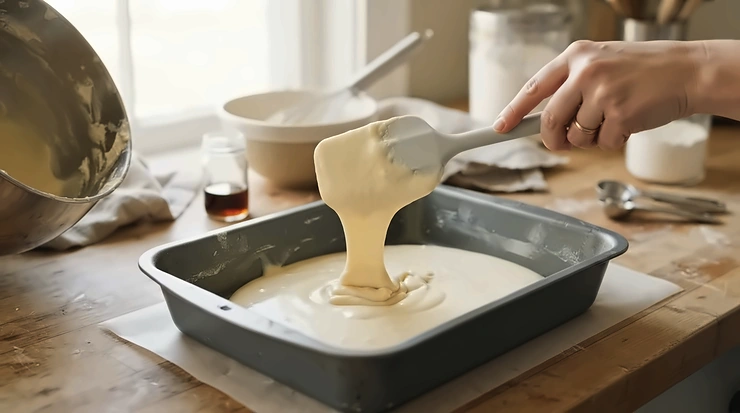
Every gluten free baker knows the sinking moment when the top half of a Victoria sponge stays behind in the tin and the bottom half comes out alone. Better batter helps, and so does a good recipe. The tin is the third leg of the stool, and it’s the one people replace least often. Coeliac UK’s baking guidance gives specific xanthan gum quantities for different cake styles, which tells you how much the structure of these bakes depends on the binder. The tin then has to cope with whatever that binder produces: sticky, elastic, clingy batter.
This guide compares seven real tins available to UK bakers in 2026. It weighs spec sheets, published reviews and baking logic, not a staged bake-off, so where review data is thin I’ll say so. You’ll also find practical routines for sticking prevention, a plain-English look at what a PFOA free coating means under UK rules, and scenario advice for different kinds of baker.
Quick Comparison: The Best Non Stick Tin for Gluten Free Sponge at a Glance
Here is the whole field on one screen before we dig into each tin.
| Tin | Base | Standout feature | Price range | Best For |
|---|---|---|---|---|
| MasterClass Non-Stick 20cm Loose Base Sandwich Pan | Loose | Double-layer coating, PFOA/PTFE/BPA free per maker | £11–£15 | First-time gluten free bakers |
| Tala Performance Loose Base Sandwich Tin | Loose | Extra depth (about 4.5cm) | £10–£16 | Tall, high-rising sponges |
| Prestige Inspire 8″ Loose Based Sandwich Pan | Loose | Heavy 500g steel, even heat | £12–£18 | Frequent layer-cake bakers |
| Circulon Ultimum 20cm Loose-Based Round Cake Tin | Loose | Lifetime guarantee, PFOA-free statement | £14–£20 | Long-term value seekers |
| Samuel Groves Great British Bakeware Victoria Sandwich Tins | Fixed | Made in England, double-coated | Under £15 (twin pack) | Buyers who prefer British-made |
| KitchenCraft Non-Stick 20cm Loose Base Sandwich Pan | Loose | PTFE, PFOA and BPA free label at a modest price | Under £15 | Budget-conscious loose-base fans |
| Lets Cook Cookware 8 Inch Victoria Sandwich Tins Twin Pack | Fixed | Cheapest way to get matched twin layers | Under £15 (twin pack) | Occasional bakers on a tight budget |
Looking across the table, the real dividing line is base type, not brand. The four loose-base tins from MasterClass, Tala, Prestige and Circulon make turning out a fragile sponge far easier, while Samuel Groves and Lets Cook ask you to line carefully and invert gently. If you want a PFOA free coating stated plainly, the MasterClass, Circulon and KitchenCraft listings are the clearest.
💬 Just one click — help others make better buying decisions too!😊
Top 7 Non Stick Tin for Gluten Free Sponge Picks: Expert Analysis
Prices below are ranges at the time of research and may vary, so check current price on the listing before you buy.
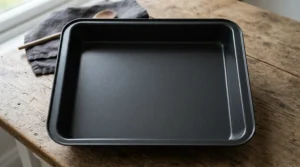
1. MasterClass Non-Stick 20cm Loose Base Sandwich Pan — double-layer, PFOA free all-rounder
The headline here is the coating. MasterClass applies a double-layer Quantum II system that the maker says relies on silicone rather than PTFE, PFOA or BPA. That’s unusual at this price.
The pan measures 20cm across and 3.5cm deep, and retailer listings describe carbon steel of roughly 1mm. That gauge matters for gluten free sponge. Thin steel heats the rim faster than the middle, and a quick-set edge is exactly how you get a dry crust around a damp centre. Oven tolerance is quoted at 220°C, far above the 160–180°C most gluten free sponge recipes ask for, and the tin is dishwasher, fridge and freezer safe.
On paper this is the tin I’d point a first-time gluten free baker towards. The loose base answers the release question, the coating claim answers the PFOA question, and a 20-year guarantee with a five-year non-stick promise signals the maker expects it to last. The trade-off is depth: at 3.5cm there’s little headroom for a generously rising xanthan gum batter.
Buyer feedback on the wider MasterClass loose-base range is generally positive about how smoothly the base pops up. One reviewer noted that some listings muddle the wording around PFOA, so read the label on the tin itself.
Pros:
- ✅ Double-layer coating free from PFOA, PTFE and BPA
- ✅ Loose base for easy release of fragile layers
- ✅ 20-year guarantee plus five-year non-stick cover
Cons:
- ❌ Shallow 3.5cm sides limit rise headroom
- ❌ Loose base can weep thin batter if overfilled
Expect roughly £11–£15; solid value for what’s on offer.
2. Tala Performance Loose Base Sandwich Tin — extra depth for taller sponges
Depth is the story. At roughly 4.5cm, the Tala Performance sandwich tin gives gluten free batters about a centimetre more room than the MasterClass pan, which helps if your sponge domes hard.
Tala builds it from 1.0mm carbon steel with a double-layered Eclipse coating and a loose base. Heavy-gauge steel is the unglamorous hero, because it spreads heat evenly so the outer ring doesn’t set before the middle rises. Retailer listings quote heat resistance up to 240°C across the Performance range and a 10-year guarantee. Tala‘s deep-tin listings describe the coating as PTFE, PFOA and BPA free, so confirm the same wording on the 20cm sandwich tin’s page before buying.
Based on the spec comparison, this is the better choice for xanthan-rich mixes that climb, and for bakers who want a sandwich tin that can double as a shallow cheesecake tin. The extra centimetre is cheap insurance against a collapsed dome.
Feedback is mixed in a useful way. Retailer reviewers praise the finish, but one reviewer of Tala‘s deep loose-base tin said the base sat loosely enough to let batter drip out. That’s a reminder to stand any loose-base tin on a baking tray. Reviews for the 20cm sandwich tin itself are few, so treat the verdict as provisional.
Pros:
- ✅ Extra depth for higher-rising gluten free batters
- ✅ Heavy 1.0mm carbon steel for even baking
- ✅ 10-year guarantee across the range
Cons:
- ❌ Reported base looseness on a related deep tin
- ❌ Coating wording varies between listings
Around £10–£16; strong value if depth is your priority.
3. Prestige Inspire 8″ Loose Based Sandwich Pan — heavyweight steel for even heat
Weight is the selling point. At around 500g, the Prestige Inspire 20.4cm pan is chunkier than most budget tins, and that mass resists hot spots.
It uses heavy-gauge carbon steel with Prestige‘s CushionSmart non-stick interior. Listings give a height of about 5cm and an oven limit of 240°C. Mass translates to thermal stability: a heavy tin dips less in temperature when cold batter goes into a hot oven, so the sponge sets evenly instead of catching at the rim. For a non stick cake tin for delicate sponges, that steadiness is worth more than any marketing adjective.
The best independent evidence is indirect. In its cake tin test, Which? named the Prestige Inspire springform its Editor’s Choice. That’s a different tin from the same range, tested in November 2021, but it suggests the interior copes well with release. I couldn’t find an explicit PFOA statement in the listings reviewed, so check the packaging.
Verified buyer commentary on this exact tin was thin in the sources I could access, which is why the Which? result carries so much weight here.
Pros:
- ✅ Heavy 500g steel resists hot spots
- ✅ Oven safe to a quoted 240°C
- ✅ Range earned a Which? Editor’s Choice
Cons:
- ❌ Heavier to handle when full
- ❌ PFOA wording not prominent in listings
Roughly £12–£18; fair value for a tin built to last.
4. Circulon Ultimum 20cm Loose-Based Round Cake Tin — lifetime guarantee, PFOA-free statement
The standout here is longevity. Circulon pairs a lifetime manufacturer’s guarantee with an explicit statement that the Ultimum bakeware is free from PFOA, lead and cadmium.
It’s carbon steel with a loose base, oven safe to 230°C and dishwasher safe. Circulon‘s trademark raised-circle surface is pitched as reducing abrasion from utensils, which is relevant because palette knives are part of every gluten free turn-out. The combination of lifetime cover and a plain PFOA free coating statement is the most explicit package of the seven.
Choose this if you bake often and hate replacing kit. The question is whether you’ll bake enough to justify the premium, and for a weekly baker over several years the maths works. The loose base also needs gentle, even pressure: an Olive magazine test of Circulon‘s Ultimum flan tin rated it 5/5 but noted the base needs a well-judged push to release.
Review data on the sandwich version is limited. A single retailer reviewer gave it top marks, and the listing I found is now discontinued there. Check stock on the current listing.
Pros:
- ✅ Explicit PFOA, lead and cadmium free statement
- ✅ Lifetime manufacturer’s guarantee
- ✅ Dishwasher safe and oven safe to 230°C
Cons:
- ❌ Premium pricing against rivals
- ❌ Base can need a firm, even push
Around £14–£20; worth it for frequent bakers.
5. Samuel Groves Great British Bakeware Victoria Sandwich Tins — British-made, double-coated heritage
Provenance is the draw. Samuel Groves makes its Great British Bakeware range in England, and the company’s roots go back to 1817.
These are carbon steel Victoria sandwich tins with a double-coated non-stick finish, oven safe to 230°C. The key spec is the fixed base. There’s no joint for batter to leak through, which suits a thin, runny gluten free mix. But you can’t push the cake up and out. For a delicate sponge, line the base with parchment, let the cake cool in the tin, then ease it out by inversion.
Honest take: this suits bakers who value British manufacturing and don’t mind the extra turn-out step. A double-coat finish promises even wear, though I couldn’t verify long-term durability from the sources available. The listings I reviewed don’t spell out PFOA status, so look for it on the packaging.
Reviewer feedback on Samuel Groves loaf tins praises the non-stick and quick rinse-clean. For the sandwich tins, I couldn’t verify a meaningful review volume, and the sizes I confirmed include a 6″ twin pack, so check you’re buying the 8″ (20cm) version.
Pros:
- ✅ Made and designed in England
- ✅ Double-coated non-stick finish
- ✅ Fixed base means no leak joint
Cons:
- ❌ Fixed base needs lining and careful inversion
- ❌ PFOA wording not stated in reviewed listings
Typically under £15 for a twin pack; check current price, as sizes vary.
6. KitchenCraft Non-Stick 20cm Loose Base Sandwich Pan — sensible value with a PFOA free label
Modest price meets a clear chemical-free label. The KitchenCraft pan is described as free from PTFE, PFOA and BPA.
Listings give a 20.5cm diameter, a loose base, an oven limit of 220°C and dishwasher, fridge and freezer compatibility. It comes from the same group as MasterClass, but it’s positioned as the plainer, cheaper cousin. If the MasterClass is the all-rounder, this is the sensible friend. The 220°C limit is irrelevant for sponge, since you’ll be at 160–180°C, so the real question is coating durability. A double-layer system and longer non-stick guarantee, as on the MasterClass, are what you pay extra for.
I couldn’t verify enough independent review detail for this exact pan, so the case rests on specs. Those specs match the more expensive MasterClass on base type, chemistry claims and oven tolerance. For bakers who make a gluten free sponge a few times a year, that’s plenty.
Pros:
- ✅ Loose base for simpler turn-out
- ✅ PTFE, PFOA and BPA free label
- ✅ Dishwasher, fridge and freezer safe
Cons:
- ❌ Guarantee terms unclear in reviewed listings
- ❌ Independent review data hard to verify
Under £15 in the retailers I checked; good value if you bake occasionally.
7. Lets Cook Cookware 8 Inch Victoria Sandwich Tins Twin Pack — matched twin layers on a budget
A matched pair is the format Victoria sponge was invented for. The Lets Cook twin pack gives you two 20cm fixed-base carbon steel tins, with UK origin stated on the listing.
The coating is described as a Teflon-branded non-stick, free from harmful chemicals. That phrase is vaguer than the explicit PFOA statements on the MasterClass and Circulon pages, so ask for the packaging claim. Two identical tins matter because mismatched layers bake at different speeds, giving you one dry sponge and one damp one. Since the base is fixed, line it with parchment and let the sponge cool before you try to turn it out.
This is the entry ticket for occasional bakers. Buyers describe the tins as easy to clean and good for sandwich cakes. One reviewer reported they fit inside their air fryer, but check your own basket dimensions before assuming that. Another simply said they did the job and arrived well packaged, which is honest, modest praise.
Pros:
- ✅ Twin pack gives matched layers immediately
- ✅ Easy to clean, per buyer feedback
- ✅ Low entry cost for occasional bakers
Cons:
- ❌ Fixed base needs lining and gentle inversion
- ❌ Vague “free from harmful chemicals” wording
Typically under £15 for the pair; fair value for occasional use.
Spec Showdown: How the Seven Tins Compare
| Tin | Size / depth | Base | Coating note | Stated oven limit | Guarantee | Price range |
|---|---|---|---|---|---|---|
| MasterClass | 20cm / 3.5cm | Loose | Quantum II, PFOA/PTFE/BPA free | 220°C | 20-year; 5-year non-stick | £11–£15 |
| Tala Performance | 20cm / about 4.5cm | Loose | Eclipse double layer | 240°C (range) | 10-year | £10–£16 |
| Prestige Inspire | 20.4cm / about 5cm | Loose | CushionSmart | 240°C | Check listing | £12–£18 |
| Circulon Ultimum | 20cm | Loose | PFOA, lead, cadmium free | 230°C | Lifetime | £14–£20 |
| Samuel Groves | Sizes vary (6″ confirmed) | Fixed | Double-coated | 230°C | Check listing | Under £15 (twin) |
| KitchenCraft | 20.5cm | Loose | PTFE, PFOA, BPA free | 220°C | Check listing | Under £15 |
| Lets Cook | 8″ / 20cm | Fixed | Teflon-branded | Check listing | Check listing | Under £15 (twin) |
The guarantee column does most of the talking. Circulon and MasterClass are the only two with long, clearly stated cover, which is useful evidence that their makers expect the coating to last. If budget matters most, KitchenCraft gives you the loose base and chemical-free label for the least outlay. If it’s depth you need, only Tala and Prestige clearly give you extra headroom.
How to Choose a Non Stick Tin for Gluten Free Sponge (7 Steps)
Choosing well takes a few minutes and saves many ruined bakes. Work through these in order:
- Choose a loose base for delicate layers. Pushing the cake up avoids the inversion that snaps fragile gluten free crumb. Fixed-base tins work if you line carefully.
- Check the steel gauge. Around 1mm carbon steel heats more evenly than flimsy budget tins, reducing the crisp-edge, damp-middle problem.
- Match depth to your recipe. Gluten free batters can dome, so 4–5cm gives safer headroom than 3.5cm.
- Get the coating claim in writing. Look for an explicit PFOA free coating statement on the packaging, not just the retailer’s headline.
- Ignore the oven limit. Every tin here handles 220°C or more, far above sponge temperatures.
- Buy two identical tins for Victoria sponge. Matching layers bake at the same pace, which matters more than a fancy finish.
- Read the guarantee and care instructions. A longer guarantee signals confidence, and dishwasher-safe doesn’t mean dishwasher-ideal.
For extra reassurance on build and release, the Which? cake tin test shows how much ordinary tins vary.
Gluten Free Cake Tin With Easy Release: What Actually Makes a Tin Let Go
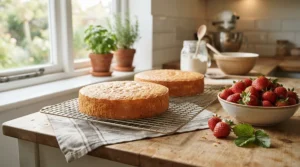
A gluten free cake tin with easy release depends on three things working together: coating, geometry and heat behaviour.
The coating reduces adhesion between batter and metal. Geometry decides how much force you apply while releasing the cake, and a loose base lets you push the sponge up from underneath rather than flipping it. Heat behaviour determines how evenly the crumb sets, because a sponge that’s set unevenly tears at the weak, underbaked patches.
Gluten free sponge adds a twist. Because the structure relies on xanthan gum and starch rather than gluten, the crumb is softer while warm and firms as it cools. That’s why many bakers leave a sponge in the tin for several minutes after baking, then release it. Check your recipe for the exact timing.
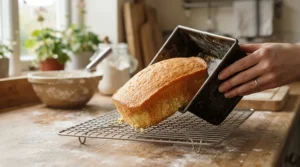
Practical release routine: run a thin, flexible plastic or silicone knife around the edge, support the sponge with a palm, and push the loose base gently and evenly. A parchment disc on the base is cheap extra insurance. Tools matter too: Tala states its Performance range is safe for metal utensils, but makers differ, so avoid metal knives unless your tin’s maker says otherwise.
Non Stick Cake Tin for Delicate Sponges: Weight, Depth and Heat
A non stick cake tin for delicate sponges needs more than a slippery surface. It needs predictable heat.
Weight and gauge dominate. Thin, lightweight tins heat quickly at the edges, which is why Which? found one budget twin pack’s cakes came out a little crispy around the edges even though they released well without greasing. Heavier tins like the Prestige Inspire (around 500g) damp those temperature swings.
Colour is next. Dark non-stick surfaces absorb heat and brown faster than bare shiny metal. A common baker’s rule is to drop the oven temperature by 10–15°C or lower the shelf a rung, though you should always follow your recipe first. In a fan oven, check the sponge a few minutes early.
Depth finishes the picture. A gluten free batter often domes, and a deeper tin such as the Tala Performance gives the crumb room without spilling over. Shallow tins push the batter to crown against the oven’s top heat, which can colour the surface before the middle sets.
Finally, handle gently. A delicate sponge benefits from cooling on a wire rack with air circulation, because trapped steam makes the underside gummy.
Xanthan Gum Batter: How It Changes What Your Tin Needs
Xanthan gum batter behaves differently from wheat batter, and your tin has to cope with the difference.
Xanthan acts as a stand-in for gluten, giving structure and stretch. A study reported by FoodNavigator found cakes made with rice and corn flours at roughly 0.3–0.4% xanthan gum had desirable sensory characteristics and a more uniform internal structure than those without. On a 200g flour sponge, that’s very roughly a quarter teaspoon, though that’s my arithmetic rather than the study’s recipe. Coeliac UK’s guidance suggests half a teaspoon per 225g of mix for rich fruit cakes and an eighth of a teaspoon per 175g for light ones.
Here’s where the tin matters. Xanthan gum batter is more viscous and clingy than ordinary batter, so it doesn’t self-level as readily and grips tin walls more stubbornly. That’s why a good coating and a lined base matter. It also holds gas well, so cakes dome, which is why extra depth helps. Too much xanthan produces a gummy crumb that sticks regardless of the tin.
Check your flour blend, too. Some Coeliac UK recipe notes specify a plain gluten free flour with no xanthan or binder added, while other blends already include it. Doubling up is an easy mistake.
Sticking Prevention: A Five-Step Routine for Gluten Free Sponge
Reliable sticking prevention is a routine, not a product. Even the best tin benefits from the same five steps:
- Wash and dry a new tin first. Residue from manufacturing can affect release, and hand-washing is gentler on the coating.
- Line the base with a parchment disc. This matters most for fixed-base tins like the Samuel Groves and Lets Cook pans, and it costs pennies.
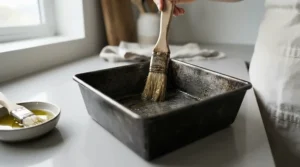
- Apply a thin, even film of fat to the sides if the recipe asks for it. Which? found one tested non-stick tin released cakes cleanly with or without greasing, but gluten free batters cling harder, so a brushed film is sensible insurance.
- Don’t overfill. About two-thirds full leaves rising room and reduces leaks from loose-base tins. Stand loose-base tins on a baking tray.
- Cool in the tin briefly, then release. The crumb firms as it cools. Rushing is the biggest cause of broken sponges.
Maintenance schedule: hand-wash with a soft sponge after each bake, dry thoroughly, and store tins unstacked or with a cloth between them. Avoid abrasive pads.
First-30-day mistakes: using aerosol sprays that leave a residue over time, cutting cakes in the tin with metal knives, and plunging a hot tin into cold water, which can warp the steel.
PFOA Free Coating: What the Label Means for UK Bakers
A PFOA free coating matters because PFOA is a persistent chemical. According to a Defra written parliamentary answer, PFOA, its salts and related compounds are already banned in the UK under the Persistent Organic Pollutants Regulation, which prohibits their manufacture, placing on the market and use.
So newly sold UK bakeware shouldn’t contain PFOA. The label still matters for two reasons. First, it’s reassurance when you’re buying from marketplace sellers. Second, “PFOA free” is not the same as “PTFE free”. A coating can be free from PFOA and still be PTFE-based, and some makers, such as MasterClass, KitchenCraft and Tala on its deep-tin listing, state both claims separately.
How the tins compare: MasterClass and KitchenCraft list PFOA, PTFE and BPA free; Circulon states PFOA, lead and cadmium free; Lets Cook uses the vaguer “free from harmful chemicals” wording; and Prestige and Samuel Groves listings I reviewed don’t state it explicitly.
Gluten free sponge bakes at 160–180°C, well below the oven limits of 220–240°C quoted for these tins. If a coating ever flakes or peels, retire the tin. This is general guidance, so follow each manufacturer’s instructions.
Real-World Scenarios: Which Tin for Which Baker?
Specs only help once they meet a real kitchen. Here are three profiles with reasoning.
The coeliac family baker. A parent bakes a gluten free sponge every weekend, uses plenty of xanthan gum batter, and wants a tin that lasts. The Circulon Ultimum (lifetime guarantee, PFOA-free statement) or the MasterClass (20-year guarantee, loose base) fit best. If birthday cakes tend to be tall, the Tala Performance‘s extra depth is the tiebreaker. Budget: a mid-teens spend per tin, repaid over years.
The occasional baker on a budget. Someone bakes a gluten free Victoria sponge a few times a year and needs two matched layers. The Lets Cook twin pack is the cheapest way in, while the KitchenCraft loose-base pan costs only a little more and releases more gently. Line the base and expect a careful turn-out with either.
The showstopper gift baker. Tiered celebration cakes need consistency across tins. The Prestige Inspire (heavy steel, even heat) and the Tala Performance (extra depth) suit multiples of the same size.
Whichever profile fits, buy at least two tins of the same size. It’s the quickest quality upgrade in gluten free baking.
✨ Ready to bake without the sticking drama?
🔍 Click any highlighted tin above to check current pricing and availability, then pick the one that matches your kitchen. A good tin plus a patient cooling routine is the quickest route to gluten free sponge your family will actually fight over. 🍰
Problem and Solution: When Your Gluten Free Sponge Still Sticks
Even good tins fail sometimes. Here are four common problems and fixes.
Problem 1: The top half sticks to the tin. Likely cause: releasing too hot, or too little fat on the sides. Fix: let the sponge cool a few minutes in the tin, ease the edge with a flexible plastic knife, and brush a thin film of fat on the sides next time.
Problem 2: Batter leaks from a loose base. Cause: thin batter, overfilling, or a loose-fitting base. Fix: don’t fill beyond two-thirds, stand the tin on a baking tray, and consider a fixed-base tin such as the Samuel Groves if leaks persist.
Problem 3: Dry, crisp edges and a damp middle. Cause: thin steel or a dark, fast-heating surface. Fix: choose heavier steel like the Prestige Inspire, lower the oven by 10–15°C, and check early.
Problem 4: The sponge domes then cracks. Cause: a hot oven plus xanthan gum batter holding gas. Fix: lower the temperature, tap the filled tin gently, and use a deeper tin such as the Tala Performance.
If none of these apply, check whether your flour blend already contains xanthan gum.
Non Stick Tin vs Alternative Tin Types: Which Wins for Gluten Free Sponge?
A coated carbon steel tin is the sensible default, but it isn’t the only option.
| Tin type | Release | Durability | Best For |
|---|---|---|---|
| Coated carbon steel (e.g. MasterClass, Tala Performance) | Very good, especially with loose base | Depends on coating care | Everyday gluten free sponge |
| Hard-anodised aluminium (e.g. Samuel Groves Mermaid) | Good when lined | Pitched as durable and non-coating | Bakers who dislike coatings |
| Silicone moulds | Variable, flexible release | Long-lasting but floppy | Novelty shapes |
| Plain greased and lined tin | Reliable only with careful prep | Very durable | Traditional bakers |
Based on the comparison, coated steel wins for convenience, especially in a loose-base format. Anodised aluminium trades the coating for a hardened surface, so you’ll still line the base carefully. Silicone moulds are the least rigid, which makes delicate sponges harder to position and move.
For a non stick tin for gluten free sponge used regularly, a heavy coated loose-base pan is usually the least fuss. If you want to avoid coatings entirely, anodised aluminium plus parchment is a fair alternative.
Long-Term Cost and Maintenance: Is a Better Tin Worth It?
A tin that costs more up front can cost less per bake. Illustrative arithmetic: a mid-teens tin used weekly for five years is roughly 260 bakes, or about 5p per bake. A cheaper tin that needs replacing after two years is around 104 bakes, or closer to 10p. Guarantees help here, because they show how long the maker expects the coating to last.
| Tin | Guarantee (as listed) | Price range | Value verdict |
|---|---|---|---|
| Circulon Ultimum | Lifetime | £14–£20 | Best long-run value for frequent bakers |
| MasterClass | 20-year; 5-year non-stick | £11–£15 | Strongest balance of cost and cover |
| Tala Performance | 10-year | £10–£16 | Great if depth matters |
| Prestige Inspire | Check listing | £12–£18 | Built for heat stability |
| KitchenCraft | Check listing | Under £15 | Good for light use |
| Samuel Groves / Lets Cook | Check listing | Under £15 | Low outlay, fixed base |
Circulon and MasterClass earn their premiums on paper because of their guarantees, while KitchenCraft and Lets Cook keep entry costs low for lighter use. Care matters as much as price: hand-washing and avoiding abrasives will extend any coating’s life. Prices may vary, so check current price before buying.
FAQ: Non Stick Tin for Gluten Free Sponge
❓ Do I still need to line a non stick tin for gluten free sponge?
❓ Is a loose base or fixed base better for a gluten free Victoria sponge?
❓ Are PFOA free cake tins safe for everyday gluten free baking?
❓ What size tin should I buy for a gluten free sponge?
❓ Can I put a non stick cake tin in the dishwasher?
Conclusion: The Best Non Stick Tin for Gluten Free Sponge for Your Kitchen
The best non stick tin for gluten free sponge is the one that matches how you bake. For most people the MasterClass Non-Stick 20cm Loose Base Sandwich Pan is the safest starting point: loose base, a clear PFOA free coating statement, and long guarantees. If your sponges rise tall, the Tala Performance gives you the extra depth. If you want heft for even heat, the Prestige Inspire delivers, and the Circulon Ultimum rewards frequent bakers with lifetime cover.
On a tighter budget, the KitchenCraft loose-base pan offers the same basic design for less, while the Samuel Groves and Lets Cook twin packs suit bakers who don’t mind lining a fixed base. Whatever you choose, the routine matters as much as the metal: parchment on the base, sensible filling, a short cool in the tin, and a gentle release.
Take one decision now. Do you need depth, longevity or the lowest outlay? Answer that, and the shortlist makes itself.
Recommended for You
- Omelette Pans Under £20: 7 Best Budget Picks For UK Hobs (2026)
- Best Omelette Pan: 7 Proven Picks For UK Kitchens (2026)
- Crepe Pans Under £25: 7 Best Budget Picks For UK Cooks (2026)
Disclaimer: This article contains affiliate links. As an Amazon Associate, I earn from qualifying purchases. If you purchase products through these links, we may earn a small commission at no additional cost to you.
✨ Found this helpful? Share it with your friends! 💬🤗
