
In This Article
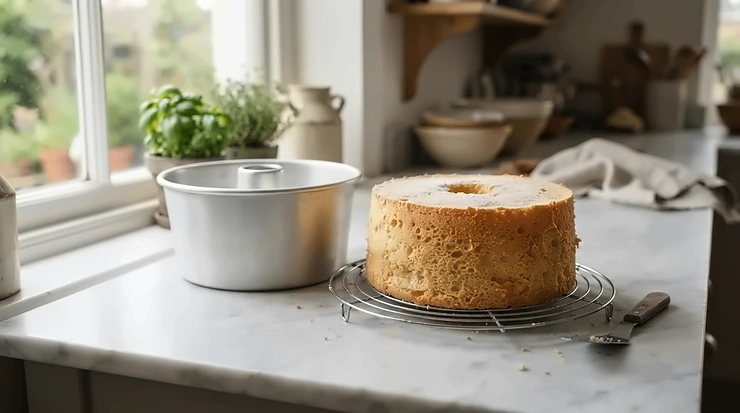
A wobbly tier is rarely a recipe problem. It’s a tin problem. Pick a tall round tin for tiered wedding cake baking that tapers, bulges or flexes, and no amount of buttercream will hide the lean. Pick one with straight walls and honest depth, and the hardest part of the build is done before you’ve creamed a single knob of butter.
Tiered cakes have always been engineering projects. Wikipedia’s wedding cake entry notes that modern ones rely on internal dowels because of their sheer size. The same logic starts one step earlier, in the tin. Get the geometry wrong there and every later step, from levelling to doweling to stacking, becomes damage control.
This guide compares seven real, widely sold deep tins, from budget non-stick options to hand-finished British aluminium. It explains what each spec means in your kitchen rather than just reciting it. You’ll find a sizing ladder for a deep round cake tin for stacked cakes, a proper look at cake dowels, notes on using an 8 inch deep round tin for celebration cake bakes, and a troubleshooting guide for the usual deep-tin dramas.
One honest note before we start. I haven’t baked in these tins, and I won’t pretend otherwise. Everything here comes from spec sheets, retailer information and genuinely published review themes. Prices are ranges only, so always check the live listing. This page contains affiliate links, with the full disclosure at the end.
What Is a Tall Round Tin for Tiered Wedding Cake Baking?
A tall round tin for tiered wedding cake baking is a circular cake tin, usually 3 to 4 inches (7.5–10cm) deep, with straight sided walls and a flat base, designed so each tier bakes tall, level and cylindrical. Sized in 2-inch steps, the tins stack into tiers without awkward gaps or sloping sides.
Four decisions shape every tin in this category. The first is depth. Three-inch tins suit tiers you’ll build from two baked layers. Four-inch tins let you bake one tall tier and slice it into layers.
The second is the base. A solid, seamless base keeps batter contained and edges crisp. A loose base lets you push a heavy fruit cake straight up and out.
Walls are the part people forget. If a tin’s top is wider than its base, even by a thumb’s width, your tier becomes a gentle cone, and cones don’t stack.
Material is the fourth decision. Anodised aluminium heats evenly and won’t rust. Coated carbon steel gives you a non-stick surface, in exchange for a coating that needs gentle handling.
Quick Comparison: 7 Deep Tins at a Glance
Here’s the whole field on one screen. Ranges are indicative at the time of research, so check the current price before you buy.
| Tin | Size & depth | Base & material | Price range | Review picture | Best for |
|---|---|---|---|---|---|
| PME RND084 | 8 x 4in (20 x 10cm) | Solid; anodised aluminium | Mid-teens to low £20s | Strongly positive | Straight-sided tall tiers on a sensible budget |
| Fat Daddio’s ProSeries PRD-84 | 8 x 4in (20 x 10cm) | Solid; heavy anodised aluminium | Mid-£20s to low £30s | Positive (UK aggregate unverified) | Frequent bakers wanting pro durability |
| Silverwood 8 x 3 | 8 x 3in (20 x 7.5cm) | Loose; anodised aluminium | Around £18–£30 | Not verified | British-made loose-base elegance |
| MasterClass 25cm Deep Tin | 25 x 8cm (10 x 3¼in) | Loose; non-stick carbon steel | Around £20–£25 | Not verified | Bottom tier or heavy fruit cake |
| Tala Performance | Varies by size | Loose; non-stick steel | Around £12–£25 by size | Not verified | Fruit cake bakers who nest their tins |
| Wham 8 Inch | 8 x 3½in (approx. 20 x 9cm) | Loose; non-stick metal | Under £10 | Not verified | Practice bakes on a budget |
| Lakeland Loose Based Deep Round | 18–30cm range | Loose; non-stick | Roughly £7–£20 by size | Mixed on taper | Family and fruit cakes, not razor-sharp tiers |
Looking at the comparison above, the PME RND084 delivers the best balance of depth, straight walls and cost. The Fat Daddio’s ProSeries PRD-84 justifies its premium only if you’ll bake tiers repeatedly. Budget buyers should note that the Wham 8 Inch is a rehearsal tin rather than a lifetime tin. Reviewer reports about tapering on the Lakeland Loose Based Deep Round suggest checking wall geometry before committing to precise tiers.
💬 Just one click — help others make better buying decisions too!😊
Top 7 Tall Round Tin for Tiered Wedding Cake Options: Expert Analysis
Each tin below gets the same treatment: what the specs mean in practice, who it suits, what reviewers consistently say, and where it falls short.
1. PME RND084 Round Cake Pan 8 x 4 Inch — seamless build for razor-straight tiers
PME’s seamless construction is the star here: no corner seams means nowhere for batter to cling and no ridge stamped into your tier. The PME RND084 measures 203mm across and 102mm deep, pressed from anodised aluminium with an even wall thickness. In practice, that evenness helps heat travel steadily, so the outer ring of sponge doesn’t overbake while the middle catches up.
Based on the spec comparison, it’s the most sensible starting point if you want professional geometry without a professional invoice. The base is solid rather than loose, so line it properly and let the cake settle before turning it out. PME also pairs these tins with its level baking belt for flatter tops. Its own advice for multi-tier builds is to step up in 2-inch increments, which the matching range supports neatly.
Reviewer sentiment is consistently positive. Shoppers praise even baking, easy release when lined, and tidy tier-building with two sizes. Aggregator copies of its Amazon listings show scores around 4.6 out of 5, though counts differ by marketplace. Common caveats are that it’s light and delicate, it isn’t dishwasher safe, and a hot, fragile cake can be awkward to ease out of a fixed base.
Pros:
- ✅ Seamless, straight-walled build for crisp tier edges
- ✅ Even heat from anodised aluminium
- ✅ Matching 4-inch-deep range for a full tier ladder
Cons:
- ❌ Solid base needs careful lining and release
- ❌ Hand wash only, and fairly lightweight
Expect a mid-teens to low-£20s range at the time of research (check the current price). That’s excellent value for straight-sided tall tiers.
2. Fat Daddio’s ProSeries PRD-84 — heavy-gauge aluminium built for daily bakery use
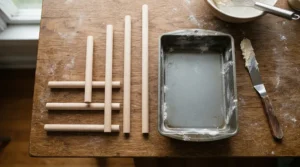
This is the tin professional cake makers tend to name-drop, and heft is the hook. The Fat Daddio’s ProSeries PRD-84 uses 16-gauge anodised aluminium that doesn’t flex when you lift it. Its interior measures 8 x 4in (20.3 x 10.2cm), but retailers quote an overall size of 9 x 4in because of the rolled rim. Measure your oven shelf and leave room for that lip.
Straight, seamless sides and a solid base mean crisp tier edges and less trimming. The manufacturer says the metal heats quickly and cools fast to limit overbaking, which is a brand claim rather than my own finding. The honest take is that this is a premium tool for someone baking multiple wedding cakes, where durability spreads the cost. For a one-off wedding, it’s probably more tin than you need.
Retailer reviews I found are positive. One buyer praised the way the cake climbs in the tall tin, and the brand has a trusted reputation. I couldn’t verify an Amazon UK aggregate, so treat that sentiment as indicative. Retailers also advise hand washing, because dishwasher detergent can discolour the finish.
Pros:
- ✅ Heavy 16-gauge build that resists flexing
- ✅ Straight seamless sides for sharp tier edges
- ✅ Nests with other sizes for storage
Cons:
- ❌ Premium price for a one-off bake
- ❌ Solid base, hand wash only, and UK stock can vary
Typically a mid-£20s to low-£30s range. Worth it for repeat bakers, optional for everyone else.
3. Silverwood 8 x 3 Silver Anodised Loose Base Tin — handmade in Birmingham
Silverwood has been making bakeware in Birmingham since Alan Silverwood founded the business in 1960, and this tin carries that heritage. The Silverwood 8 x 3 is 8 inches across and 3 inches deep, in silver anodised aluminium with a loose base and straight sides for neat layers. Retailer copy says it develops a natural non-stick patina, which in practice means the tin gets friendlier with use. So don’t scrub it back to bare metal.
The loose base slides out cleanly, which flatters delicate sponges and sticky fruit cakes alike. Three inches is shallower than the 4-inch tins above. That suits tiers built from two baked layers, but not a towering single bake. As with any loose-based tin, line the base carefully if your batter is runny.
I couldn’t find verifiable customer reviews for this exact tin, so I won’t characterise buyer sentiment. What the specs do say is that this is a well-made, UK-manufactured option for bakers who value release and finish over maximum height.
Pros:
- ✅ Handmade in the UK with a loose base
- ✅ Straight sides for neat layers
- ✅ Patina improves non-stick over time
Cons:
- ❌ 3 inches deep, shallower than 4-inch rivals
- ❌ Premium pricing and thin review data
Roughly £18–£30 depending on size and seller. Good value if you want British-made and a loose base.
4. MasterClass Non-Stick 25cm Deep Loose Base Round Tin — the sturdy base-tier workhorse
The MasterClass 25cm Deep Tin is built from 1mm warp-resistant carbon steel, oven safe to 220°C. It measures 25cm (10in) across and 8cm (3¼in) deep, with a loose base and a non-stick finish. The maker lists a 20-year guarantee plus a five-year non-stick guarantee, which signals confidence in the steel.
At 10 inches it’s a natural bottom tier beneath 8 and 6 inch tins. It’s also a sensible choice for a heavy fruit cake, where a push-up base saves you from tipping out a dense, fragile bake. The caveat is depth. At roughly 3¼ inches it sits a little shorter than 4-inch tins, so check that your upper tiers match its height before you bake the full set.
The retailer page I found carried no customer reviews yet, so there’s no review sentiment to report. The range includes smaller diameters, such as a 15cm tin, so you can assemble a ladder from one family.
Pros:
- ✅ Sturdy steel that resists warping
- ✅ Loose base for easy removal
- ✅ Long guarantees on tin and coating
Cons:
- ❌ Slightly shallower than 4-inch tins
- ❌ Non-stick coating needs plastic or silicone utensils
Around £20–£25 at the time of research. Solid value as a base tier.
5. Tala Performance Non Stick Round Deep Cake Tin — size embossed on every base
Tala’s deep round range is made from what the brand describes as commercial-weight steel, with a loose base and non-stick finish. The Tala Performance line is pitched at everything from fruit cakes to tiered wedding cakes. The detail I like is that each tin’s size is embossed on the base. That sounds trivial until you own four near-identical tins in a stack and are working at 6am.
Commercial weight matters because thin steel flexes when you move a full tin of heavy batter. It also tends to heat unevenly. That makes this a comfortable fit for dense fruit cakes, where a long, slow bake rewards a stable tin. Check the listed depth for each diameter, as it can vary across the range.
I couldn’t verify customer reviews for this specific product, so I’ll rely on the spec sheet. It looks like a dependable mid-range steel tin rather than a precision tier maker.
Pros:
- ✅ Heavy steel build for stable handling
- ✅ Size embossed on the base
- ✅ Loose base for clean release
Cons:
- ❌ Review data not verified
- ❌ Non-stick coating limits utensil choice
Around £12–£25 depending on diameter. Good value for fruit cake bakers who like order in the cupboard.
6. Wham 8 Inch Loose Bottom Deep Round Tin — the budget rehearsal tin
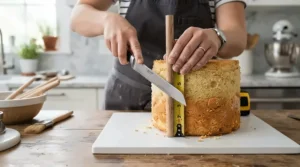
Every tiered cake deserves a dress rehearsal, and the Wham 8 Inch is a cheap way to run one. Its inner dimensions are listed as 8 inches across by roughly 3½ inches high, with a non-stick finish, a removable base and an oven rating of 230°C. That’s deep enough to practise tier height and bake timings without spending serious money.
Budget non-stick tins vary in wall geometry, so measure the top and bottom diameter when it arrives. I haven’t verified this tin’s walls, and the check costs ten seconds. If it passes, it’s a sensible mid-tier for a first attempt. If it flares, you’ve learned something cheaply before the real bake.
I found no verified customer reviews for this listing. Treat it as a low-cost starter rather than a heirloom.
Pros:
- ✅ Very low cost for a deep loose-base tin
- ✅ Around 3½ inches deep for realistic practice
- ✅ Oven safe to 230°C
Cons:
- ❌ Wall straightness unverified, so measure it
- ❌ Thin coating likely to wear faster than premium tins
Under £10 at the time of research. Great for rehearsals, less so for a decade of weddings.
7. Lakeland Loose Based Deep Round Cake Tin — nests neatly, but check the taper
The Lakeland Loose Based Deep Round range comes in sizes from 18cm to 30cm, with two layers of Quantum 2 non-stick, sure-grip handles, a sizing guide on the base, and a fill line. It’s oven safe to 240°C with a three-year guarantee. The tins are designed to nest inside each other for storage.
That nesting is also the catch. Two reviewers of the 25cm size reported that the sides taper, with one noting roughly half an inch of difference between top and bottom. One had to throw away a cake baked for a wedding. It’s reasonable to infer that the tapered walls that let tins stack in a cupboard are the same ones that stop tiers stacking cleanly. Other sizes fare better. Buyers of the 18cm and 30cm tins praise the depth, easy release, and the 30cm’s usefulness as a wedding-cake base layer.
Reviewers also note the rims make it hard to wrap newspaper tightly around the outside for fruit cakes.
Pros:
- ✅ Nesting design saves cupboard space
- ✅ Loose base and non-stick for easy release
- ✅ Three-year guarantee and fill line
Cons:
- ❌ Reviewers report tapered walls on the 25cm size
- ❌ Rims complicate newspaper wrapping
Roughly £7–£20 by size. Better for family and fruit cakes than precision stacking.
✨ Don’t Miss These Handpicked Tins!
🔍 Take your tiered baking to the next level with these carefully selected tins. Click on any highlighted product name to check current pricing and availability. The right tin will help you create wedding cake tiers your guests will remember!
How to Choose a Tall Round Tin for Tiered Wedding Cake Baking
Choose a tin with straight sided walls, 3 to 4 inches of depth, a base that suits your cake type, and sizes that step up in 2-inch increments. Then check that it fits your oven. The detail behind each step matters.
- Check the walls first. Measure the diameter at the top and bottom of the tin. Any difference makes a cone, and cones make leaning tiers.
- Pick your depth. Four inches lets you bake one tall tier and slice it. Three inches suits tiers built from two baked layers. Match the depth across every tin so tier heights agree.
- Choose your base. A solid, seamless base gives crisp edges and no leaks. A loose base rescues heavy fruit cakes. Line either one.
- Weigh the material. Anodised aluminium conducts heat evenly and doesn’t coat-peel. Non-stick steel is easier to release but needs gentler utensils.
- Build a 2-inch ladder. PME suggests spacing tiers by two inches, such as 6, 8 and 10 inch. Buy tins from the same range so the walls and depth match.
- Check oven fit. Rolled rims can add half an inch to the overall width. Measure your shelf before you order.
For a sense of how independent testers judge tins, Which? tested nine 20cm round tins for non-stick performance, cleaning and cake quality. Those were standard tins rather than tall ones, so use the results for coatings, not for tier geometry.
Straight Sided Walls: Why Taper Quietly Ruins Tiers
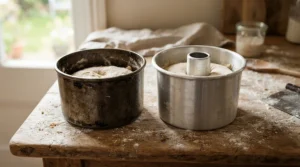
Straight sided walls sound like a marketing nicety. They’re closer to structural engineering. A tier baked in a tapering tin has a smaller base than top, so when you stack it, the sponge flares outward over the cake below. Dowels land at slightly different heights. Cutting a clean, plumb edge for ganache or fondant becomes a fight.
The Lakeland reviews are a useful case study. A buyer making two wedding tiers found the tins varied by half an inch from top to bottom, and the cakes were unusable. Another planned a naked tiered cake and found the sides weren’t straight enough. Neither was a recipe failure. Both were geometry failures.
You can test any tin in thirty seconds. Hold a ruler across the top rim, then across the base, and compare. Or lay a set square against the inside wall. Seamless aluminium tins like the PME RND084 and Fat Daddio’s ProSeries PRD-84 are made specifically for straight walls. Nesting non-stick steel tins have to trade some straightness for stackability.
If you only remember one thing from this article, make it this: measure before you bake.
Deep Round Cake Tin for Stacked Cakes: Building Your Size Ladder
A deep round cake tin for stacked cakes is only as useful as its neighbours. A single excellent 8-inch tin can’t build a wedding cake on its own.
The simplest ladder uses 2-inch steps. PME’s own guidance for wedding cakes recommends tins separated by two inches, such as 6, 8 and 10 inch. In centimetres that’s roughly 15, 20 and 25cm, which the MasterClass 25cm Deep Tin range and the PME RND084 family both cover.
A few principles keep a ladder tidy:
- Buy every tin from one range, so wall straightness and depth match.
- Match depth across the set, so your 6, 8 and 10 inch tiers finish at the same height.
- Put each tier on a board cut to its own diameter. The boards carry the dowels, not the sponge.
- Use a drum a couple of inches wider than your bottom tier as the base.
Matching depth is the step beginners skip. A 10-inch tin at 3¼ inches deep under 4-inch upper tiers produces a stepped, uneven build. If you mix brands, measure first.
Cake Dowels: Types, Placement and How Many You Actually Need
Here’s what first-timers rarely hear: cake dowels don’t hold up the cake. They hold up the board. Each tier sits on a card cut to its own diameter, and the dowels in the tier below carry the load through that board. The sponge never bears the weight above.
Material choice is about convenience and confidence. Retailers pitch hollow plastic rods as easy to cut and more hygienic than wood, with a serrated knife slicing them cleanly. Wooden rods are rigid and cheap. Metal dowels are strong but harder to cut. For standard tiers, cake dowels like the PME Wooden Dowel Rods (a 12-pack of 30cm lengths) or the PME Hollow Easy-Cut Dowels (a four-pack of 12-inch lengths) are common UK choices, so check Amazon UK for current stock. One reviewer of a thinner plastic brand found they needed strong scissors to cut them, which is worth knowing if you’re trimming a dozen.
For placement, professional course guidance suggests marking the tier’s outline with its board. Push dowels in at roughly the 12, 3, 6 and 9 o’clock positions, mark each at the cake’s surface, pull them out and cut them all to the same height. If the cake will travel, add a central rod through all tiers. Taller, narrower tiers wobble more, so a tall tier needs more support.
Dowels also need a flat surface. That’s another reason straight sided walls and a level tier matter.
Practical Usage Guide: Prepping, Baking and Cooling Deep Tiers
Deep tins reward preparation. Here’s a workflow that suits most of the tins above.
Prep. Grease the tin, then line the base and sides with parchment. Let the paper stand a little proud of the rim so a rising cake has a collar. For solid-base tins, such as the PME RND084, the liner is your release plan.
Bake. Deep tiers take longer, and the outside can set before the centre does. Many bakers lower the oven temperature slightly and extend the time, then check with a skewer. PME sells a level baking belt for flatter tops, and reviewers mention using heating cores in tall cakes, so both are worth considering for 4-inch tins.
Cool. Let the cake rest in the tin briefly, then release and cool fully on a rack. Which?’s baking advice notes that a fully cooled cake is far easier to ice and decorate, so resist the urge to rush.
Avoid these first-30-day mistakes:
- Putting anodised aluminium in the dishwasher
- Using metal utensils on non-stick coatings
- Skipping a liner on a solid-base tin
- Baking the tier before testing the tin’s wall straightness
Treat the tin well and it will quietly outlast the wedding.
Which Tin Fits Your Plan? Three Real-World Scenarios
These are illustrative profiles, not real customers.
The first-timer on a budget. You’re baking three tiers for about sixty guests and want to rehearse first. Use the Wham 8 Inch for a trial bake, then buy a matching trio from the PME RND084 range for the real thing. Rehearsal tins cost little, and you’ll find any timing problems before the big day.
The fruit cake traditionalist. You’re baking months ahead for a dense, matured cake. The MasterClass 25cm Deep Tin or Tala Performance gives you sturdy steel and a loose base for a heavy cake. The Silverwood 8 x 3 suits someone who prefers aluminium and wants a UK-made tin. Remember the newspaper-wrapping tip. If you’re considering the Lakeland Loose Based Deep Round, check the sides first, since rims and taper can complicate things.
The side-business baker. You bake a few wedding cakes a year and want geometry you can rely on. The Fat Daddio’s ProSeries PRD-84 is the premium pick, since its heavy gauge and straight, seamless sides are built for repeated use. A 25 notional-pound tin used twenty times costs about £1.25 per bake, and the cost per use falls with every order.
Each scenario comes down to the same trade-off: spend where failure would be costly, save where it wouldn’t.
Common Problems With Deep Tins and How to Fix Them
Problem: domed tops. Deep batter rises in the centre first. Try a baking belt, a slightly lower temperature, or levelling the tier before stacking.
Problem: dry edges, raw middle. Heat is reaching the outside faster than the core. Lower the temperature, extend the time, and consider a heating core. Anodised aluminium tins like the Fat Daddio’s ProSeries PRD-84 spread heat evenly, which helps.
Problem: a stuck cake in a solid base. Line the base and sides, and let the cake settle before releasing it. PME reviewers note a hot, fragile cake can be tricky, so patience helps.
Problem: tiers that lean. Check wall straightness before baking. If the tin tapers, trim the tiers or choose a tin with straighter walls.
Problem: a tier sinking under the one above. Add dowels, and use a board under every tier. Place dowels in a circle, plus a central rod for transport.
Problem: batter seeping from a loose base. Line the base carefully, especially with a runny batter. Wrapping the base of a loose-bottom tin like the Silverwood 8 x 3 helps with wetter mixes.
8 Inch Deep Round Tin for Celebration Cake: Volumes, Timing and Tiers
The 8 inch deep round tin for celebration cake is the workhorse middle tier of most three-tier builds, and it’s the size most home bakers reach for first. Two details are worth understanding.
First, volume. A retailer listing for the 8 x 4in PME tin shows a capacity of roughly 3.3 litres. One reviewer of the 7 x 4 version found that a standard recipe for two 9 x 2in tins fit comfortably in a single pan. A 4-inch tin holds about a third more than a 3-inch tin of the same diameter, which is simple geometry. That means a recipe written for 3 inches may need scaling for the PME RND084 or Fat Daddio’s ProSeries PRD-84.
Second, timing. Deeper batter bakes more slowly, so expect to extend the time and check with a skewer rather than the clock. PME’s listing gives an upper temperature of around 200°C for its 7 x 4 tin, so it’s worth checking your tin’s rating against your recipe.
For smaller practice runs, the Wham 8 Inch at about 3½ inches deep offers a mid-way volume. For an 8-inch celebration bake in a loose-base tin, the Silverwood 8 x 3 gives clean release at 3 inches.
Tall Round Tin for Tiered Wedding Cake vs Layering Shallow Sandwich Tins
Not everyone bakes tall. Many bakers prefer several shallow layers, and Cupcake Jemma’s guidance recommends baking layer cakes as multiple layers rather than slicing one deep bake. A reviewer of a PME 3-inch tin made a three-layer wedding cake by baking three shallower cakes, noting it meant a lot of cleaning and relining. The trade-off is real.
| Approach | Strength | Weakness | Best for |
|---|---|---|---|
| Tall seamless tin, such as the PME RND084 | One tall bake, crisp edges | Longer bake, risk of raw centre | Cutting layers from one tall sponge |
| Several shallow sandwich tins | Quick, even bakes | More tins to wash and reline | Beginners and light sponges |
| Loose-base deep tin, such as the Silverwood 8 x 3 | Clean release | Wet batter can seep | Fruit cakes and firm sponges |
| Springform tin | Easy release | Latch seam can leak runny batter | Cheesecakes, not precision tiers |
Looking at the comparison above, a tall tin saves washing-up and bakes uniform layers in one go, while shallow tins bake faster and more forgivingly. A tall round tin for tiered wedding cake baking wins on neat, consistent tier height. Shallow sandwich tins win on beginner confidence. If you’re nervous about raw centres, start shallow and move up.
Long-Term Cost, Care and Value
A tin is a small purchase with a long life, so cost per bake is the right lens. Pay a notional £25 and bake twenty times, and each bake costs about £1.25 in tin. Pay under £10 for a tin that wears out in a few bakes, and the maths changes.
| Band | Tins | Care | Value verdict | Best for |
|---|---|---|---|---|
| Budget (under about £20) | Wham 8 Inch, Lakeland Loose Based Deep Round | Gentle utensils, check coating wear | Fine for rehearsals and family cakes | First attempts |
| Mid-range (around £12–£25) | PME RND084, MasterClass 25cm Deep Tin, Tala Performance | Hand wash aluminium, soft tools on non-stick | Best all-round value | Most home bakers |
| Premium (£25 and up) | Fat Daddio’s ProSeries PRD-84, Silverwood 8 x 3 | Hand wash, avoid scrubbing patina | Durable, built to repeat | Frequent or serious bakers |
Looking at the comparison above, mid-range tins give the best return for most people. Premium tins reward repeat use, and budget tins make sense as rehearsal gear. Care is cheap either way: hand wash aluminium tins, avoid metal utensils on non-stick, and store tins so walls don’t get dented.
Safety, Allergens and Selling Cakes in the UK
Baking a tiered cake for your own wedding is one thing. Selling one is another. The Food Standards Agency explains that its prepacked-for-direct-sale allergen rules, often called Natasha’s Law, apply to food businesses including home bakers. Home bakers selling online or by distance selling must give allergen information before the order and on delivery. Its guidance for bakers on allergen labelling is the place to start.
Councils also generally expect home food businesses to register, and council leaflets flag fresh cream and royal icing made with raw egg whites as higher risk. That matters for tiers sitting at a venue for hours.
Equipment matters too. Use food-safe dowels and clean boards. Anodised aluminium is non-reactive, so acidic bakes like lemon are fine, and check non-stick tins for scratches before each bake. This isn’t legal advice, so check requirements with your local council before selling.

FAQ
❓ Is the Fat Daddio's ProSeries PRD-84 worth paying more for?
❓ Can a loose base deep tin hold heavy fruit cake batter without leaking?
❓ Are anodised aluminium cake tins dishwasher safe?
❓ Do I need a baking belt for a deep round cake tin?
❓ Should I buy a full set of deep tins or build the ladder one at a time?
Conclusion
A great tiered cake begins long before the icing, and the tin is where it begins. The best tall round tin for tiered wedding cake baking has straight sided walls, honest depth and a base that suits your cake. Everything else is detail.
For most home bakers, the PME RND084 is the sensible pick: seamless, straight-walled and reasonably priced. Frequent bakers should consider the Fat Daddio’s ProSeries PRD-84 for its heavy-gauge durability. If you prefer British-made with a loose base, the Silverwood 8 x 3 is the elegant choice, while the MasterClass 25cm Deep Tin and Tala Performance suit fruit cake bakers and base tiers. The Wham 8 Inch is a cheap rehearsal tin, and the Lakeland Loose Based Deep Round is better for family cakes than precision tiers, given the taper reports.
Whichever you choose, measure the walls, match the depth across your set, and support every tier with cake dowels and a board. Then bake a rehearsal cake. Your wedding day deserves no surprises.
✨ Ready to bake your showstopper?
🎂 Click any highlighted tin above to check current pricing and availability, and build a tiered cake that stands tall, straight and proud! 🤍
Recommended for You
- Silicone Cake Mould For Easy Release: 7 Best Picks (2026)
- Non Stick Tin For Gluten Free Sponge: 7 Best Foolproof Picks (2026)
- Omelette Pans Under £20: 7 Best Budget Picks For UK Hobs (2026)
Disclaimer: This article contains affiliate links. As an Amazon Associate, I earn from qualifying purchases. If you purchase products through these links, we may earn a small commission at no additional cost to you.
✨ Found this helpful? Share it with your friends! 💬🤗
