In This Article
Pressure cookers under £80 are sealed pots, either stovetop or electric, that trap steam to raise the boiling temperature and cook food in a fraction of the usual time. At this price, you can realistically get a solid 5-6 litre model that turns tough meat, beans and stews into weeknight food. 🍲
Here’s the thing about pressure cooking: the technique is old, but the appeal is thoroughly modern. Energy bills nag, weeknights are short, and a brisket that once demanded a Sunday afternoon can now be done between the school run and bath time. The catch? Shopping for pressure cookers under £80 means wading through listings that all promise “70% faster” cooking and “12-in-1” magic.
I’ve sifted through spec sheets, retailer listings, independent reviews and aggregated owner feedback to narrow the field to seven real, currently listed options. Some are stovetop workhorses. Some are plug-in multi-cookers. All sit in or near the sub-£80 bracket, although UK retail prices wobble constantly, so treat every figure below as a guide and check current price before you buy.
You’ll also find honest analysis of what each spec actually means in your kitchen, plus guides on batch meal prep, tenderising tough meat and choosing the right size. Let’s get into it.
Quick Comparison: Pressure Cookers Under £80 at a Glance
Before the deep dive, here’s the whole field on one screen. Prices are ranges at the time of research and will move, so check current price on the day.
| Product | Type | Capacity | Standout trait | Price range | Best For |
|---|---|---|---|---|---|
| Instant Pot Duo 5.7L | Electric multi-cooker | 5.7L | 13 one-touch programs | Around £60-£90 (promo-dependent) | Set-and-forget families |
| Tower T80244 6L | Stovetop | 6L | Ten-year guarantee (registered) | Mid-£50s | Cheapest way in |
| Prestige Smart Plus 6L | Stovetop | 6L | Zero-pressure safety device | Mid-£70s | Safety-minded hob cooks |
| Tefal Secure 5 Neo 6L | Stovetop | 6L | Five safety devices | £70s at cheaper retailers | Large batches |
| Crock-Pot Express CSC051 | Electric multi-cooker | 5.6L | Eight pressure programs | Roughly £60s-£80s | Slow-cooker converts |
| Instant Pot Duo Mini 3L | Electric multi-cooker | 3L | Compact footprint | Around £60-£90 | Singles and couples |
| Tower One Pot Express T16005 | Electric multi-cooker | Check listing | Top-tier steam tray | Roughly £60s-£80s | Meat-and-veg one-pot meals |
Looking at the table, the stovetop trio (Tower T80244 6L, Prestige Smart Plus 6L and Tefal Secure 5 Neo 6L) gives you the most capacity per pound, which matters if you cook in volume. The electric models cost a little more but add timers, keep-warm and slow-cook modes. If you’re weighing budget against convenience, the Instant Pot Duo 5.7L is the pivot point between the two camps.
💬 Just one click — help others make better buying decisions too!😊
Top 7 Pressure Cookers Under £80: Expert Analysis
Each pick below is analysis built on real specs and aggregated review sentiment, not personal hands-on claims. Where I couldn’t verify a data point, I say so rather than guess.
1. Instant Pot Duo 5.7L — best all-rounder for busy weeknights
The name that made electric pressure cooking mainstream still earns its place. The Instant Pot Duo 5.7L packs 13 smart programs (soup, meat/stew, beans/chilli, poultry, rice and more) into a 1000W stainless-steel pot with a dishwasher-safe lid and liner.
What does that mean in practice? Press “Meat/Stew” for diced shin and the machine handles timing and pressure while you get on with your evening. On paper, 1000W keeps it modest to run, and a manufacturer claim of up to 80% less energy than an electric oven is plausible for small batches, though savings depend on what you cook. The 5.7L pot is realistically a 4-litre-ish working volume once you respect the fill line, so it comfortably feeds four.
Reviewers consistently praise the simple controls and the way it replaces slow cookers and rice cookers. A recurring complaint is that the pot takes a while to come up to pressure and that the quick-release valve can spit if you rush it.
Pros:
- ✅ Thirteen one-touch programs, minimal fiddling
- ✅ Stainless-steel pot, no non-stick coating to scratch
- ✅ Doubles as slow cooker and rice cooker
Cons:
- ❌ Slow to reach pressure on a full pot
- ❌ Bulky on small worktops
Expect to pay around £60-£90 depending on the variant and retailer promotions, so watch for it dipping under £80. Verdict: the best value for anyone who wants to press a button and walk away.
2. Tower T80244 6L — cheapest route into serious stovetop cooking
The Tower T80244 6L is a stainless-steel 22cm stovetop cooker that works on every hob type, including induction, and comes with a removable steamer and stand. Mumsnet’s round-up names it the best budget pressure cooker, which tallies with its mid-£50s pricing.
Why does that matter? Because no electronics means less to break. A stovetop model heats fast on a gas ring, can hit pressure quicker than an electric pot, and gives you a bigger cooking vessel for the money. The lockable lid, cool-touch handles and visual pressure indicator cover the safety basics.
The trade-off is that you’re in charge. There are no presets, no keep-warm and no delay timer, so you’ll be watching the hob and learning to hold the heat steady once pressure is reached. If that sounds daunting, the learning curve is about two meals long.
Reviewers of this range praise the simplicity and the ten-year guarantee (you have to register to claim it). Verified owner feedback on this exact model was thinner than for the electric cookers, so treat the sentiment as directional.
Pros:
- ✅ Lowest price of the seven
- ✅ Large 6L capacity for batch cooking
- ✅ Steamer and stand included
Cons:
- ❌ Single function, no presets
- ❌ Needs hob supervision throughout
Price range: mid-£50s. Verdict: outstanding value if you’re comfortable minding a hob.
3. Prestige Smart Plus 6L — safest-feeling stovetop for nervous first-timers
The Prestige Smart Plus 6L is a stainless-steel stovetop cooker suited to gas, electric and induction hobs. Its standout is a zero-pressure safety device: the lid physically won’t open while pressure remains inside. It also has mechanical locking, a visual pressure indicator and a ten-year guarantee.
That safety design speaks directly to the “my nan’s old cooker rattled like a freight train” fear. In practice, it means fewer opportunities for a steam-burst mishap while you’re learning. Stainless steel is also hardwearing, so this is the kind of pot that survives a decade of stews.
Mumsnet names it the best stovetop pressure cooker and highlights its suitability for freezer-bound batch cooking, from chillies to curries. Its trade-off is what you’d expect: no extra functions, and you’ll need to manage heat yourself.
Aggregated buyer feedback focuses on solid build and reassuring safety features, while the main gripe is the lack of any smart cooking modes. I’d weigh this against electric options only if you already enjoy hob cooking.
Pros:
- ✅ Zero-pressure lid lock adds real reassurance
- ✅ Durable stainless-steel construction
- ✅ Works on induction hobs
Cons:
- ❌ No timer, presets or keep-warm
- ❌ Priced at the top of the stovetop trio
Price range: mid-£70s. Verdict: worth the small premium if safety features are your priority.
4. Tefal Secure 5 Neo 6L — best for large family batches
Tefal designs the Tefal Secure 5 Neo 6L with five safety devices, an automatic locking system and two cooking programs (vegetables and meat/fish). It’s induction-compatible and Tefal backs it with a ten-year warranty.
The two-program setup is a quiet advantage. Rather than guessing at pressure, you choose the gentler setting for greens and the stronger one for meat. Tefal’s own sizing guidance points to 6L for four to six people, which fits a family of four with leftovers.
Price tracking suggests £70s at cheaper retailers, though some sellers list it far higher, so shop around. One independent lifestyle review named it a durable, safety-focused budget choice.
Owner sentiment is polarised. Some buyers rave about how simple and economical it is, while one marketplace reviewer said quality disappointed them. With this much variation, I’d buy from a retailer with a decent returns policy and check the seal on day one.
Pros:
- ✅ Five safety devices and auto-lock
- ✅ Two-level pressure setting
- ✅ Ten-year warranty
Cons:
- ❌ Price varies wildly between sellers
- ❌ Mixed owner reviews on build quality
Price range: low-to-high £70s at the cheapest retailers. Verdict: a strong pick if you find it at the lower end of that range.
5. Crock-Pot Express CSC051 — best bridge for slow-cooker loyalists
The Crock-Pot Express CSC051 is a 5.6L, 1000W electric cooker with eight pressure programs and four ways to cook (pressure, slow, steam, sauté). It has a delay start, auto keep-warm and a stainless-steel finish.
For anyone already devoted to a slow cooker, this is the softest landing. The controls are familiar and the pressure function is one more tab on the same machine. TechRadar’s review praised it as an inexpensive multi-cooker that does nearly everything pricier models do, while noting the pot can be fiddly to slide out and that the recipe selection is limited.
That fiddly-pot complaint is worth taking seriously. If you’ll be lifting a heavy, hot liner daily, a lighter model may suit better. Also note: the lid stays locked during use, so there are no spills or leaks to worry about.
I couldn’t verify a current retail price with certainty. It has historically sat around the £60s-£80s, so check current price and confirm it’s under the line.
Pros:
- ✅ Eight one-touch pressure programs
- ✅ Delay start and keep-warm included
- ✅ Familiar slow-cooker feel
Cons:
- ❌ Pot can be awkward to lift out
- ❌ Limited recipe guidance
Price range: roughly £60s-£80s. Verdict: a comfortable first electric cooker.
6. Instant Pot Duo Mini 3L — best compact for one or two
The Instant Pot Duo Mini 3L condenses the seven-in-one idea into a smaller pot with 11 one-touch programs, suited to side dishes or meals for one or two. Reviewers describe it as perfect for two people and capable of four portions.
Small size is the point. If you’re cooking for a couple, a 6L pot runs half-empty and cooks less efficiently. The Mini fills properly, heats less water and takes up far less worktop. Wattage on listings varies between roughly 600W and 700W, so check the box.
Reviewers praise how versatile and quick it is; some note that the small pot limits larger joints. If you’re eyeing batch cooking for the freezer, you’ll fill it in one go and have to run it twice.
Pros:
- ✅ Compact footprint suits small kitchens
- ✅ Eleven one-touch programs
- ✅ Good fit for one or two portions
Cons:
- ❌ Too small for batch cooking
- ❌ Cannot fit a whole chicken comfortably
Price range: around £60-£90 depending on the seller. Verdict: ideal for singles and couples, poor for families.
7. Tower One Pot Express T16005 — best for cooking meat and veg together
The Tower One Pot Express T16005 is an electric cooker whose steam tray sits in the top half of the pot, letting you cook something in the base and steam vegetables above at the same time. That tray positioning is a genuine design point that many rivals (with low-set racks) don’t match.
For one-pot dinners, that’s handy: a stew below, broccoli above, and everything finishes together. Whether that’s worth the trade-off depends on how often you cook meat and veg together versus straight stews.
I’ll be candid about the data limits here. Most of the verifiable feedback I found is older, so I’d treat this as the riskiest pick of the seven. Check the seller’s current stock, warranty terms and recent reviews before committing.
Pros:
- ✅ Upper steam tray enables two-level cooking
- ✅ Electric presets ease everyday use
- ✅ Simple, uncluttered controls
Cons:
- ❌ Fewer recent verifiable reviews
- ❌ Stock and pricing less predictable
Price range: roughly £60s-£80s (verify). Verdict: interesting design, but research the seller carefully.
Best Pressure Cooker for a Family of Four
Choosing the best pressure cooker for a family of four comes down to capacity first. Mumsnet’s guidance puts 5-6 litres as the sweet spot for families of four to six, and Tefal’s sizing guide agrees that 6L suits four to six people. That’s why four of the seven picks here sit at 5.6-6L.
Never fill a pressure cooker beyond the manufacturer’s stated limit. Many manuals cap it at two-thirds full (and half for foaming foods like beans), so a 6L pot really gives you roughly 4L of working volume. For four people, that’s still plenty for a chilli, a curry or a whole small chicken with leftovers.
Which type suits a family better? If your evenings are chaotic, the Instant Pot Duo 5.7L or Crock-Pot Express CSC051 let you set a timer and walk off. If you’d rather have a bigger vessel for less money, the Tower T80244 6L or Tefal Secure 5 Neo 6L are the smarter buys.
One more option lies just above the budget line: the COSORI 5.7L 9-in-1 was named the best pressure cooker for families by Mumsnet, but it launched at around the £100 mark, so it’s worth watching for promotions rather than counting on it. For most households, though, the best pressure cooker for a family of four at this price is the Instant Pot Duo 5.7L if you want convenience, or the Tower T80244 6L if you want capacity per pound.

Best Pressure Cooker for Batch Cooking: A Batch Meal Prep Blueprint
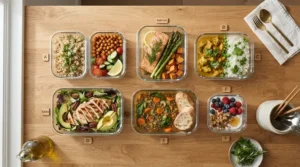
Batch meal prep is where pressure cookers under £80 repay themselves fastest. The best pressure cooker for batch cooking is simply the biggest one that suits your hob or worktop, which points to the 6L stovetop trio or the 5.6-5.7L electrics.
Here’s a practical routine:
- Prep in bulk. Chop everything for two recipes at once.
- Cook once, portion twice. A large beef chilli can become chilli, stuffed jacket potatoes and burrito filling.
- Cool fast. The Food Standards Agency advises cooling cooked food and getting it into the fridge or freezer within one to two hours, dividing it into smaller portions to speed things along. Details on chilling, freezing and defrosting food safely are on the FSA site.
- Label and date. Leftovers should be eaten within 48 hours or frozen.
- Reheat properly. Make sure food is steaming hot all the way through.
Rice and pulses are the batch-prep secret weapons. Dried chickpeas or beans cook in a fraction of the usual time, and there’s no overnight soak fuss with many recipes. If you regularly cook more than four portions, go for a 6L. If you’re cooking for one or two, the Instant Pot Duo Mini 3L will fill up in a single go, though it won’t stretch to freezer stockpiling.
Best Pressure Cooker for Tough Cuts of Meat: A Guide to Tenderising Tough Meat
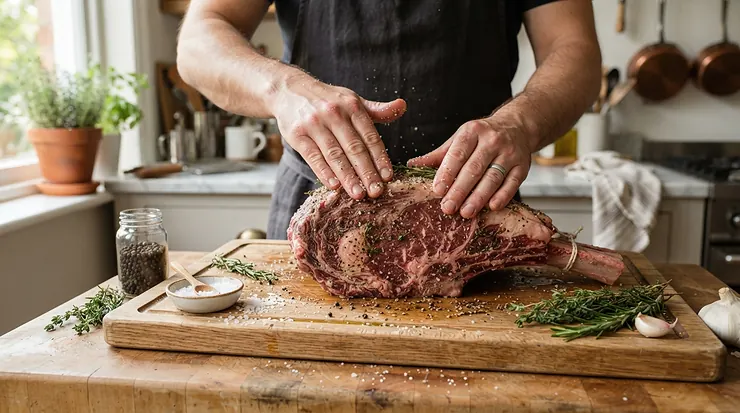
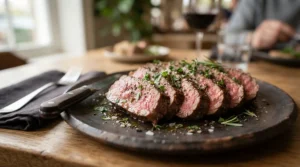
Tenderising tough meat is the pressure cooker’s party trick, and it’s why the best pressure cooker for tough cuts of meat is often one of these budget stovetop or electric models rather than a pricey gadget. Shin, brisket, oxtail, lamb shoulder and pork shoulder are all rich in connective tissue that needs heat, moisture and time to melt into gelatin. Pressure shrinks that time from hours to under an hour.
A handy method for tenderising tough meat:
- Cut into even chunks. Two-to-three-centimetre pieces cook uniformly.
- Brown first. Sear in batches; the browned bits build flavour that a sealed pot won’t develop on its own.
- Deglaze. Scrape up the browned residue with stock or wine, since stuck-on bits can trigger burn warnings on electric models.
- Use enough liquid. Follow your manual’s minimum; stovetop and electric pots differ.
- Allow a natural release. Ten to fifteen minutes of natural pressure release relaxes the meat instead of shocking it dry.
As a rough starting point, diced beef shin often lands around 35-50 minutes at high pressure in many recipes, but check your manual and recipe. One retailer guide notes that beef which normally takes around three hours can be done in about 45 minutes.
For tenderising tough meat, the stovetop models get to pressure fast and hold steady heat. Electric models like the Instant Pot Duo 5.7L make the “Meat/Stew” program a foolproof shortcut. Either way, this is the job pressure cookers under £80 do best.
How to Choose Pressure Cookers Under £80
Use these seven steps to narrow the field. For independent lab data on pressure cookers, Which? has tested 17 models, though the full results sit behind a free account.
- Decide electric or stovetop. Electric gives timers and presets; stovetop gives speed and capacity per pound.
- Match capacity to your household. 3L suits one or two people, 5-6L suits families of four to six.
- Check your hob. If you have induction, confirm the base is compatible. The Tower, Prestige and Tefal picks here are.
- Look at the safety features. Locking lids, pressure indicators and zero-pressure devices matter more than gimmicks.
- Check the warranty. Ten years on the stovetop trio (with registration) is reassuring.
- Check cleaning. Dishwasher-safe pots and lids save real time.
- Confirm the price is genuinely under the line. Retail prices shift, so check current price on the day.
Electric vs Stovetop Pressure Cookers Under £80
The electric versus stovetop debate isn’t about which is “better”, it’s about which fits your habits. Stovetop cookers are usually cheaper, heat quickly and have fewer electronic parts to fail. Electric multi-cookers add convenience, safety interlocks and keep-warm.
| Factor | Stovetop | Electric multi-cooker | Oven or slow cooker |
|---|---|---|---|
| Typical price | Mid-£50s to £70s | Around £60-£90 | Already owned |
| Speed | Fastest to pressure | Slower to pressure | Hours |
| Hands-off? | No, hob supervision | Yes, timers and presets | Yes |
| Extra functions | None | Slow cook, rice, sauté | Limited |
| Best For | Capacity and value | Convenience | Long, gentle cooking |
The table shows that stovetop wins on cost and capacity, while electric wins on ease. If you’re nervous around the hob, an electric cooker with a locking lid is more reassuring. If you love hands-on cooking, a stovetop like the Prestige Smart Plus 6L will feel natural.
Features That Actually Matter (And Those That Don’t)
Matter: a reliable lid lock, a clear pressure indicator, a wide, thick base (for even browning), and a decent warranty. Capacity you’ll genuinely use is another.
Don’t matter: a long list of “in-1” functions. Most people use pressure cook, slow cook and sauté, and ignore yoghurt, sterilise and cake. One Mumsnet contributor said they only ever use the pressure and steam settings, which is a common pattern.
Similarly, app connectivity is nice-to-have at best. A good pot with a clear timer beats a smart one with fiddly menus. And “up to 70% faster” is a manufacturer claim measured against certain baselines, so treat it as marketing until you’ve watched your own dinner cook.
What to Expect: Real-World Performance
A pressure cooker doesn’t work instantly. It takes time to come to pressure (a few minutes to 20-plus depending on volume), cook, then release. Total time is shorter than a stew on the hob, but “ready in 20 minutes” can mean 20 minutes under pressure plus warm-up and release.
You’ll notice quieter cooking with modern valves, no hissing gasps, and cooler kitchens. Flavour is concentrated, so season carefully and add fresh herbs at the end. And there’s a learning curve: expect one or two overcooked vegetables before you find your timings.
Common Mistakes When Buying and Using Pressure Cookers
- Overfilling. Steam needs headspace. Stick to your manual’s fill lines.
- Buying too big. Underfilled pots cook poorly. One retailer guide warns small households against buying a big pot “just in case”.
- Ignoring the seal. A dirty or worn gasket leaks steam. Wash it and check it regularly.
- Skipping the liquid. No liquid, no pressure.
- Rushing the release. Quick-releasing a full pot of stew can spit hot liquid, so use natural release for foamy or starchy dishes.
- Ignoring induction compatibility. Check before you buy.
The most expensive mistake is chasing the longest feature list. A simpler pot you actually use beats a 14-in-1 machine that sits in a cupboard.
✨ Don’t Miss These Exclusive Deals!
🔍 Take your batch cooking to the next level with these carefully selected pressure cookers under £80. Click on any highlighted product to check current pricing and availability. These tools will help you create tender, freezer-ready meals your family will love!
Long-Term Cost: Are Pressure Cookers Under £80 Affordable Kitchen Appliances?
Among affordable kitchen appliances, a pressure cooker is one of the few that can pay for itself. On a typical tariff of around 26-28p per kWh (see Ofgem’s price cap explainer for how it’s set), Mumsnet estimates a 1,000W cooker costs about 13p per 30 minutes, versus an oven that often draws two to three kilowatts and needs preheating.
Maintenance is modest: replace the sealing gasket when it hardens or cracks, keep the valve clear, and wash the lid thoroughly. Stovetop cookers have fewer parts to fail; electric ones add a heating element and control board.
| Cost factor | Stovetop | Electric |
|---|---|---|
| Upfront | Lower (mid-£50s to £70s) | Slightly higher |
| Running cost | Uses hob energy | Roughly pennies per meal |
| Likely replacements | Gasket | Gasket, possibly electronics |
| Longevity | Long with a ten-year guarantee | Depends on brand |
The table suggests stovetop models win on durability, while electric models win on set-and-forget convenience. Either way, if a pressure cooker replaces even a handful of oven roasts a month, the maths works out in your favour.
Safety, Regulations and Compliance Guide
Modern pressure cookers are engineered around safety, with locking lids and multiple release valves. Electric appliances sold in the UK should carry UKCA or CE marking, and you should buy from reputable UK retailers.
Simple habits cover most risks:
- Read the manual before first use.
- Never force a lid open.
- Release steam away from your face and hands.
- Keep valves and gaskets clean.
- Register your guarantee promptly.
If a cooker leaks steam from the handle or won’t build pressure, stop using it and contact the seller. One marketplace reviewer of a Tower model reported exactly that kind of fault, which is a reminder to test any new cooker with plain water first.
Conclusion
For pressure cookers under £80, the winners depend on how you cook. The Instant Pot Duo 5.7L is the best all-rounder for convenience. The Tower T80244 6L is the best value for capacity. The Prestige Smart Plus 6L and Tefal Secure 5 Neo 6L offer safety-first stovetop cooking. The Crock-Pot Express CSC051 eases slow-cooker fans into pressure cooking. The Instant Pot Duo Mini 3L suits couples, and the Tower One Pot Express T16005 is a quirky two-level option worth researching carefully.
Whichever you choose, you’re buying time, tenderness and lower bills. Get the size right, respect the fill line, and start with a simple stew. Once you’ve watched a tough cut go soft in under an hour, you’ll wonder how you managed without one.
Check current prices before buying, since UK retail prices move frequently.
✨ Ready to make weeknights easier?
🍲 Pick the pressure cooker that fits your kitchen, click through to check the latest price, and start cooking smarter tonight!
Frequently Asked Questions
❓ Can I get a decent pressure cooker for under £80 in the UK?
❓ Are stovetop pressure cookers safer than electric ones?
❓ How long does it take to cook a stew in a pressure cooker?
❓ Is a bigger pressure cooker always better?
❓ Do pressure cookers work on induction hobs?
Recommended for You
- Best Pressure Cookers UK: 7 Genuinely Worth Buying (2026)
- Universal Steamer Inserts: 7 Proven Picks For UK Kitchens (2026)
- Universal Steamer Insert: 7 Best Picks For Any UK Pot (2026)
Disclaimer: This article contains affiliate links. As an Amazon Associate, I earn from qualifying purchases. If you purchase products through these links, we may earn a small commission at no additional cost to you.
✨ Found this helpful? Share it with your friends! 💬🤗
