In This Article
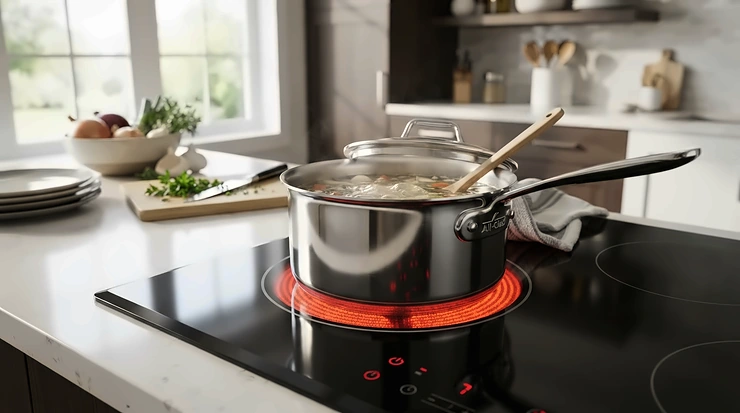
Cast your mind back to the pressure cooker of family folklore. It was a rattling aluminium pot that hissed like an angry kettle and, if the legends are true, once redecorated a kitchen ceiling with stew. Modern stainless steel pressure cookers are a different animal entirely. The lid stays locked until the pressure drops, backup valves wait in reserve in case the main one clogs, and the better bases are layered to work on every hob, induction included.
The idea itself is old. The pressure cooker traces its roots to a 17th-century steam digester. But the stainless version has become the sensible choice for British kitchens in 2026. Energy bills have made “cook it in a third of the time” sound less like marketing and more like arithmetic. Meanwhile, more of us are living with induction hobs that reject half our old pans.
This guide doesn’t pretend to lab testing or hands-on ownership. It pulls together real specifications, Which? testing coverage, retailer spec sheets and the recurring themes in genuine customer reviews. The result is an honest comparison of seven real models. Along the way you’ll find the best stainless steel pressure cooker for induction hobs, the best stainless steel pressure cooker for everyday cooking, and the best stainless steel pressure cooker for large families. There are also practical how-to guides, a value breakdown and straight answers on safety.
Prices below are ranges, and they move constantly, so check the current price before you buy.
Stainless Steel Pressure Cookers at a Glance (2026)
If you only have two minutes, start here. The table sorts all seven stainless steel pressure cookers by size, pressure settings, price bracket and who each one suits.
| Product | Size | Pressure settings | Price range | Best For |
|---|---|---|---|---|
| Kuhn Rikon Duromatic Classic Neo | 2.5L–8L range | 2 (5.8 / 11.6 psi) | £150–£250 (size dependent) | Buy-once everyday cooking |
| Fissler Vitaquick Premium | Several sizes | 2 (slow / fast) | Premium bracket, check listing | Refined, quiet, long-term use |
| Tefal Secure 5 Neo 6L | 6L | 2 (110°C / 117°C) | £60–£90 | Mid-price family workhorse |
| Tower T80244 6 Litre | 6L | 2 (70 / 100 kPa) | £40–£60 | Budget-conscious beginners |
| Prestige 7.5L Stainless Steel | 7.5L | 15lb setting | £70–£90 | Large families, batch cooking |
| Prestige 4 Litre Smart Plus | 4L | 2 | £40–£70 | Couples, small households |
| Amazon Basics 4L Stainless Steel | 4L | Check listing | Under £50 | Testing the waters cheaply |
Looking at the comparison above, the Tefal Secure 5 Neo 6L and Tower T80244 6 Litre share the same 6-litre capacity but sit in different price tiers. That is worth knowing, because the extra money buys longer guarantees and finish rather than a different cooking result. The Kuhn Rikon Duromatic Classic Neo and Fissler Vitaquick Premium cost two to four times as much as the budget picks. Whether that premium pays off depends on how often you cook and how long you’ll keep the pot.
💬 Just one click — help others make better buying decisions too!😊
Top 7 Stainless Steel Pressure Cookers: Expert Analysis
Every model below is real and currently sold in the UK. Specs come from manufacturer and retailer listings, and review comments come from genuine published customer feedback, summarised rather than quoted. Where reliable reviews couldn’t be verified, the entry says so.
1. Kuhn Rikon Duromatic Classic Neo — Swiss-built benchmark for everyday cooking
Few pots have the reputation this one carries. Duromatic cookers have been made at Kuhn Rikon’s Swiss site since 1949.
The two pressure levels do real work. The gentle 5.8 psi setting suits fish, fruit and rice, while 11.6 psi handles meat and root vegetables. In practice, that means delicate food doesn’t turn to mush while a brisket still falls apart. The Superthermic sandwich base spreads heat evenly, so you can brown onions in the pot before sealing it, and it’s induction-compatible. A lid lock and triple overpressure relief stop it opening under pressure. The Neo cap also carries a cooking-time guide, which is handy for beginners.
Based on the specs, this is the cooker for someone who wants one pot for a decade. It comes in sizes from 2.5L to 8L, and the maker lists the body and handles as covered by a 10-year guarantee. Reviewers consistently describe Duromatic cookers as quiet and good at spreading heat. A few owners of other Duromatic variants report stubborn lid release or slow depressurising, so learn the release methods in the manual.
Pros:
- ✅ Two clearly defined pressure levels
- ✅ Even heat from sandwich base
- ✅ Long guarantee on body and handles
Cons:
- ❌ Premium price versus rivals
- ❌ Release technique takes practice
Price & verdict: Expect roughly £150–£250 depending on size. It’s the best stainless steel pressure cooker for everyday cooking if you value longevity over upfront savings.
2. Fissler Vitaquick Premium — satin-finish German engineering with a 10-year steel warranty
Fissler has been making cookware since 1845, and this Premium model is its refined take on the stovetop cooker.
It’s made from 18/10 stainless steel that the maker says is 90% recycled. It suits all hobs, induction included. Its cooking display offers two settings, slow or fast, and a lid-positioning indicator confirms the lid is genuinely locked. That sounds minor until you remember that “have I closed this properly?” is the number-one first-timer worry. Fill-level markings inside stop you overfilling past the two-thirds mark.
The maker claims cooking times up to 70% shorter and energy use roughly halved. Treat those as headline claims, but the direction of travel is believable for stews, pulses and braises. On paper, this suits people who want a quiet, tidy, premium-feeling pot and don’t mind paying for it. The satin exterior and ergonomic handles are cosmetic, but they matter if the cooker lives on your hob rather than in a cupboard.
At the time of research, I couldn’t verify a large enough pool of independent UK customer reviews to summarise fairly, so judge it on the specification and warranty instead.
Pros:
- ✅ Lid-locking indicator removes first-use guesswork
- ✅ 10-year warranty on stainless steel parts
- ✅ Fill-level markings built in
Cons:
- ❌ Highest price bracket in this list
- ❌ Limited verifiable UK review data
Price & verdict: It sits in the premium bracket, so check the current price. It’s worth it only if you’ll use it several times a week for years.
3. Tefal Secure 5 Neo 6L — the mid-price family workhorse
Tefal’s 6-litre cooker is the sensible middle path. It has real capacity and a proper safety system without premium pricing.
The five-point Secure system regulates pressure and keeps the lid shut while the cooker is pressurised. Two programmes work at roughly 110°C for vegetables and 117°C for meat, which translates to gentler steaming for greens and harder work for tougher cuts. The 22cm base fits standard burners and works on induction, gas, ceramic and electric hobs. One retailer lists 18/10 stainless steel, a steam basket is included, and the pot is dishwasher safe. At just under 3kg, it feels stable on the hob.
Which? has tested this model, though the detailed results sit behind free registration. A 6L pot serves four to six people comfortably, so it’s a strong candidate for family-size cooking. Reviewers praise the capacity and say it cooks quickly and reliably for soups, meat and vegetables. The recurring complaint is that the plastic pressure regulator can be fragile, with a few owners reporting it snapping. Order a spare if you can.
Pros:
- ✅ Generous 6L capacity for family meals
- ✅ Separate vegetable and meat pressure programmes
- ✅ Steam basket included, dishwasher safe
Cons:
- ❌ Plastic pressure regulator can be fragile
- ❌ Less long-term cachet than premium rivals
Price & verdict: Expect around £60–£90. It offers the best balance of size and sophistication under £100.
4. Tower T80244 6 Litre — British-brand budget pick with a steamer basket
Tower’s 6L cooker earns its place by being cheap, capable and well equipped.
The two pressure levels (70 and 100 kPa, or roughly 10 and 14.5 psi) cover gentle and hard cooking. An encapsulated aluminium-and-steel base makes it induction-friendly. A stainless steamer basket and stand are included, so you can steam fish or veg above boiling liquid. The phenolic handles stay cooler than metal ones, and the 22cm diameter suits most hob rings. Tower lists a one-year guarantee, extendable to ten years with online registration. Its claim of around 18p per hour to run is a manufacturer figure, so treat it as indicative.
Which? tested a Tower 6L, and a Mumsnet-backed roundup names a Tower stovetop cooker as its budget pick. This one suits beginners who want to test pressure cooking without a big outlay. Reviewer sentiment is mixed but leans positive. Many call it a sturdy entry-level cooker, while a minority report that the dial wouldn’t lock, which is a safety dealbreaker if it happens to you. Some note the steamer plate is missing and that it takes longer to reach and release pressure than a smaller 3L Tower.
Pros:
- ✅ Steamer basket and stand included
- ✅ Induction-compatible encapsulated base
- ✅ Long guarantee with registration
Cons:
- ❌ Some reports of locking dial faults
- ❌ Not listed as dishwasher suitable
Price & verdict: Around £40–£60. It’s strong value, provided you register the guarantee.
5. Prestige 7.5 Litre Stainless Steel Pressure Cooker — biggest capacity for batch cooking
At 7.5 litres, this is the one for feeding a crowd or filling the freezer.
It has a 15lb pressure setting and a visual pressure indicator, which together make a straightforward, high-pressure cooker for tough cuts and big pots of stock. Safety includes a zero-pressure device, a gasket release system and a mechanical lock that prevents opening under pressure. It works on all hobs including induction, the body is dishwasher safe, and Prestige lists a 15-year manufacturer’s guarantee. That’s the longest warranty in this guide.
Here’s what the spec sheet won’t tell you: a bigger pot is heavier when full, and its wider base needs a large enough hob zone. Check your ring diameter before buying. The reviews I found relate to Prestige’s stainless range generally, particularly a 6L model. They praise it as light but solid, easy to use and good value, and one reviewer was moving from an Aga to induction. They aren’t specific to the 7.5L, so treat that as supportive rather than conclusive.
Pros:
- ✅ Large capacity suits batch cooking
- ✅ 15-year manufacturer’s guarantee
- ✅ Multiple built-in safety devices
Cons:
- ❌ Heavy and wide when full
- ❌ Reviews specific to this size are limited
Price & verdict: Around the mid-£70s at the time of research, which is excellent value for the capacity.

6. Prestige 4 Litre Smart Plus — compact pick for couples and small kitchens
Small households often buy too much pot. This 4L model is a sensible antidote.
It’s stainless steel inside and out, with a stainless lid and two pressure settings. A visual indicator rises to show when the pot is at pressure, and it hisses audibly too. It suits electric, gas, ceramic, halogen, induction and solid hotplate hobs. The Argos listing mentions a manufacturer’s lifetime guarantee and says it suits couples or individual servings. In practice, that means two generous portions plus leftovers for a lunch, or a pot of soup for two.
Be realistic about accessories. The listing suggests two standard steam trays are unlikely to fit, so this isn’t a pot for tiered steaming. Reviewers appreciate its efficiency, ease of use and quality, and mention how simple it is to clean. The review pool I found was small, so treat sentiment as encouraging rather than definitive.
Pros:
- ✅ Right-sized for one or two people
- ✅ Works on every hob type including induction
- ✅ Easy to clean, according to reviewers
Cons:
- ❌ Too small for batch cooking
- ❌ Limited steaming accessory space
Price & verdict: Roughly £40–£70. It’s great value for couples, but families should size up.
7. Amazon Basics 4L Stainless Steel Pressure Cooker — cheapest way to try pressure cooking
Sometimes you just want to know whether pressure cooking will suit your life without spending much. This is the entry ticket.
A UK roundup describes it as a budget stainless steel model suitable for all heat sources, induction included, and Which? has included it in its stovetop test group. The exact spec details beyond that are thinner than for the other models here, so read the current listing for pressure settings, valve type and accessories before you buy. One useful reminder from Great British Chefs: you should only fill a pressure cooker about two-thirds full. That means the usable capacity of any 4L pot is closer to 2.7L, which is plenty for two but tight for a family.
At the time of research, I couldn’t verify a reliable pool of customer reviews, so I won’t summarise sentiment I haven’t seen. The sensible reading is that this is a low-risk trial purchase. If you love pressure cooking, you can step up later.
Pros:
- ✅ Lowest price in this guide
- ✅ Stainless steel and induction-compatible, per listings
- ✅ Included in Which? stovetop test group
Cons:
- ❌ Fewer verifiable details and reviews
- ❌ Small usable capacity for families
Price & verdict: Under £50. It’s a fair first purchase, but not a long-term family cooker.
Induction Hob Use: Setup, First Cook and Maintenance Guide
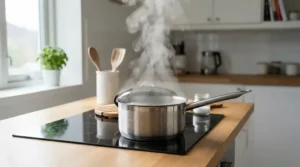
Induction hob use rewards the right cooker and punishes the wrong one. Here is the practical routine that Amazon listings never spell out.
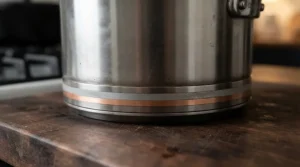
- Test the base. Hold a fridge magnet to the bottom of the pot. If it grips firmly, you’re good. Stainless steel pressure cookers rely on a magnetic layer in the base because 18/10 steel alone isn’t reliably magnetic.
- Match the zone. Place the pot on a ring close to its base diameter. Oversized pots on tiny rings heat unevenly.
- Run a water test first. Add a cupful of water, seal the lid and bring it up to pressure once, so you learn what your indicator and hiss sound like.
- Respect the two-thirds rule. Great British Chefs advises filling a cooker no more than two thirds full. Foamy foods like beans and grains deserve even less.
- Heat high, then drop fast. Induction responds almost instantly, so once pressure is reached, reduce to low straight away. Leaving it on high is the commonest way to scorch food and spit steam.
- Release with care. Use natural release for beans and grains, and quick release for vegetables.
Maintenance is simple. Wash the lid, valve and sealing ring after every use. Check the gasket for cracks and hardening, and replace it according to your manual, since rubber seals age even if the pot looks perfect. In the first 30 days, the commonest mistakes are underfilling with liquid, forgetting to clear the valve, and cooking delicate food on the high setting.
Real-World Scenarios: Which Cooker for Which Household?
Specs mean little until you picture them in a kitchen. These are hypothetical profiles, not testimonials.
Scenario 1: the couple in a flat with an induction hob. Say it’s two people, cooking dinner five nights a week, with limited storage and a modest budget. The Prestige 4 Litre Smart Plus fits the hob and the cupboard. It cooks soup, curry and a casserole for two with portions left over. If money is tight and you’re unsure, the Amazon Basics 4L Stainless Steel Pressure Cooker lets you test the habit first.
Scenario 2: the family of five that batch-cooks on Sundays. Think stocks, chilli, a joint for the week, and big batches for the freezer. Here the Prestige 7.5L Stainless Steel earns its footprint. The Tefal Secure 5 Neo 6L is the lighter alternative if you’d rather lift a smaller pot, and a 6L model comfortably serves four to six.
Scenario 3: the buy-once cook. If you cook from scratch most days and hate replacing kit, the Kuhn Rikon Duromatic Classic Neo or Fissler Vitaquick Premium make the spreadsheet work. A premium cooker used three times a week for ten years is about 1,560 uses, which spreads even a high price thin.
Scenario 4: the first-timer on a budget. The Tower T80244 6 Litre includes the steamer basket most beginners end up wanting. Just register the guarantee and test the locking dial on day one.
Problem and Solution: Fixing Common Pressure Cooker Headaches
Even the best stainless steel pressure cooker has off days. Here are the usual culprits and the fix.
- It won’t come up to pressure. Check the sealing ring is seated, the valve is clear, and there’s enough liquid. Too little water is a frequent cause.
- Steam hisses from the lid edge. The gasket is probably misaligned or worn. Re-seat it, or replace it if it’s cracked. The Tefal Secure 5 Neo 6L and Tower T80244 6 Litre both rely on plastic parts, so keep spares handy.
- Food sticks or catches. Add more liquid, deglaze after browning, and drop the heat promptly once pressure is reached, which matters most on induction.
- The lid won’t open. Never force it. Release the pressure fully using your cooker’s method, then try again. This is the safety mechanism working as designed.
- Smells linger. Wash the gasket separately and let it air-dry. Curry smells in rubber are a common reviewer complaint across brands.
Check for a recognised safety marking such as UKCA or CE on the product listing, and a standards reference such as BS EN 12778 for domestic hob cookers where stated. Retailers should be able to confirm compliance if the listing doesn’t. Finally, never leave a pressure cooker unattended and never ignore a faulty valve.
What Are Stainless Steel Pressure Cookers?
Stainless steel pressure cookers are sealed pots that cook food with high-pressure steam, raising the boiling point of water above 100°C so meals finish much faster. Their stainless steel bodies resist corrosion and staining, and their layered bases spread heat evenly and work on gas, electric and induction hobs.
Why stainless rather than aluminium?
Aluminium is light and conducts heat well, but on its own it doesn’t work on induction hobs. It can also react with acidic foods like tomatoes. Stainless steel is durable and non-reactive, and when it’s paired with an aluminium or copper core in the base, you get the best of both. That’s why most modern models, from the Kuhn Rikon Duromatic Classic Neo to the Tower T80244 6 Litre, use a sandwiched or encapsulated base.
What do they cook best?
Pressure cooking shines for tough cuts, pulses, stocks, curries, braises and rice. It’s less suited to crisp textures and anything that needs tasting and adjusting mid-cook.
How to Choose Stainless Steel Pressure Cookers
Follow these seven steps and you’ll avoid most buying mistakes. For deeper reading, Which? has a useful pressure cooker buying guide.
- Confirm hob compatibility. If you have induction, look for a magnetic base and an explicit induction listing.
- Judge usable capacity. Subtract a third from the nominal litres. A 6L pot gives roughly 4L of usable cooking space.
- Check the pressure settings. Two levels give you the flexibility to cook fish and brisket in the same pot.
- Inspect the safety features. Look for a lid lock, a backup release valve and a clear pressure indicator.
- Read the guarantee. A 10- or 15-year guarantee signals confidence, though registration conditions apply.
- Think about spare parts. Gaskets and valves are the wear items. Choose a brand that sells them.
- Match weight and handles to your strength. A full 7.5L pot is heavy. Make sure you can lift it comfortably.
Best Stainless Steel Pressure Cooker for Induction Hobs: What Actually Matters
Plenty of cookers claim induction compatibility, but the best stainless steel pressure cooker for induction hobs does three things properly. It heats evenly, it holds pressure at low power, and it doesn’t buzz or rattle.
Every product in this guide is listed as suitable for induction. The Kuhn Rikon Duromatic Classic Neo and Fissler Vitaquick Premium are the premium choices, with sandwich-style bases built for even heat. The Tefal Secure 5 Neo 6L lists a strong induction base. The Tower T80244 6 Litre and Prestige 4 Litre Smart Plus are the budget-friendly options.
The key trait for induction hob use is control. Induction can reach pressure faster than other hob types, so you want a cooker with a clear pressure indicator and a quick, predictable response when you drop the heat. Be wary of undersized bases on big rings, which can cause hot spots. If you’re upgrading to induction, the cooker you already own may not work, and a base magnet test costs nothing.
Best Stainless Steel Pressure Cooker for Large Families
Family-size cooking has different rules. Capacity is only half the story, because lifting weight, hob footprint and cooking speed all matter at 6pm on a Tuesday.
The Prestige 7.5L Stainless Steel is the biggest here, ideal for batch cooking and big joints. A family of six or more will appreciate the extra headroom, and its long guarantee adds reassurance. The Tefal Secure 5 Neo 6L and Tower T80244 6 Litre each handle four to six portions, and Tower says this size can take a large meat joint. If you want a premium option, the Kuhn Rikon Duromatic Classic Neo is sold up to 8L, and the maker lists that size as up to eight servings.
Remember the two-thirds rule. A nominal 6L cooker holds about 4L of food and liquid, which is plenty for stew for four but not for a party. For the best stainless steel pressure cooker for large families, I’d favour 6–8L, a steam basket for veg, and a long guarantee. Check your hob zone, too. A wide 7.5L pot needs a big ring.
Best Stainless Steel Pressure Cooker for Everyday Cooking
Everyday cooking is about repeatability. The best stainless steel pressure cooker for everyday cooking is one you’ll reach for on a weeknight without dread.
That means a 5–6L size, easy cleaning, a clear pressure indicator and a lid that’s simple to lock. The Kuhn Rikon Duromatic Classic Neo suits this best, with a cooking-time guide on the cap and a design built for frequent use. The Tefal Secure 5 Neo 6L is a close second, with separate vegetable and meat programmes and dishwasher-safe construction. The Tower T80244 6 Litre is the budget route, with a steamer basket for midweek vegetables.
Try these everyday wins: lentil soup in minutes, tender chicken thighs, risotto without constant stirring, and cheaper cuts of beef. Great British Chefs notes that a pressure cooker can produce braises in roughly a third of the usual time, and that is where the weeknight benefit lies. As an everyday appliance, value comes from frequency. A pot you use four times a week pays itself back far faster than one that lives in the cupboard.
Everyday Appliance Value: Long-Term Cost and Maintenance
Everyday appliance value is a numbers game. Take a £60 cooker used three times a week for five years. That’s about 780 uses, or roughly 8p each. A £200 premium cooker used the same way for ten years works out at about 13p per use, and it should be less likely to need replacing.
| Product | Price range | Guarantee (as listed) | Value verdict | Best For |
|---|---|---|---|---|
| Kuhn Rikon Duromatic Classic Neo | £150–£250 | 10 years, body and handles | Excellent long-term | Heavy daily use |
| Fissler Vitaquick Premium | Premium bracket | 10 years, steel parts | Strong if used often | Quality-first cooks |
| Tefal Secure 5 Neo 6L | £60–£90 | Check seller | Very good | Family weeknights |
| Tower T80244 6 Litre | £40–£60 | 1 year + 9 on registration | Good, register it | Beginners |
| Prestige 7.5L Stainless Steel | £70–£90 | 15 years | Excellent for size | Big households |
| Prestige 4 Litre Smart Plus | £40–£70 | Lifetime, per listing | Good for small homes | Couples |
| Amazon Basics 4L Stainless Steel | Under £50 | Check listing | Fair trial buy | First attempt |
Reading the table, the Prestige 7.5L Stainless Steel offers the strongest guarantee-per-pound, while the Kuhn Rikon Duromatic Classic Neo wins on build quality. The cheapest options are fine if you’ll use them, but a hard-working premium pot can cost less per meal over time. Always check the current price and guarantee terms, since conditions and registration requirements vary.
For the maintenance side, budget for replacement gaskets every few years and a spare valve if your brand sells them. Which? also publishes full pressure cooker test results for members and free account holders if you want independent scoring.
Stainless Steel Pressure Cookers vs Electric Multi Cookers
Electric multi cookers are the obvious rival. They plug in, run programmes and need no hob. So why choose stovetop stainless steel pressure cookers at all?
| Factor | Stainless steel stovetop cooker | Electric multi cooker |
|---|---|---|
| Hob needed | Yes, any type with the right base | No, plugs in |
| Control | Manual, you manage the heat | Automated programmes |
| Pressure | Generally higher working pressure | Generally slightly lower |
| Storage | Compact, stacks with pans | Bulky |
| Lifespan | Decades if maintained | Electronics can fail |
| Best For | Kuhn Rikon Duromatic Classic Neo, Tefal Secure 5 Neo 6L | Set-and-forget convenience |
The table shows a trade-off between convenience and longevity. A stovetop cooker is simpler and often lasts longer, but it demands attention. An electric multi cooker takes over the monitoring, but occupies worktop space and adds electronics that can age. For hob-confident cooks, the Prestige 7.5L Stainless Steel or Tower T80244 6 Litre deliver the speed without the plug.
Your Questions Answered
❓ Are stainless steel pressure cookers worth buying in 2026?
❓ What size do I need for a family of five?
❓ Can stainless steel pressure cookers go in the dishwasher?
❓ How much time does a pressure cooker really save?
❓ Is it safe to use a pressure cooker on an induction hob?
Final Verdict
Seven models, three clear winners by need. For the best all-rounder and a buy-once purchase, the Kuhn Rikon Duromatic Classic Neo is the benchmark, with the Fissler Vitaquick Premium as its refined German rival if you can verify the review picture to your satisfaction. For families who want size without a luxury price, the Tefal Secure 5 Neo 6L and Prestige 7.5L Stainless Steel hit the sweet spot. Budget-conscious beginners should look at the Tower T80244 6 Litre, while couples will be happy with the Prestige 4 Litre Smart Plus. The Amazon Basics 4L Stainless Steel Pressure Cooker remains the lowest-risk way to try the method.
A final word on honesty. Some of these cookers have thinner verified review data than others, and prices and guarantees change, so double-check the current listing before you commit. Choose by hob, household size and how often you’ll cook, and a good pressure cooker will repay you every week.
✨ Ready to Pressure-Cook Your Way to Easier Weeknights?
🍲 Click any highlighted product above to check current pricing and availability, then pick the cooker that fits your hob and your household. Your future self, eating tender stew in half the time, will thank you!
Recommended for You
- Stainless Steel Pressure Cooker: 7 Proven Picks That Last (2026)
- Stovetop Pressure Cookers: 7 Best Reliable Picks For UK Homes (2026)
- Stovetop Pressure Cooker: 7 Best Picks For UK Hobs (2026)
Disclaimer: This article contains affiliate links. As an Amazon Associate, I earn from qualifying purchases. If you purchase products through these links, we may earn a small commission at no additional cost to you.
✨ Found this helpful? Share it with your friends! 💬🤗
