In This Article
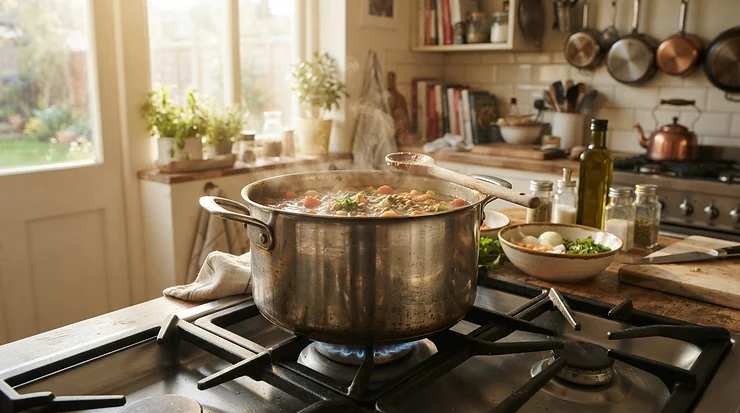
Walk into almost any British kitchen with an ancient pressure cooker and you’ll find a gleaming pot that has outlived two hobs, three house moves and at least one dodgy gasket. That’s the quiet superpower of a stainless steel pressure cooker. It doesn’t dent, it doesn’t pit, and it doesn’t flinch at a tomato-heavy chilli. If you’re hunting for the best stainless steel pressure cooker in 2026, you’re really weighing up a long-term appliance investment, not buying a gadget for the back of the cupboard.

The case for pressure cooking itself is hard to argue with. Which? tested 17 pressure cookers and found stove-top models on an induction hob had its beef stew ready in about 15 minutes, against roughly 25 for electric ones. It also put the running cost of its least efficient pressure cooker at around 14p an hour, versus about 31p for an oven.
This guide compares seven real models across budget, mid-range and premium. Then it tackles the questions that decide whether you’ll still be happy in year ten: stainless steel pressure cooker vs aluminium, material durability comparisons and induction compatibility. Everything here rests on published specifications, manufacturer guarantees and aggregated review sentiment. I haven’t road-tested these pots myself, and I won’t pretend otherwise.
What is a stainless steel pressure cooker?
A stainless steel pressure cooker is a sealed hob-top pot, usually made from 18/10 or 18/8 stainless steel, that traps steam to lift the internal temperature above boiling point. Food cooks in roughly a third of the usual time, and the corrosion-resistant metal won’t absorb flavours or react with acidic ingredients.
Quick Comparison: Best Stainless Steel Pressure Cooker Models at a Glance
Short on time? Here’s the lay of the land. Prices are indicative ranges from the time of research and will vary by retailer, so check current prices before you buy.
| Model | Steel / build | Capacity | Induction | Guarantee | Price range | Best For |
|---|---|---|---|---|---|---|
| Kuhn Rikon Duromatic Inox 5L | 18/10, encapsulated base | 5L | Yes | 10 years (base and lid) | £150–£200 | Buy-it-once cooks |
| Fissler Vitaquick Premium 6L | 18/10, Superthermic base | 6L | Yes | 10 years (stainless parts) | £150–£230 | Nervous first-timers |
| Tefal Secure 5 Neo 6L | 18/10 | 6L | Yes | 10 years (check UK terms) | £70–£90 | Safety-first families |
| Prestige Smart Plus 6L | Stainless steel | 6L | Yes | Lifetime | £70–£90 | Everyday value |
| Judge JA75 5L | Stainless steel | 5L | Yes | 25 years | £90–£110 | Guarantee hunters |
| Tower One-Touch Ultima 6L | Stainless, bonded base | 6L | Yes | 10 years (after registration) | £50–£80 | Tight budgets |
| IKEA 365+ 6L | Stainless steel | 6L | Yes | 15 years | Around £60 | Budget with long cover |
Looking at the table, the Kuhn Rikon Duromatic Inox 5L and Fissler Vitaquick Premium 6L are priced as heirlooms, while the Tower One-Touch Ultima 6L and IKEA 365+ 6L undercut them by a wide margin. The surprise is how long the guarantees run at the cheaper end. The IKEA 365+ 6L promises 15 years and the Judge JA75 5L promises 25, so price alone won’t tell you how long a pot will last.
💬 Just one click — help others make better buying decisions too!😊
Best Stainless Steel Pressure Cooker Review: The Top 7 Picks Analysed
1. Kuhn Rikon Duromatic Inox 5L — the buy-it-once benchmark
The Duromatic earns its reputation through build quality rather than gimmicks, and the spec sheet shows why.
The Swiss-made body is 18/10 stainless steel wrapped around a fully encapsulated aluminium Superthermic base. That spreads heat evenly, so stews are less likely to catch, and it works on every hob, induction included. There are two pressure settings and three ways to release pressure: slow natural release, a quick release via the indicator, or tepid water over the rim. The valve is also notably quiet, with none of the kettle-on-the-boil hiss.
Based on the specs, this suits cooks who’d rather pay once and forget about it. The 10-year guarantee covers the base and lid, while wear parts such as gaskets carry two years, so budget for the odd spare. Expert roundups consistently praise its durability and ease of use. I couldn’t verify a large pool of recent UK owner reviews, though, so treat that as expert consensus rather than crowd data.
Pros:
- ✅ Encapsulated base for even, induction-ready heating
- ✅ Three pressure-release options, quiet operation
- ✅ Swiss-made 18/10 build with 10-year cover
Cons:
- ❌ Highest upfront outlay in this round-up
- ❌ Wear parts carry only two years’ cover
Expect to spend around £150–£200. That’s steep on day one, but it works out among the lowest costs per year of ownership here.
2. Fissler Vitaquick Premium 6L — idiot-proof pressure indicator
Fissler’s trick is making pressure cooking feel as intuitive as pressing a button on an electric model.
The 18/10 stainless body (made with up to 90% recycled steel) sits on a Superthermic encapsulated base. Two cooking levels are shown by one or two rings on the valve, which tells you at a glance whether you’re on gentle or fast. A locking indicator flips from red to green with an audible click, so you know the lid has sealed before pressure builds. At around 3.1kg and 22cm across, it’s a solid, stable pot, and the stainless parts are dishwasher-safe, though the seal ring and attachments need washing by hand. Which? tested the smaller 4.5L Vitaquick Premium in September 2025, which is the strongest independent signal available.
What the spec sheet won’t say is how much the click matters to nervous beginners. It’s a small reassurance that removes the guesswork. I couldn’t find enough verifiable UK customer reviews to summarise honestly, so rely on the Which? inclusion and the 10-year guarantee on stainless parts.
Pros:
- ✅ Two-ring valve makes pressure level obvious
- ✅ Red-to-green locking click confirms a secure seal
- ✅ Made in Germany with a 10-year guarantee
Cons:
- ❌ Premium pricing for a stove-top pot
- ❌ Seal ring and attachments need hand washing
Prices run around £150–£230 depending on size and seller. It’s good value for anyone who values simplicity over saving money.
3. Tefal Secure 5 Neo 6L — five-point safety on a family-sized pot
This is the cooker for households where someone is quietly terrified of pressure cooking.
The 18/10 stainless body holds six litres and weighs about 2.9kg. Two presets cover vegetables (around 110°C) and meat (around 117°C), so you’re matching heat to ingredient rather than guessing. A five-point safety system regulates pressure and keeps the lid locked while the pot is pressurised, and the base suits all hobs including induction. Which? tested it and recorded about 4 litres of usable capacity, so plan meals around that rather than the label.
Honestly, it’s the sensible mid-range choice for families who want safety features and a dishwasher-friendly pot. One caveat comes from European retail reviews. A buyer reported the plastic pressure regulator snapping off, while another said an earlier Tefal had lasted 20 years. The pattern suggests the plastic parts, not the steel, are the weak link.
Pros:
- ✅ Five-point safety system with two presets
- ✅ Induction-ready 18/10 stainless body
- ✅ Dishwasher-safe pot and lid
Cons:
- ❌ Reviewers report a fragile plastic regulator
- ❌ Heavy at nearly 3kg when full
You’ll typically pay around £70–£90, which is strong value for the safety features.
4. Prestige Smart Plus 6L — lifetime guarantee, no gimmicks
Prestige gets the fundamentals right without fuss, which is exactly what most kitchens need.
The stainless pot carries a mechanical locking cam, a visual pressure indicator and a directional regulator that vents steam away from your hands. Two settings, 8lb and 12lb, map neatly onto delicate vegetables versus tough braising cuts. It works on every hob including induction, the pot is dishwasher-safe, and a steamer with a food separator is included. Which? tested the 4L Smart Plus and noted the lifetime warranty and a pressure valve cleaning brush.
Aggregated owner reviews on a retailer listing, originally posted on Prestige’s own site, lean positive. One owner said their previous Prestige Smart Plus lasted 11 years before the pressure housing snapped, and they happily bought another. Others describe it as light but solid, and one switched from an Aga to induction without issue. Note that these reviews come via the brand’s own site, so they may skew favourable.
Pros:
- ✅ Lifetime guarantee on a stainless pot
- ✅ Two pressure settings for versatile cooking
- ✅ Dishwasher-safe pot and included steamer
Cons:
- ❌ One long-term owner saw the pressure housing fail
- ❌ Lifetime terms need careful reading
At around £70–£90, it’s an easy value verdict: the best all-rounder for ordinary weeknights.
5. Judge JA75 5L — a 25-year guarantee on paper
The headline here is the longest guarantee in this round-up, backed by a thoughtful handle layout.
The 5L pot has two safety valves and a gasket-release system, plus a cool-touch main handle and a helper handle for lifting it with both hands. It weighs around 3.1kg and suits all hob types including induction. A UK listing breaks the materials down as roughly 85% stainless steel, 12% Bakelite and 3% silicone. That’s useful honesty, because the handles and seal are the parts that wear out first, not the steel.
On paper, this is for people who want maximum guarantee length and a stable, two-handed carry. I couldn’t find enough verifiable independent reviews or Which? test data to comment on real-world performance, so the guarantee is the main evidence here. As always with long guarantees, read what’s actually covered.
Pros:
- ✅ Longest guarantee in the round-up (25 years)
- ✅ Helper handle makes two-handed lifting safer
- ✅ Two safety valves plus gasket release
Cons:
- ❌ Limited independent test data available
- ❌ Weighty at roughly 3.1kg
Expect around £90–£110. It’s decent value if you trust the guarantee, and worth checking the terms first.

6. Tower One-Touch Ultima 6L — twist-and-lock lid with a built-in timer
Tower’s pitch is simplicity: one pressure setting, one hand on the lid, and a timer you can take with you.
The stainless body sits on a bonded stainless base for all hobs, and the twist-and-turn lid is designed for one-handed opening. It runs at a single 80kPa (11.6lb) setting, with stay-cool phenolic handles, a steamer basket and stand, and a detachable 60-minute timer. Single pressure keeps things foolproof, though it’s less gentle for fish or delicate greens than a two-setting design.
Based on the spec comparison, this is the budget pick for confident beginners who want fewer decisions. A Tower-linked review page showed a 4.5 average across 20 reviews at the time of research, and one buyer was replacing an older model that had lasted 15 years. That’s a small sample, so treat it as a hint rather than proof. The 10-year guarantee is one year as standard, plus nine more once you register online.
Pros:
- ✅ One-handed twist-and-lock lid
- ✅ Detachable 60-minute timer included
- ✅ Steamer basket and stand supplied
Cons:
- ❌ Single pressure setting limits delicate cooking
- ❌ Ten-year cover needs online registration
Prices sit around £50–£80, which makes it the cheapest route into a stainless steel pressure cooker here.
7. IKEA 365+ 6L — 15-year guarantee at a modest price
The surprise bargain of the group, with the kind of long guarantee you don’t usually see at this price.
The stainless pot has a pressure regulator that holds the preset pressure and warns you if it climbs too high. It also has a safety opening and a safety valve, with three steam-release routes if pressure gets out of hand. Two cooking settings let you pick between hearty meat dishes and gentler vegetables. It suits induction, and Which? lists about 4 litres of usable capacity from the 6L body. The listing quotes up to 50% shorter cooking times, which is more modest than some rivals’ 70% claims.
Honestly, it’s a sensible choice for anyone who wants stainless build and a 15-year guarantee without premium spending. I couldn’t verify enough customer review sentiment to summarise, and Which?’s scores sit behind a login.
Pros:
- ✅ 15-year guarantee at budget pricing
- ✅ Two cooking settings plus three steam-release routes
- ✅ Induction-ready stainless build
Cons:
- ❌ About 4L usable capacity, per Which?
- ❌ Quoted time saving trails rivals’ claims
At around £60, the value verdict is positive: strong guarantee, honest pricing.
Practical Usage Guide: Your First 30 Days With a Stainless Steel Pressure Cooker
Most disappointments with a new pot come from habits, not hardware. Here’s how to start well.
Week one: wash and test. Wash the pot, lid and sealing ring by hand before first use to remove polishing dust, as Fissler’s UK stockists advise. Then try a simple batch of potatoes. Which? says large potatoes can be done in about eight minutes, so you’ll learn how your pot behaves without risking an expensive roast.
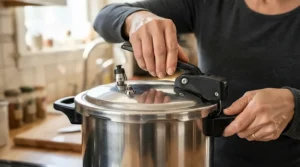
Learn the fill rules. Always meet the minimum liquid line and stay below the maximum fill line, as Which? points out. A sound rule of thumb is two-thirds full at most, and half for foaming foods like beans or porridge oats.
Master the heat. Brown ingredients first, lock the lid, then run on high until the indicator rises. After that, drop the heat to hold pressure steadily. Kuhn Rikon’s own instructions describe adjusting the hob to control pressure.
Choose your release. Natural release for meat joints and pulses; quick release for vegetables and fish.
Common mistakes in the first month:
- Overfilling the pot.
- Forgetting the minimum liquid.
- Cranking the heat once pressure is reached.
- Letting residue dry on the steel, which Fissler warns can cause staining.
After each cook, wipe the gasket and rinse the valve. Replace the seal if it looks cracked, hardened or leaks steam. The Prestige Smart Plus 6L helpfully includes a valve-cleaning brush, a small touch that earns its place.
Real-World Scenarios: Matching a Stainless Steel Pressure Cooker to Your Kitchen
Specs are tidy; kitchens are not. Here are three realistic buyer profiles.
The family of four on induction. Sunday batch cooking, weeknight curries, a budget around £70–£90. The Tefal Secure 5 Neo 6L or Prestige Smart Plus 6L fit well. Both are induction-ready with two pressure settings. Remember that 6L nominal means about 4L usable, so a family of four will fill it most nights.
The couple in a small flat. Limited storage, cooking two or three times a week, a budget near £60. A 6L pot might feel like a stockpot in a tiny cupboard. The Prestige Smart Plus 4L (which Which? tested at about 2.7L usable and 2.15kg) is lighter, easier to store and big enough for two. Its pot is dishwasher-safe, which helps when the sink is tiny.
The keen cook who wants to buy once. Daily use, a budget of £150–£200, and no interest in replacing it. The Kuhn Rikon Duromatic Inox 5L or Fissler Vitaquick Premium 6L are the sensible shortlist. Choose the Kuhn Rikon for its quiet valve and release options, or the Fissler for its pressure-ring display and locking click.
In each case, the pattern is the same: match capacity to household size first, hob type second, and only then think about brand.
Stainless Steel Pressure Cooker vs Aluminium: The Honest Verdict
The great stainless steel pressure cooker vs aluminium debate is less dramatic than the internet suggests, but the differences are real.
| Factor | Stainless steel | Aluminium (polished) | Hard-anodised aluminium |
|---|---|---|---|
| Reaction with acidic food | Non-reactive | Can leach with acids and salt | Treated to reduce leaching |
| Weight | Heavier | Lightest | Light to medium |
| Induction | Yes, with magnetic or encapsulated base | Typically no | Typically needs a steel base |
| Cleaning | Often dishwasher-safe | Often hand wash | Varies by model |
| Best For | Tomato-heavy, spicy, daily cooking | Budget cooks on gas or electric | Cooks wanting light weight and lower reactivity |
Real examples help. The Prestige 6L High Dome is polished aluminium, hand-wash only, with a 10-year guarantee. The Hawkins Classic 5L, which Which? tested, works on electric and gas hobs only and carries a five-year warranty. Neither is a bad pot, but both limit your choices.
The health angle is often overblown. Homes & Gardens’ expert round-up notes that cooking acidic ingredients in bare aluminium can speed up leaching, though minimal amounts are usually considered safe. It also notes that organisations like Alzheimer’s Research say there’s a lack of convincing evidence linking normal aluminium exposure to the disease.
Looking at the comparison above, aluminium wins on weight and price. Stainless wins on versatility, induction support and peace of mind with acidic dishes. If you cook curries, chillis or tomato-based stews regularly, stainless steel is the safer long-term bet.
Material Durability Comparisons: What 18/10, 18/8 and Aluminium Really Mean
Material durability comparisons start with the numbers. In 18/10 stainless steel, the figures refer to roughly 18% chromium and 10% nickel. In 18/8, it’s 18% chromium and 8% nickel. Both are food-grade, and the extra nickel in 18/10 generally adds a touch more corrosion resistance and a smoother finish. The Kuhn Rikon Duromatic Inox 5L, Fissler Vitaquick Premium 6L and Tefal Secure 5 Neo 6L all use 18/10, while the Instant Pot Duo 5.7L electric inner pot is 304-grade (18/8).
The more telling comparison is what surrounds the steel. The Judge JA75 5L listing shows that roughly 15% of the pot’s weight is Bakelite and silicone, which are the parts most likely to wear out. Base construction matters too. An encapsulated aluminium core, as in the Kuhn Rikon and Fissler, keeps the aluminium sealed inside the steel.
Which? also uses a lab-calibrated scratch pen to see how each pot’s surface stands up to repeated use, which is a fair proxy for long-term cosmetic wear. Aluminium, by contrast, tends to dent and mark more easily than steel. In short, the stainless body rarely fails; seals, handles and valves are what you’ll replace.
Best Stainless Steel Pressure Cooker for Durability: Reading Between the Guarantee Lines
If you’re hunting for the best stainless steel pressure cooker for durability, start by decoding the guarantees:
- Judge JA75 5L: 25 years
- Prestige Smart Plus 6L: lifetime
- IKEA 365+ 6L: 15 years
- Kuhn Rikon Duromatic Inox 5L, Fissler Vitaquick Premium 6L, Tower One-Touch Ultima 6L: 10 years (the Tower needs online registration)
- Tefal Secure 5 Neo 6L: 10 years in some markets, so check UK terms
Longer isn’t automatically better. Guarantees typically cover the body and lid, not consumables. Kuhn Rikon, for example, covers wear parts for only two years. A 25-year guarantee on a pot whose gasket you’ll replace every few years tells you about the manufacturer’s confidence in the steel, not the whole assembly.
Owner anecdotes add colour without proving much. One buyer’s Prestige Smart Plus lasted 11 years, another buyer’s previous model lasted 15 years, and another reported 20 years from an older model. They’re encouraging, though not statistically meaningful.
My honest read: the Kuhn Rikon Duromatic Inox 5L and Fissler Vitaquick Premium 6L lead on materials and build. The Judge JA75 5L and Prestige Smart Plus 6L lead on guarantee length. The best stainless steel pressure cooker for durability depends on whether you value build or paperwork more.

How to Choose a Stainless Steel Pressure Cooker (6 Steps)
To choose a stainless steel pressure cooker, match the size to your household, confirm your hob type, check the base and steel grade, look for safety features, and read the guarantee terms. Here are the steps in more detail:
- Pick the right size. Which? found 6L models give around 4L usable capacity. Four people usually need 5–6L; one or two need 3–4L.
- Check the steel and base. Look for 18/10 or 18/8 stainless with an encapsulated or bonded base for even heating.
- Confirm induction compatibility. Don’t assume. Check the product page and test with a magnet (more on that below).
- Consider pressure settings. Higher pressure raises the temperature and cuts cooking time, as Wikipedia’s overview of pressure cooking explains. Two settings give flexibility; a single setting keeps things simple.
- Check the safety features. Look for a locking lid, a safety valve and a visible pressure indicator.
- Read the guarantee. Check what’s covered, whether registration is required, and whether spares are available.
Induction Compatibility: What the Label Really Means
Induction compatibility is the feature most likely to catch buyers out. Induction cooking works by heating ferromagnetic cookware directly, so the pot’s base must be magnetic. Standard 18/10 stainless steel isn’t strongly magnetic, so makers add a magnetic outer layer or an encapsulated base to make it work.
The simplest check is a fridge magnet: if it grips firmly to the base, you’re in business. Also check the pot’s base diameter against your ring. The Kuhn Rikon Duromatic Inox 5L is 22cm, the Fissler Vitaquick Premium 6L is 22cm and the Tefal Secure 5 Neo 6L has a 220mm base.
All seven models here are listed as induction-ready. Many aluminium designs aren’t. The Hawkins Classic 5L, for instance, is listed as electric-and-gas only. Remember that the Instant Pot Duo 5.7L has a stainless inner pot, but it’s designed for its electric base, not for stovetop use.
If you’re moving from gas to induction, this one detail can make or break the whole purchase.
Long-Term Appliance Investment: What a Stainless Steel Pressure Cooker Really Costs Over a Decade
Thinking of a stainless steel pressure cooker as a long-term appliance investment changes the maths. Here’s an illustrative cost-per-year comparison, spread over ten years using the price ranges above:
| Model | Price range | Guarantee | Approx. cost per year (10 years) | Best For |
|---|---|---|---|---|
| Kuhn Rikon Duromatic Inox 5L | £150–£200 | 10 years | £15–£20 | Daily cooks |
| Fissler Vitaquick Premium 6L | £150–£230 | 10 years | £15–£23 | Beginners wanting guidance |
| Judge JA75 5L | £90–£110 | 25 years | £9–£11 | Long-guarantee seekers |
| Tefal Secure 5 Neo 6L | £70–£90 | 10 years (check) | £7–£9 | Safety-first families |
| Prestige Smart Plus 6L | £70–£90 | Lifetime | £7–£9 | Everyday value |
| Tower One-Touch Ultima 6L | £50–£80 | 10 years | £5–£8 | Tight budgets |
| IKEA 365+ 6L | Around £60 | 15 years | Around £6 | Budget with long cover |
Looking at those figures, even the premium pots cost less per year than a takeaway coffee habit, and the cheapest options are almost negligible. The real running costs are small. Which? found the yearly cost difference between its cheapest and most expensive-to-run pressure cookers was only about £20, even with daily use.
Compare that with electric models. Which? lists one to two years of warranty on the electric cookers it tested, including the Instant Pot Classic 5.7L. A stainless stove-top pot has no circuit board or heating element to fail. Over a decade, the stove-top route looks like the safer long-term appliance investment, with gaskets and valves as the only ongoing expense.
Frequently Asked Questions
❓ How much should you spend on a stainless steel pressure cooker?
❓ Is a stainless steel pressure cooker dishwasher safe?
❓ What size stainless steel pressure cooker suits a family of four?
❓ Is a stainless steel pressure cooker faster than an electric one?
❓ Can you use a stainless steel pressure cooker without the lid?
Conclusion
Choosing a stainless steel pressure cooker really comes down to three questions: how many people are you feeding, what hob do you own, and how long do you want the pot to last? For most households, a 5–6L model in the £70–£90 range, such as the Tefal Secure 5 Neo 6L or Prestige Smart Plus 6L, hits the sweet spot of safety, induction compatibility and value.
If budget is tight, the Tower One-Touch Ultima 6L and IKEA 365+ 6L deliver stainless build and long guarantees for far less. If you want something to last for decades with proper spares and a quiet, refined feel, the Kuhn Rikon Duromatic Inox 5L and Fissler Vitaquick Premium 6L justify their premium. The Judge JA75 5L is the one for people who want the longest guarantee on the table.
Whichever you pick, remember the fundamentals: stainless steel pressure cooker vs aluminium usually favours stainless for acidic food and induction hobs. The seals, not the steel, are what you’ll replace. And a long-term appliance investment pays off most when you actually use the thing, so start with a simple potato test and work up to Sunday stew.
✨ Ready to Cook Smarter?
🔍 Click any highlighted product above to check current pricing and availability on Amazon UK, and pick the stainless steel pressure cooker that fits your kitchen. Your future self, enjoying a tender stew in 15 minutes, will thank you! 🍲
Recommended for You
- Stovetop Pressure Cookers: 7 Best Reliable Picks For UK Homes (2026)
- Stovetop Pressure Cooker: 7 Best Picks For UK Hobs (2026)
- Pressure Cookers Under £80: 7 Best Buys For UK Kitchens (2026)
Disclaimer: This article contains affiliate links. As an Amazon Associate, I earn from qualifying purchases. If you purchase products through these links, we may earn a small commission at no additional cost to you.
✨ Found this helpful? Share it with your friends! 💬🤗
