
In This Article
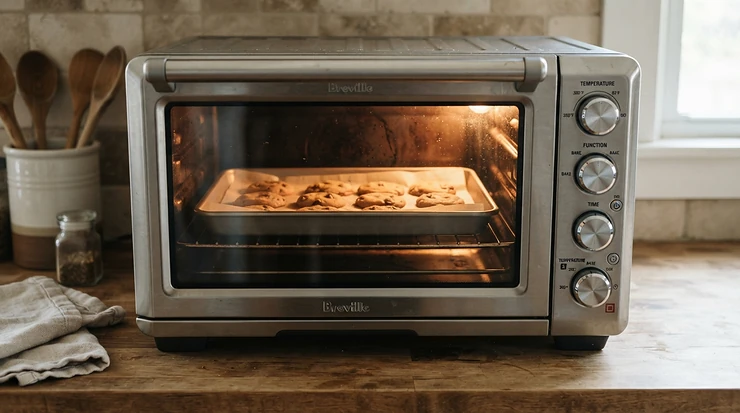
Small ovens are unforgiving. The shelf sits two fingers from the element, the door fogs up the moment you open it, and the roasting tin you need for a water bath looks suspiciously too big. Add a baked cheesecake, the diva of the dessert world, which cracks if you so much as glare at it. Choosing the right springform tin for baking cheesecake in a small oven matters far more than most recipes admit.
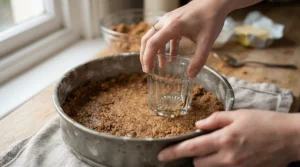
A compact tin changes the maths in your favour. A 7 inch (18cm) tin makes a cheesecake for six to eight people, fits a countertop or compact fan oven with room left for a water bath, and wastes far less cream cheese if things go sideways. The catch is that small tins punish leaks. A few tablespoons of water sneaking under the base ruins a 7 inch crust faster than a 9 inch one.
This guide compares seven real tins, from pocket-money budget to premium import. Each one is judged on what matters in a cramped oven: footprint, wall height, closure, seal and heat tolerance. The analysis rests on published specs and real reviewer themes, and I’ve said plainly where review data is thin. Which?’s independent cake tin tests show how much release performance varies between tins, so never assume every clip-sided tin behaves the same.
Quick Comparison Table: Springform Tins at a Glance
| Product | Size & Depth | Seal / Closure | Best For |
|---|---|---|---|
| MasterClass Non-Stick 18cm Springform | 18cm × 7cm | Clip springform, no dedicated seal | First-time bakers wanting a safe all-rounder |
| ProCook Non-Stick Springform 18cm | 18cm (7in) | Clip springform | Tight budgets with a long guarantee |
| Tower Precision Plus 18cm Springform | 18cm | Clip springform | Light, easy everyday bakes |
| Tala Performance Springform 18cm | 18cm (7in) | Clip springform | Hotter ovens and crust pre-baking |
| Lakeland PushPan 18cm | 18cm × 8cm | Silicone-sealed loose base, no clip | Water bath baking without foil |
| Nordic Ware 7 Inch Leakproof Springform | About 19cm outer × 8cm | Leakproof-design clip | Tall bakes and water bath fans |
| Lakeland 15cm Springform | 15cm (6in) | Clip springform | Very small ovens and solo bakes |
Read the table by priority. If water bath baking is your main worry, the Lakeland PushPan 18cm and Nordic Ware 7 Inch Leakproof Springform are the only two engineered to keep water out. If budget rules, the ProCook Non-Stick Springform 18cm and Tower Precision Plus 18cm Springform cost the least. If your oven is genuinely tiny, the Lakeland 15cm Springform is the one to consider.
💬 Just one click — help others make better buying decisions too!😊
Top 7 Picks: Springform Tin for Baking Cheesecake in a Small Oven
Seven tins follow, roughly ordered from the most everyday choice to the most specialist. Prices are ranges only, so check the current listing before buying.
1. MasterClass Non-Stick 18cm Springform — dependable all-rounder with 7cm sides
Seven centimetres of wall height is the quiet hero here. It’s enough for a properly tall 7 inch cheesecake without overfilling. The MasterClass Non-Stick 18cm Springform is roughly 1mm carbon steel with a silicone-based Quantum II coating that the maker says is free of PTFE, PFOA and BPA. It weighs around 400g, so it resists flexing under a heavy filling. That helps when you’re lifting a water-bath tin out of a cramped oven with a tea towel and a prayer.
Based on the spec comparison, this suits beginners and anyone wanting a no-drama tin. The range is sold with a 20-year guarantee and a five-year non-stick guarantee. What it lacks is any engineered seal, so water bath baking still needs foil.
Review data for this exact size is thin at the retailers checked, so there’s no star average to quote. Which?’s published testing judged the brand’s springform decent but said slightly cheaper rivals did better, which is a fair “good, not magical” summary.
Pros:
- ✅ Deep 7cm walls suit tall baked cheesecakes
- ✅ Long guarantee backing the range
- ✅ Sturdy steel that resists flexing
Cons:
- ❌ No dedicated seal, so foil is essential
- ❌ Little review data at this size
Expect to pay around £12-£15. That’s fair value, mainly for the guarantee.
2. ProCook Non-Stick Springform 18cm — best budget pick with a decade of cover
Spending under a tenner and still getting a 10-year guarantee is a rare combination. That’s the whole pitch of the ProCook Non-Stick Springform 18cm, which ProCook sells in 18cm (7 inch), 20cm and 23cm sizes. The brand backs its bakeware with that 10-year guarantee and a 30-day money-back policy.
Which?’s published testing of ProCook’s springform found a smooth, easy-to-use clip mechanism, and it noted the tin needs greasing and lining. The write-up wasn’t specific to the 18cm size, so treat it as a brand-level signal. A smooth latch matters because you’ll be opening it with warm hands and a delicate cheesecake. Lining the base is standard cheesecake practice anyway, so the “needs greasing” caveat costs you nothing here.
ProCook’s own page shows 78 customer ratings for the 18cm size. I couldn’t verify a star average, so read that as steady sales rather than proof of quality.
Pros:
- ✅ Very low entry price for a branded tin
- ✅ Smooth clip action noted in independent testing
- ✅ 10-year guarantee on the range
Cons:
- ❌ Needs greasing and lining for clean release
- ❌ No built-in water bath protection
At under £10 this is one of the cheapest sensible ways in. It’s excellent value if you accept the foil routine.
3. Tower Precision Plus 18cm Springform — light aluminised steel for everyday bakes
Weight is an underrated virtue in a small oven, where you’re sliding a tin in and out at awkward angles. The Tower Precision Plus 18cm Springform is built from aluminised carbon steel with a non-stick coating, and the black finish gives it a smart, modern look. A retailer listing says it can go in the fridge and freezer, which suits the bake-then-chill cheesecake workflow. The same listing recommends hand washing to protect the finish, which is sensible for any clip tin.
Dark finishes absorb heat faster than pale ones. In a compact oven with the element close to the top shelf, that can brown the edges of a cheesecake before the centre sets. The simple fix is to drop the temperature by around 10°C or tent the top loosely with foil.
I couldn’t find a verifiable pool of customer reviews for this specific tin, so there’s no sentiment summary to offer. Reading several current listing reviews before buying is wise.
Pros:
- ✅ Lightweight aluminised steel eases handling
- ✅ Fridge and freezer compatible
- ✅ Cleanly finished, modern appearance
Cons:
- ❌ Dark finish may brown edges quickly
- ❌ Little verified review data available
Pricing sits around the £8-£12 range. It’s good value for light, occasional use.
4. Tala Performance Springform 18cm — heat-tolerant tin from a British baking name
Heat tolerance is where this tin separates itself. The Tala Performance springform range is listed as heat safe to 240°C, fridge and freezer safe, dishwasher safe and safe with metal utensils (per a retailer listing for the 23cm size, so confirm the 18cm listing). That 240°C ceiling lets you pre-bake a biscuit base at a higher temperature if your recipe wants it. It also means a freezer-to-oven slip-up won’t wreck the tin.
The Tala Performance Springform 18cm also carries its size embossed into the base, a small detail that helps when you own several tins. Tala itself uses an 18cm Performance springform in its published crème brûlée cheesecake recipe, which serves ten. That tells you the 18cm tin is a genuine “feed a crowd” size, not a novelty.
Verified customer reviews for this size weren’t available, so I can’t summarise sentiment honestly. Check the current listing’s feedback, particularly on how firmly the latch closes.
Pros:
- ✅ Rated to 240°C for pre-baking crusts
- ✅ Size embossed for easy identification
- ✅ Dishwasher, fridge and freezer compatible
Cons:
- ❌ No dedicated seal for water baths
- ❌ Review evidence for 18cm is limited
Across all its sizes the range spans roughly £10-£18, with the 18cm toward the lower-middle. It’s a solid mid-range choice.
5. Lakeland PushPan 18cm — the seal does the work foil usually does
Anyone who has fished a soggy crust out of a water bath will appreciate this idea. The Lakeland PushPan 18cm drops the clip entirely. It’s a loose-based tin with a snug silicone seal around the base, designed to keep batter in and water out. Lakeland’s claim is that you can bake in a water bath without wrapping the tin in foil, and that it needs no lining.
The specs back up the small-oven case. It’s heavy-gauge silver anodised aluminium, oven safe to 230°C, freezer safe and 18cm across by 8cm tall, with fill lines inside. To release, you stand the tin on a tall jar or tin and press the collar down. That’s easy at the worktop, though it asks for a bit of headroom.
Lakeland’s page showed around 20 reviews with a roughly mid-to-good average, plus a tiny set of five-star ratings on a non-stick variant. The pools are small. Some listings show as discontinued, so check availability before getting attached.
Pros:
- ✅ Silicone seal keeps water out
- ✅ No seams marking the cheesecake sides
- ✅ No foil or lining needed
Cons:
- ❌ Not a true clip springform, so release needs a tall tin
- ❌ Availability varies between variants
Around £12-£15 puts it in mid-range territory. It’s strong value if water bath baking is your priority.
6. Nordic Ware 7 Inch Leakproof Springform — tall walls and a leakproof-focused design
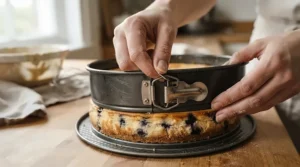
Height sells this one. Retail write-ups describe the Nordic Ware 7 Inch Leakproof Springform as taller than most 7 inch alternatives. Its listed outer dimensions of about 7.4 × 7.4 × 3.1 inches (around 19 × 19 × 8cm) include the latch. Allow for that extra width when you measure a tight water-bath dish. It’s carbon steel with a PFOA-free non-stick surface, hand wash only, oven safe to about 425°F (roughly 218°C), with a stated five-year warranty.
Treat the “leakproof” label with caution. America’s Test Kitchen named the 9 inch Nordic Ware leakproof pan its Best Buy, but that’s a different size. A summarised set of Amazon reviews for the 7 inch lands in mixed territory. Reviewers praise the build quality and report no leaks, while one reported leakage when baking a quiche. Another mentioned water collecting around the base during cooking.
It’s also an import, and at least one UK retailer lists it as unavailable, so confirm stock and delivery costs.
Pros:
- ✅ Tall walls suit deep cheesecakes
- ✅ Solid build quality noted by reviewers
- ✅ Designed with leak resistance in mind
Cons:
- ❌ Occasional leak reports in reviews
- ❌ UK availability and pricing can be patchy
Expect it to sit above the British-brand tins; check the current price. It’s worthwhile if you want tall sides and extra reassurance.
7. Lakeland 15cm Springform — smallest footprint for tiny ovens
When the oven is genuinely tiny, size beats everything. The Lakeland 15cm Springform has roughly 70% of the base area of an 18cm tin (about 177cm² against 254cm²). A cheesecake from it serves four to six, and the tin leaves plenty of room for a water-bath dish even in a mini oven.
It’s also the cheapest tin here, which makes it a low-risk way to try baking a cheesecake at all. Recipes written for 18cm tins will need cutting to about 70%, and that’s easy to do. Lakeland’s page showed only two reviews, both five-star. That’s far too small a sample to prove anything, so treat the praise as a pleasant footnote, not evidence.
It lacks any seal, so foil, or an oven bag or slow-cooker liner, is mandatory for water bath baking. Beyond that, I couldn’t verify the material or coating details, so read the current listing before buying.
Pros:
- ✅ Smallest footprint of all seven
- ✅ Cheapest way to start
- ✅ Great for solo or two-person bakes
Cons:
- ❌ Recipes need scaling down to roughly 70%
- ❌ Specification details and reviews are sparse
At roughly £4-£5, it’s superb value for a tiny oven. Just treat it as a small-batch tin.
Water Bath Baking in a Small Oven: A Step-by-Step Guide
Water bath baking sounds fussy, but it simply puts your cheesecake in a gentle, steamy environment. As the bain-marie entry on Wikipedia explains, water in a bath never exceeds 100°C, so the filling heats slowly instead of scorching at the edges.
- Measure first. Place your roasting dish in the oven and confirm the springform tin sits inside with a couple of centimetres to spare and the door still shuts.
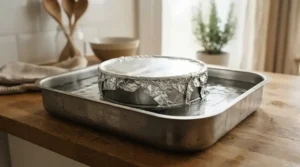
- Wrap properly. Use a single large sheet of heavy foil, doubled, with no seams on the underside. Skip this only if you’re using a Lakeland PushPan 18cm or an oven bag or slow-cooker liner.
- Set the stage. Put the wrapped tin in the roasting dish on the shelf, then pour boiling kettle water in until it reaches about halfway up the tin. Filling after placement avoids slopping.
- Bake gently. Many UK recipes use around 150-160°C fan, but follow your recipe and expect to drop the temperature if your oven runs hot.
- Cool slowly. Switch off, leave the door ajar and let it cool in the oven for about an hour, then chill overnight.
In a small oven, keep the shelf low so the cheesecake sits away from the element. If the top browns early, tent it loosely with foil.
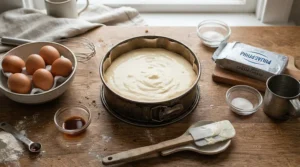
Problem → Solution Guide: Cracks, Leaks and Soggy Crusts
Most cheesecake disasters come down to five culprits. Each has a fix.
Soggy crust. Water has entered through the base join. Double-wrap the tin in foil, use a liner, or choose a sealed design such as the Lakeland PushPan 18cm.
Cracked top. Usually overbaking or cooling too quickly. King Arthur’s guide to preventing cheesecake cracks recommends a water bath and says a properly baked cheesecake reaches no more than about 80°C an inch from the edge and at least around 65°C in the centre. Take it out while the middle still wobbles like set jelly.
Browned edges. Small ovens run hot near the element. Lower the shelf, drop the temperature slightly or tent with foil, particularly with a dark tin like the Tower Precision Plus 18cm Springform.
Torn sides on release. Chill fully, then run a thin warm knife around the edge before opening the MasterClass Non-Stick 18cm Springform or any clip tin.
Batter seeping from the base. Seat the base firmly, trap parchment under the ring, and stand the tin on a baking tray to catch drips.
Real-World Scenarios: Which Tin Fits Which Baker?
Three typical buyers show how the choice plays out. These are illustrative profiles, not personal testimonials.
The student with a mini oven. Budget is tight, baking happens once a month, and the oven is barely bigger than a microwave. The ProCook Non-Stick Springform 18cm or the Lakeland 15cm Springform makes sense, with foil for water bath baking. The 15cm tin is the safer fit if the oven is truly small.
The dinner-party couple. They bake a few times a year, want a showpiece and hate soggy crusts. The Lakeland PushPan 18cm removes the foil faff, while the Nordic Ware 7 Inch Leakproof Springform gives taller sides for a dramatic slice.
The compact-kitchen regular. Baking is weekly, the oven is a built-in compact unit and heat control matters. The Tala Performance Springform 18cm handles pre-baked crusts at higher temperatures, and the MasterClass Non-Stick 18cm Springform offers dependable depth and a long guarantee.
✨ Don’t Miss These Exclusive Deals!
🔍 Take your cheesecake baking to the next level with these carefully selected tins. Click on any highlighted item to check current pricing and availability. These tools will help you create smooth, crack-free cheesecakes your family will love!
What Is a Springform Tin for Baking Cheesecake in a Small Oven?
A springform tin for baking cheesecake in a small oven is a compact, two-piece round tin, usually 15-18cm (6-7 inch) across. Its side wall opens with a clip release latch and lifts away from a separate base. That frees a delicate baked cheesecake without turning it out, while still fitting a mini or compact oven.
The removable ring is the key. A cheesecake has no structure until it’s fully chilled, so tipping it out of a fixed tin would wreck it. The compact size matters because small ovens limit shelf height, door clearance and the dish you need for a water bath. A standard 9 or 10 inch tin often leaves no space for any of that, which is why the 7 inch (18cm) tin has become the sweet spot.
How to Choose a Springform Tin for Baking Cheesecake in a Small Oven
- Measure your oven. Check internal width and shelf height, then add room for a water-bath dish, because the dish, not the tin, is usually the limiting factor.
- Pick 7 inch or smaller. An 18cm tin balances serving size and fit, while 15cm suits tiny ovens and solo bakes.
- Check wall height. Aim for at least 7cm so a baked cheesecake doesn’t crowd the rim.
- Inspect the closure. A firm clip release latch that snaps shut without wobble prevents the ring slipping under filling weight.
- Decide on your seal strategy. A watertight seal, as on the Lakeland PushPan 18cm, saves foil. A standard clip tin needs wrapping.
- Consider the finish. Dark coatings brown faster in a small oven, so lighter or lower-temperature baking helps.
- Check heat limits and care. Look for oven ratings of at least 220°C and hand wash to protect the latch.
7 Inch Springform Tin for Small Cheesecake: Why the Size Works
A 7 inch springform tin for small cheesecake baking hits a neat geometric sweet spot. An 18cm tin has an area of roughly 254cm², against about 415cm² for a 9 inch (23cm) tin. That’s around 61%, so scaling a 9 inch recipe to about 60% of the ingredients gives you a similar depth of cheesecake.
In practice, round eggs to the nearest sensible number, and don’t be tempted to overfill. Leave at least a centimetre below the rim. A 7 inch bake usually finishes slightly sooner than a 9 inch one, so start checking early and trust the wobble over the clock. Many UK recipes call for 18cm tins, so buying this size also keeps you in the recipe mainstream. It’s also a friendlier size for gifting, because an 18cm cheesecake fits neatly in most fridges and cake boxes.
Leakproof Springform Tin for Cheesecake: What the Claim Really Means
Marketing loves the phrase leakproof springform tin for cheesecake, but independent sources are sceptical. Bustle’s guide notes no springform pan is completely leakproof, and Business Insider’s roundup observed that few live up to the label. The reason is mechanical: a base that drops into a ring leaves a hairline gap, however tight.
There are three honest responses. First, accept the gap and double-wrap in foil. Second, add a barrier such as a slow-cooker liner or oven bag. Third, choose a design that actively seals, such as the silicone gasket on the Lakeland PushPan 18cm, or a leakproof-design clip tin like the Nordic Ware 7 Inch Leakproof Springform. Even then, some reviewers report occasional leaks, so check the seating before baking. If you want to skip the water bath entirely, some bakers set a tray of hot water on a lower shelf to add steam, though it controls cracking less reliably.
Clip Release Latch and Watertight Seal: Features That Actually Matter
Clip release latch
A good clip release latch closes with a firm click, holds the ring round, and opens without a fight. Silicone-covered clips, as on Lakeland’s springforms, stay cooler to handle. Always release the latch before running a knife around the edge, and wash gently by hand, because dishwashers can wear the mechanism over time. Forcing a stiff latch is a sign the ring is slightly misaligned, so reseat it rather than pulling.
Watertight seal
A watertight seal matters most for water baths and runny batters. The Lakeland PushPan 18cm relies on a silicone gasket around the base, while clip tins rely on tight tolerances. Before relying on any tin, do a quick water test over the sink. Assemble it, add a little water, set it on a dry paper towel and watch for damp patches. Passing doesn’t guarantee a leak-free bake, because metal expands in the oven, but a failing tin is one to return.
Springform vs Loose-Base and Sealed Tins: Which Style Suits Small Ovens?
| Tin Style | Release | Water Bath Friendly | Best For |
|---|---|---|---|
| Clip springform | Open latch, lift ring | Only with foil or liner | MasterClass Non-Stick 18cm Springform, ProCook Non-Stick Springform 18cm |
| Silicone-sealed loose base | Push base up on a tall tin | Yes, built in | Lakeland PushPan 18cm |
| Leakproof-design springform | Open latch, lift ring | Better than standard, still check | Nordic Ware 7 Inch Leakproof Springform |
| Standard loose-base tin | Push up base | Poor | Sponge cakes, not baked cheesecake |
The clip springform stays the best all-rounder because release is gentle and universal. The sealed loose-base tin wins when water bath baking is non-negotiable, trading a clip for a pushing technique. A standard loose-base tin tends to leak and drag delicate sides, so it suits sponges better than cheesecakes.
Long-Term Cost, Care and Storage
| Tier | Tins | Typical Range | Value Verdict |
|---|---|---|---|
| Budget | Lakeland 15cm Springform, ProCook Non-Stick Springform 18cm, Tower Precision Plus 18cm Springform | Under about £12 | Best for occasional bakers |
| Mid-range | MasterClass Non-Stick 18cm Springform, Tala Performance Springform 18cm, Lakeland PushPan 18cm | About £10-£18 | Best all-round value |
| Premium import | Nordic Ware 7 Inch Leakproof Springform | Above British-brand tins | Worth it for tall, sealed bakes |
A roughly £10 tin used 30 times costs about a third of a pound per bake, so durability beats the initial price. Hand wash, avoid metal scouring pads on the non-stick, and retire any tin whose coating is flaking.
Storage matters too. The Food Standards Agency’s chilling guidance says fridges should sit between 0 and 5°C, and leftovers are best eaten within two days. Cover the cheesecake and chill it promptly after cooling.
FAQ
❓ Can I use a 6 inch tin for a 7 inch cheesecake recipe?
❓ Does a springform tin need foil in a water bath?
❓ How long does a 7 inch cheesecake take to bake?
❓ Should I grease a non-stick springform tin for cheesecake?
❓ Is a 7 inch tin worth buying for two people?
Conclusion
The right springform tin for baking cheesecake in a small oven comes down to three questions. Will it fit with a water bath? Will it stay sealed? Will it release cleanly? For most people, the MasterClass Non-Stick 18cm Springform or Tala Performance Springform 18cm answers all three with a bit of foil. Budget bakers will find the ProCook Non-Stick Springform 18cm and Tower Precision Plus 18cm Springform hard to beat on cost. If water baths make you nervous, the Lakeland PushPan 18cm and Nordic Ware 7 Inch Leakproof Springform do the most to keep water out. And if your oven is truly tiny, the Lakeland 15cm Springform is a cheap, charming starting point.
Whichever you pick, do the water test, wrap carefully, bake gently and chill patiently. A small oven only demands a bit of planning, and your cheesecake will thank you for it.
Recommended for You
- Deep Square Tin For Brownies And Traybakes: 7 Best Picks (2026)
- Tall Round Tin For Tiered Wedding Cake: 7 Best Picks (2026)
- Silicone Cake Mould For Easy Release: 7 Best Picks (2026)
Disclaimer: This article contains affiliate links. As an Amazon Associate, I earn from qualifying purchases. If you purchase products through these links, we may earn a small commission at no additional cost to you.
✨ Found this helpful? Share it with your friends! 💬🤗
