In This Article
A loose bottom tin for carrot cake layers is a round, straight-sided baking tin with a removable base. You push the base upwards to release a baked sponge without tipping it out. For carrot cake the best versions are about 20cm wide, either deep enough to slice into tiers or shallow enough to stack as ready-made layers.

Carrot cake is a heavy, damp, spice-laden sponge that clings to metal like a toddler at the school gate. Turn one out of a fixed tin and you risk a cracked top, a torn base, or a lost corner. A loose bottom tin sidesteps the drama. The cake rises on a flat disc, cools in its walls, then lifts out cleanly, ready for frosting.
The cake itself has a long and slightly murky pedigree. Wikipedia’s carrot cake entry says its origins are disputed. It also notes that modern versions use neutral oil rather than butter to stay moist, and that rationing revived its popularity in Britain during the Second World War. That oil-rich, moisture-packed batter is why tin choice matters so much.
A quick note on how this guide was built. It draws on manufacturer specifications, UK retailer listings, Which? tin testing and aggregated buyer feedback. It does not rely on hands-on testing, and where review evidence is thin, we say so. Prices are ranges, so check current prices before you buy.
Quick Comparison: 7 Tins at a Glance
Here is the shortlist before we go deep. Depths are approximate and drawn from retailer listings.
| Tin | Build | Depth | Price range | Best For |
|---|---|---|---|---|
| MasterClass Deep 20cm | Non-stick carbon steel | ~8cm | £14-£18 | Tall all-rounder carrot cakes |
| Tala Deep 20cm | Non-stick carbon steel | ~8cm | £10-£16 | Heavy-gauge value |
| Silverwood 8x3in | Anodised aluminium (no coating) | 7.5cm | £15-£25 | A buy-it-once tin |
| ProCook Deep Duo | Non-stick carbon steel, 2-piece set | Check listing | Around £20 per pair | Baking two layers at once |
| MasterClass Sandwich 20cm | Non-stick carbon steel | Shallow | £12-£15 | Thin, stackable layers |
| Tala Sandwich 21.6cm | Non-stick carbon steel | 5cm | £10-£15 | Wide, slim layers |
| PME Deep Loose Base | Anodised aluminium | 7.5cm (3in) | £12-£20 | Anodised feel on a smaller budget |
Looking at the table, MasterClass Deep 20cm and Tala Deep 20cm are the safest bets if you want one tin to do most jobs. Silverwood 8x3in and PME Deep Loose Base suit bakers who dislike non-stick coatings. ProCook Deep Duo and the two sandwich tins suit anyone who wants separate layers straight from the oven without any slicing.
💬 Just one click — help others make better buying decisions too!😊
Top 7 Loose Bottom Tin for Carrot Cake Layers: Expert Analysis
Each pick below is judged on what its specs mean for a dense, damp, spiced sponge, not on marketing copy. We also summarise real aggregated review themes where we could verify them.
1. MasterClass Non-Stick Deep Round Loose Base Cake Tin 20cm — the dependable tall-cake all-rounder
Sensible, slightly dull-sounding and quietly brilliant, this is the tin you reach for without thinking. The 1mm carbon steel body resists the warping that turns cheap tins into wobbly ovals. At roughly 8cm deep, it holds a tall carrot cake that you can level and slice into three tiers.
The double-layer Quantum II non-stick coating is rated to 220°C, well above the 180°C (160°C fan) most carrot cake recipes call for. The maker backs it with a 20-year guarantee and a five-year non-stick guarantee. That makes it a sound long-term choice for anyone baking more than once a year.
Based on the spec comparison, this suits bakers who want one tin for carrot cake, birthday sponges and the odd Christmas bake. Buyers on retailer listings describe a base that releases well, a solid no-warp build and easy cleaning. One pointed out that the listing wording about PFOA is muddled, since the maker labels it PFOA-free. A retailer mirror of the listing showed around 4.5 stars from roughly 2,400 ratings at the time of research.
Which? tested a different MasterClass springform tin and found the cake fell apart without greasing and lining. Line this one properly too.
Pros:
- ✅ Sturdy 1mm steel resists warping
- ✅ Deep sides for tall, sliceable cakes
- ✅ Long guarantee on tin and coating
Cons:
- ❌ Coating still needs gentle hand-washing
- ❌ Fixed depth is less flexible for thin layers
Price: around £14-£18. A strong-value benchmark; check current price.
2. Tala Performance Deep Cake Tin 20cm — heavy-gauge muscle at a friendly price
Tala’s Performance range has a loyal following among UK home bakers. This 20x8cm tin is built from 1mm carbon steel with a double-layer Eclipse non-stick finish and a loose base. Retailer listings put its heat tolerance at 240°C, giving plenty of headroom for a long carrot cake bake.
That weight matters in practice. Thicker steel conducts heat more evenly, which helps a wet batter set at the edges without scorching before the centre catches up. The reinforced rolled edges also help it keep its shape through years of use.
Reviewers on a major UK grocery listing call it solid, heavy and well made, with one baker praising the glide of a Christmas cake out of the base. The recurring complaint is a base that feels a touch loose, with batter dripping beneath it in the oven. That is a real consideration for a runny carrot cake batter. Sit the tin on a baking tray and line the base and sides snugly, and the risk largely disappears.
On paper, Tala Deep 20cm is the choice for bakers who prize heft over frills. It also pairs naturally with Tala Sandwich 21.6cm if you later want to add shallow layers.
Pros:
- ✅ Heavy-gauge steel for even browning
- ✅ Generous 240°C heat tolerance
- ✅ Reinforced rolled edges resist denting
Cons:
- ❌ Some reviewers find the base too loose
- ❌ Needs a tray underneath for wet batters
Price: around £10-£16. Excellent value if you line it carefully.
3. Silverwood Silver Anodised Cake Tin with Loose Base, 8x3in — the heirloom option
Handmade in Birmingham since 1960, Silverwood tins have a cult status among keen UK bakers. This 20×7.5cm tin is silver anodised aluminium with no non-stick coating. Instead, the surface develops a natural patina and becomes more easily releasing with use.
That changes how you bake. Aluminium heats quickly and spreads heat evenly, so carrot cake layers brown gently and consistently. The straight sides give neat edges, which helps when you stack tiers and coat them in cream cheese frosting. There is no coating to scratch or flake, so there is nothing to wear out except your own patience.
The trade-offs are simple. It is not dishwasher safe, and you must grease and line it properly, especially early on. I could not verify a robust sample of Amazon UK reviews for this exact tin. Treat reputation as a guide, not proof, and check the listing’s ratings yourself.
For a bake that is as heavy and sticky as carrot cake, this is a buy-it-once tin for bakers who like their kit to age gracefully.
Pros:
- ✅ Anodised aluminium heats evenly and quickly
- ✅ No coating to peel or scratch
- ✅ British-made, straight sides for neat layers
Cons:
- ❌ Needs careful greasing and lining
- ❌ Hand-wash only, not dishwasher safe
Price: roughly £15-£25 (verify). A premium pick worth it for frequent bakers.
4. ProCook Non-Stick Loose Bottom Deep Cake Tin 2 Piece Set 20cm — two layers, one bake
Two tins in a box changes the maths of layer cakes. Instead of baking one tall sponge and slicing it, you bake two layers side by side and skip the knife work entirely. For a carrot cake, that is a genuine saving in time and nerves.
Each tin is made from heavy gauge carbon steel with two layers of ProCook’s Ultra BK non-stick coating and a loose bottom you press out with a gentle push. The rolled top and bottom edges add rigidity, and the brand offers a 10-year guarantee. Depth is not stated in the listing I found, so check it before committing.
ProCook’s wider loose-bottom range has earned friendly mentions in UK roundups. Mumsnet’s guide, for example, praised the brand’s square loose bottom tin for easy release and its guarantee. That is a different product, though. I could not verify enough review text for this exact set, so the sentiment here rests on the brand rather than the tin itself.
As a practical matter, two identical tins mean two identical layers, which makes levelling and stacking considerably easier.
Pros:
- ✅ Two matched tins for even layers
- ✅ Double-layer non-stick coating
- ✅ 10-year guarantee for peace of mind
Cons:
- ❌ Depth is unclear from the listing
- ❌ Takes more oven space than one tin
Price: around £20 for the pair at time of research. Good value for layer-cake fans.
5. MasterClass Non-Stick Loose Base Sandwich Pan 20cm — slim layers, no slicing needed
Not every layer cake needs height. Bake your carrot cake in two shallow tins and each layer sets quickly, cools fast and needs no levelling knife. That keeps the crumb moist because the cake spends less time exposed to heat.
This is a classic sandwich tin with a loose base and the same Quantum II non-stick family as its deeper sibling. It comes from the same maker’s range, which carries a 20-year guarantee and a five-year non-stick guarantee, though check the exact listing. You will want two, so factor that into the cost.
Shallow tins suit lighter batter volumes, so scale a carrot cake recipe accordingly rather than overfilling. Fill each tin only about two-thirds full to leave room to rise.
I could not find a verifiable sample of reviews for this exact pan. The family it belongs to, though, draws steady praise for easy release across the listings above. It is best treated as a practical, no-frills layer tin, not a showpiece.
Pros:
- ✅ Thin layers bake fast and evenly
- ✅ Little or no levelling needed
- ✅ Same trusted coating as the deep tin
Cons:
- ❌ You need two, so costs double
- ❌ Less suited to tall, single-tin cakes
Price: around £12-£15 each. Practical and sensible.
6. Tala Performance Loose Base Round Sandwich Cake Tin 21.6cm — wide and slim for generous slices
At 21.6cm across and 5cm deep, this is a wider, shallower tin than the standard 20cm. Wider layers are thinner, which means more surface area for cream cheese frosting and more frosted mouthfuls per slice. It is a good choice for a showpiece cake with lots of icing.
The professional-gauge carbon steel and Eclipse non-stick coating mirror the deep Tala tin above. The 5cm depth gives a carrot cake room to rise without overflowing, yet it stays shallow enough for fast, even baking. Prices comparison sites show this tin on Amazon with free shipping at the lowest price, though prices vary, so check.
One practical note: most recipes assume a 20cm tin. In a wider tin, the batter spreads thinner and bakes faster, so start checking a few minutes early.
I found no robust review sample for this exact tin, so the case here rests on the specs and the brand’s general reputation rather than verified feedback. Think of it as a solid supporting player for bigger, hungrier gatherings.
Pros:
- ✅ Wider layers for more frosting per slice
- ✅ 5cm depth leaves rise room
- ✅ Same sturdy Tala build quality
Cons:
- ❌ Wider than most recipes assume
- ❌ Bakes faster, so needs watching
Price: around £10-£15. A budget-friendly layer option.
7. PME Anodised Aluminium 3 Inch Deep Round Cake Tin With Loose Base — anodised feel without the premium price
PME is a well-known name in cake decorating circles, and this tin brings the anodised-aluminium approach to a lower price point. The 3-inch (7.5cm) depth suits tall carrot cakes. The listing I found showed the 5-inch size, so choose the 8-inch (20cm) option when you buy.
Anodised aluminium conducts heat quickly and evenly, and there is no non-stick coating to flake off. Like Silverwood 8x3in, it needs proper greasing and lining, but it should reward you with neat edges and even colour.
One reviewer on a retailer listing described it as comparable to Silverwood for a fraction of the cost. That is one opinion, not a verdict, but it matches the logic of the spec. I could not verify a large review sample, so read the current ratings before you commit.
If you like the anodised idea but balk at premium pricing, this is the sensible middle path.
Pros:
- ✅ Anodised aluminium for even baking
- ✅ 7.5cm depth suits tall tiers
- ✅ No coating to scratch or peel
Cons:
- ❌ Must pick the right size on the listing
- ❌ Needs careful greasing and lining
Price: roughly £12-£20 depending on size. Good value for anodised fans.
✨ Don’t Miss These Carrot Cake Essentials!
🔍 Take your carrot cake layers to the next level with these carefully selected tins. Click on any highlighted product name to check current pricing and availability. The right tin will help you create bakery-style tiers your family will love!
How to Choose a Loose Bottom Tin for Carrot Cake Layers
The short answer is to match the tin’s depth, material and base to how you plan to build your cake. Here are the steps, in order of importance.
- Decide deep or shallow first. A deep tin gives one tall cake to slice; two shallow tins give ready-made layers. Pick the workflow you can actually be bothered with.
- Stick to 20cm unless a recipe says otherwise. Most UK carrot cake recipes assume it, and Which? tested 20cm tins for exactly that reason.
- Choose coated steel or anodised aluminium. Coated steel is forgiving and dishwasher-friendlier on paper; anodised aluminium lasts longer but demands better prep.
- Check the base fit. A base that wobbles can leak batter, so read reviews for any mention of looseness.
- Look at the guarantee. A long guarantee signals that the maker expects the tin to last.
- Buy two if you bake layers regularly. Matching tins make matching layers.
- Check the oven rating. It should comfortably exceed 180°C.
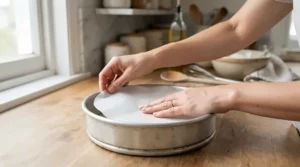
Loose Base Cake Tin for Moist Carrot Cake: Keeping the Crumb Wet
Carrot cake has a reputation for moisture, and a good loose base cake tin for moist carrot cake protects it. The key is even, moderate heat. Dark non-stick coatings brown the outside faster, which can leave edges crisper than the middle. Which?’s tests found several coated tins produced slightly crispy edges, including a deep budget tin from Asda George Home Extra Deep Cake Tin that otherwise baked beautifully.
Thicker steel or anodised aluminium helps the cake set more evenly. If your edges are drying out, lower the oven slightly or wrap the outside of the tin in a damp cloth strip, a trick bakers use to slow edge browning.
Oil-based batters do the heavy lifting here. As Wikipedia notes, using oil instead of butter keeps carrot cake moist even when it cools. Your tin’s job is not to add moisture but to avoid wasting it, so avoid over-baking. Start testing a few minutes before the recipe’s lower time, especially in shallow tins.
Once baked, cool the layers in the tin for about ten minutes, then release them and wrap the layers loosely while they finish cooling. That traps steam and keeps the crumb soft for frosting.
Deep Loose Bottom Cake Tin for Layer Cakes: Deep, Sandwich or Both?
A deep loose bottom cake tin for layer cakes gives you one tall bake and the flexibility to cut it into two or three tiers. It also makes an impressive single-tin cake if you simply want height without slicing. The downside is bake time: deeper batter takes longer to set in the middle, and the edges can dry out while you wait.
Sandwich tins flip those trade-offs. Layers bake faster, cool quicker and need little levelling, but you must buy two and manage more oven space. The decision is really about temperament. If you enjoy knife work and want a tall showpiece, choose MasterClass Deep 20cm or Silverwood 8x3in. If you prefer to bake, stack and go, choose MasterClass Sandwich 20cm or ProCook Deep Duo.
Many keen bakers eventually own both. A deep tin for tall cakes, a pair of sandwich tins for lighter bakes, and an hour saved on every layer cake.
Push Up Base vs Springform vs Fixed Tin: Which Wins for Carrot Cake?
A push up base is simply the removable disc in a loose bottom tin. You stand the tin on a sturdy mug or can and let the sides drop, as Lakeland describes in its own guidance. The cake stays on the base, and you slide it onto a board.
A springform uses a clasp to open the sides instead. Which? named the Prestige Inspire Carbon Steel Non-Stick Round Springform Cake Tin its Editor’s Choice in testing (tests took place in 2021, so check current availability). It also found a Lakeland PushPan Loose Based Cake Tin had a rubber ring that kept the base secure, though the cake needed greasing and lining. Its tests of a Argos Home Pack of 2 Round Sandwich Cake Tins revealed a very loose base on one sample.
Which?’s cake tin testing is worth reading for the full picture.
| Feature | Push up base (loose bottom) | Springform | Fixed tin |
|---|---|---|---|
| Release method | Push base upwards | Open the clasp | Turn out, often with force |
| Sponge damage risk | Low | Low | Higher |
| Leak risk | Moderate if base is loose | Low to moderate | Very low |
| Cleaning | Easy | Clasp needs care | Easiest |
| Best For | MasterClass Deep 20cm, Silverwood 8x3in | Prestige Inspire Carbon Steel Non-Stick Round Springform Cake Tin | AnyDay John Lewis & Partners Non-Stick Sandwich Cake Tin |
Reading the table, the push up base wins on simplicity for a dense, tall cake like carrot cake. Springform suits cheesecakes better, thanks to its tighter seal. A fixed tin is fine only if you will grease, line and cool patiently, as Which? found it needed lining to avoid losing part of the cake.
Features That Actually Matter (And Those That Don’t)
Marketing copy loves a long feature list. Most of it is noise for a carrot cake baker.
What matters:
- Steel gauge or aluminium quality. Thicker metal resists warping and bakes more evenly.
- Depth. It decides whether you get tall tiers or thin layers.
- Base fit. A snug push up base prevents leaks and mess.
- Oven rating above 180°C. Anything lower is a red flag.
- Straight sides. They give neat edges that are easier to stack and frost.
What matters less:
- Dishwasher-safe claims. Mumsnet’s guide advises avoiding the dishwasher for bakeware regardless of labels, as it can shorten a tin’s life.
- Colour. Dark tins brown faster, but otherwise it is mostly cosmetic.
- Handles. Nice on a big tin, irrelevant on a 20cm round.
The rule is simple: judge the tin by its metal, depth and base, and ignore the rest.
Practical Guide: Prepping, Baking and Releasing Your Carrot Cake
A good tin still needs good habits. Follow these steps for a clean release.
Prep. Grease the sides lightly, then line the base with a snug disc of baking parchment. Even non-stick tins benefit, as Which? found several needed lining to release cleanly.
Protect against leaks. Stand the tin on a baking tray. A loose base can let a thin carrot cake batter ooze, and the tray catches it.
Bake. Heat the oven to around 180°C (160°C fan, gas 4), the usual setting for UK carrot cake recipes. Check shallow layers early and deep tins closer to the recipe’s longer end.
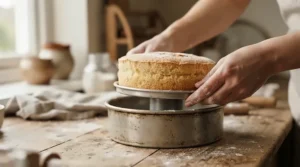
Cool. Leave the cake in the tin for about ten minutes. Run a palette knife around the edge, then stand the tin on a mug or can and press the sides down.
Release. Slide the cake, base and all, onto a wire rack. Remove the base once the cake is cool, using a thin knife or spatula to free it.
Common first-30-day mistakes: over-filling, skipping the lining and washing coated tins with abrasive scourers. Avoid all three and the tin repays you for years.
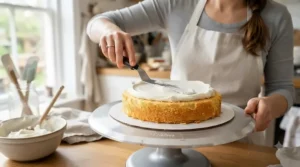
Cake Layer Levelling: How to Get Flat, Even Layers
Cake layer levelling is the unglamorous step that separates a wonky stack from a showpiece. Carrot cake often domes slightly, and a domed layer makes the cake above it slide.
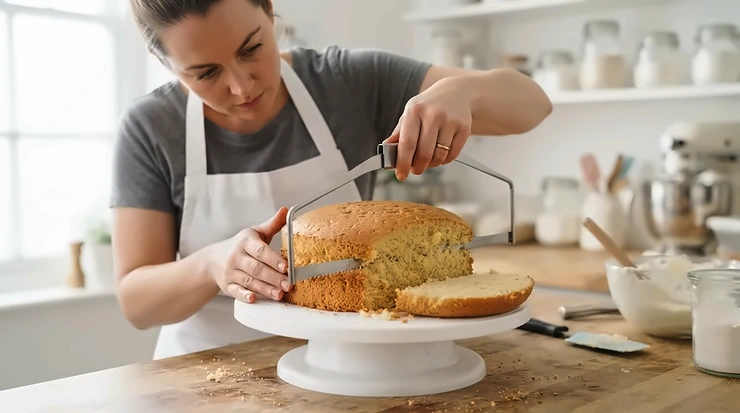
For a deep tin: let the cake cool completely, then wrap and chill it for 30 minutes. A cold cake cuts cleanly. Use a long serrated knife and saw gently, rotating the cake on a turntable. Trim the dome first, then slice the cake into two or three equal layers, measuring against a ruler or a pair of guide sticks.
For sandwich tins: you may need only a light trim. Flip the layers upside down so the flat base becomes the top, which gives a naturally level surface.
Tips that save time:
- Chill or even freeze layers briefly before cutting.
- Keep your knife level, and cut slowly.
- Save trimmings for a baker’s snack or a trifle.
- Mark the sides with a toothpick before you cut, so slices stay even.
With a loose base tin, the cake comes out intact and flat on the bottom, so you spend less time repairing damage and more time making precise cuts.
Cream Cheese Frosting: Assembly, Chilling and Fridge Safety
Cream cheese frosting is carrot cake’s signature partner, and it is soft by nature. Use full-fat cream cheese, as many UK recipes do, and keep it cold. Beat softened butter and icing sugar first, then fold in the cold cream cheese briefly so it does not turn runny.
Assemble in stages. Place the first layer on a board, spread a thin, even layer of cream cheese frosting, add the next layer and repeat. Finish with a thin crumb coat, then chill the cake for 20-30 minutes before applying a final coat.
Keep it chilled. Cream cheese frosting is dairy-based, so safe storage matters. The Food Standards Agency says chilling food properly helps stop harmful bacteria growing, and its guidance covers ready-to-eat items such as desserts. A fridge at 5°C or below is the standard target. You can read the FSA’s research on chilled storage for more detail.
Serving. Take the cake out shortly before serving so the frosting softens slightly, but do not leave it out for hours. Leftovers go straight back in the fridge.
Which Tin Suits Which Baker? Three Real-World Scenarios
Here are three typical baker profiles, with the tin that fits each.
The occasional baker (a couple of cakes a year, on a modest budget). Tala Deep 20cm is the pragmatic choice. It is cheap, solid and forgiving, and sitting it on a tray handles the base-fit quirk.
The weekend layer-cake enthusiast (monthly bakes, loves neat tiers). ProCook Deep Duo or a pair of MasterClass Sandwich 20cm tins fits best. Matching layers save time and reduce levelling.
The long-term purist (bakes weekly, hates replacing kit). Silverwood 8x3in, or PME Deep Loose Base on a tighter budget, rewards careful prep with decades of service. Budget for greasing, lining and hand-washing.
Each profile comes down to frequency, patience and budget. Match the tin to your habits and it will earn its cupboard space.
Long-Term Cost & Maintenance
Cost-per-use is the honest way to compare tins. A £15 tin used 50 times costs about 30p per bake. Even a pricier anodised tin works out cheaply if it lasts decades.
| Tin | Price band | Care | Value verdict |
|---|---|---|---|
| MasterClass Deep 20cm | £14-£18 | Hand-wash, line the base | Excellent all-rounder |
| Tala Deep 20cm | £10-£16 | Hand-wash, use a tray | Great value |
| Silverwood 8x3in | £15-£25 | Hand-wash, grease and line | Best for lifetime use |
| ProCook Deep Duo | Around £20 per pair | Hand-wash | Smart for layer cakes |
| MasterClass Sandwich 20cm | £12-£15 each | Hand-wash | Good, but buy two |
| Tala Sandwich 21.6cm | £10-£15 | Hand-wash | Budget-friendly |
| PME Deep Loose Base | £12-£20 | Hand-wash, grease and line | Strong middle path |
The cheapest tin is not always the cheapest to own. Coated tins need gentle washing, since scratches shorten their life, so skip the scourer and the dishwasher. Anodised tins cost more up front but have no coating to fail. If you bake rarely, pick Tala Deep 20cm; if you bake often, the extra spend on Silverwood 8x3in pays back over time.
FAQ
❓ Can I bake carrot cake in a loose bottom tin without lining it?
❓ Will batter leak from a loose base cake tin for moist carrot cake?
❓ What oven temperature suits carrot cake layers in a deep tin?
❓ Is a push up base better than a springform for sponge cakes?
❓ How long can carrot cake with cream cheese frosting sit out?
Conclusion
The best loose bottom tin for carrot cake layers is the one that matches how you bake. If you want a tall, sliceable cake from a single tin, MasterClass Deep 20cm and Tala Deep 20cm deliver sturdy, sensible value. If you prefer to bake layers straight from the oven, ProCook Deep Duo, MasterClass Sandwich 20cm and Tala Sandwich 21.6cm save you the knife work. If you want a tin that outlasts your oven, Silverwood 8x3in and PME Deep Loose Base reward careful prep with years of reliable results.
Whichever you choose, remember what really makes the difference: line the tin, stand it on a tray, cool the cake before release and chill your layers before cake layer levelling. A good push up base only does half the job. The rest is habit.
Do that, and your next carrot cake should come out tall, tidy and ready for its cream cheese frosting. Check current prices, pick the tin that suits your baking style and enjoy the results.
Recommended for You
- Springform Tin For Baking Cheesecake In A Small Oven: 7 Best (2026)
- Deep Square Tin For Brownies And Traybakes: 7 Best Picks (2026)
- Tall Round Tin For Tiered Wedding Cake: 7 Best Picks (2026)
Disclaimer: This article contains affiliate links. As an Amazon Associate, I earn from qualifying purchases. If you purchase products through these links, we may earn a small commission at no additional cost to you.
✨ Found this helpful? Share it with your friends! 💬🤗
