
In This Article
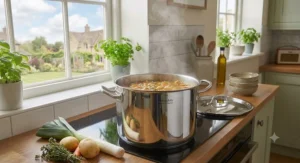
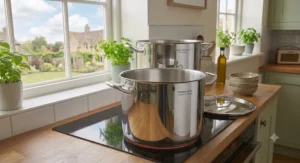
There’s a particular kind of kitchen chaos that only a proper stainless steel stockpot can solve — the one where you’ve got three chickens’ worth of bones, a bag of wilting veg, and absolutely nowhere big enough to put them. A stainless steel stockpot is a tall, deep, straight-sided cooking pot made from non-reactive steel, designed for simmering large volumes of liquid — stock, broth, soup, or a vat of chilli for a crowd — over long, low heat. If you’ve ever tried making a proper pot for making stock in a saucepan built for beans on toast, you’ll know exactly why this piece of kit earns its cupboard space. This guide walks through seven genuinely available UK models, from budget workhorses to serious 18/10 steel investments, so you can pick the one that matches how you actually cook, not just how the packaging looks on a shelf.
We’ve dug into real specifications, aggregated review sentiment, and honest comparative reasoning rather than recycling marketing copy — because a stainless steel stockpot is a “buy it once, use it for a decade” purchase, and decisions like that deserve more than a five-star average. Whether you’re feeding a family, fermenting a weekly bone broth pot habit, or just tired of decanting soup between two pans, there’s a size and price point here that fits. According to the Food Standards Agency’s guidance on chilling food safely, cooling large batches quickly matters as much as cooking them well — something worth bearing in mind before you commit to the biggest pot on the list. Let’s get into what actually separates a good stainless steel stockpot from an expensive way to boil water.
Quick Comparison Table
Short on time? Here’s the fast version before we go deep on each option.
| Product | Capacity | Best For |
|---|---|---|
| Judge Stainless Steel Stockpot | 10 litres | Best 10 litre stockpot for families |
| ProCook Professional Stockpot | 9.5 litres | Best premium build quality |
| HOMICHEF Nickel Free Stock Pot | 15 litres | Best bone broth pot for sensitive skin |
Looking at the spread above, the Judge Stainless Steel Stockpot sits in the sweet spot for most households — big enough for a proper stock day, without needing a cupboard the size of a wardrobe. The ProCook Professional Stockpot costs more but the 18/10 steel and CoolTouch handles genuinely change how the pot feels in daily use, particularly once you’re lifting it full of hot liquid. Meanwhile, the HOMICHEF Nickel Free Stock Pot is a narrower recommendation — it’s aimed squarely at people who’ve been told to limit nickel exposure, or who simmer bone broth for hours and don’t want leaching to be a variable at all.
💬 Found a pick you like already? Bookmark this page so you can compare prices before you buy!
Top 7 Stainless Steel Stockpots: Expert Analysis
Right, let’s get into the detail. Every product below has been chosen to represent a genuine price bracket and use case — no filler, no fictional “TopBrand 3000” pots invented to pad out a list. Prices are given as ranges only, since they shift constantly on Amazon.
1. Judge Stainless Steel Stockpot — best 10 litre stockpot for family cooking
The Judge Stainless Steel Stockpot comes in a 26cm, 10 litre size, which is the exact volume most home cooks mean when they type “10 litre stockpot” into a search bar. Judge is a British homeware brand founded in Bristol back in 1899, and this model reflects that old-school, built-to-last approach: heavy-gauge polished steel, hollow air-cooled handles that stay cool enough to grab bare-handed, and a vented glass lid so you can watch a simmer without lifting the lid and losing heat. Based on the spec comparison with cheaper thin-gauge pots, the thicker base here resists the scorching and hot-spot warping that ruins a long stock simmer.
Reviewers of Judge’s smaller stockpots in this range have flagged a genuine trade-off worth knowing before you buy: the satin-finish steel isn’t mirror-polished, and a few buyers note that hours of simmering broth can leave a stubborn residue that needs a proper scrub (Barkeeper’s Friend gets it back to new, by most accounts). That’s a fair swap for the price, but it’s worth going in with realistic expectations rather than assuming showroom shine after a 12-hour bone broth session.
Pros:
- ✅ Genuine 10 litre capacity for full family batches
- ✅ Hollow handles stay cool during long simmers
- ✅ British brand with a 10-year guarantee
Cons:
- ❌ Satin finish shows residue after long simmers
- ❌ Heavier to lift full than slimmer premium pots
Expect this stockpot to sit in the mid-£40s to mid-£60s range depending on retailer stock levels — for a genuine 10-litre capacity from an established British brand, that’s solid value rather than a bargain-bin compromise.
2. ProCook Professional Stockpot — best premium build for serious batch cooking
If you want the large cooking pot that convinces you stainless steel cookware is worth the fuss, this is it. The ProCook Professional Stockpot is made from 18/10 stainless steel — the same food-grade alloy used in surgical instruments, prized for resisting pitting and corrosion even after acidic tomato-based stocks. At 26cm diameter, it’s ProCook’s largest stockpot, and it comes with a genuinely useful detail most rivals skip: an internal measuring gauge, so you’re not guessing litre levels by eye when you’re topping up a simmering pot for making stock.
What most buyers overlook about this model is the CoolTouch handle design — it’s not just a marketing term, it’s a specific claim about heat transfer that matters once the pot’s been on a low simmer for three or four hours. Reviewers cited in independent cookware round-ups report that food doesn’t stick or burn on the base, and that the pot feels reassuringly sturdy in daily use, which tracks with the fully-clad construction underneath the polish.
Pros:
- ✅ 18/10 stainless steel resists pitting long-term
- ✅ Internal measuring gauge for accurate liquid levels
- ✅ CoolTouch handles genuinely stay cooler in use
Cons:
- ❌ Among the pricier options on this list
- ❌ Toughened glass lid adds noticeable weight
Prices for the ProCook range typically sit in the £70-£100 range at the time of research, positioning it as an investment piece rather than a casual purchase — but for anyone who cooks stock weekly, the cost-per-use maths tends to work out favourably over several years.
3. Buckingham Deep Induction Stock Pot — best for hill-of-bones batch cooking
The Buckingham Deep Induction Stock Pot holds 11 litres and leans hard into durability rather than polish. Its standout feature is a 3mm bonded base — noticeably thicker than the 1-1.5mm bases common on budget pots — which spreads heat evenly across induction, gas, and ceramic hobs alike without the scorched ring you sometimes get on thinner steel. Riveted hollow handles keep the pot secure when it’s full and heavy, and the tempered glass lid has a silicone-insert knob so you’re not burning fingers checking on a rolling boil.
Here’s what the spec sheet won’t tell you outright: a 3mm base isn’t just about even heating, it’s about longevity under repeated thermal cycling. Thinner bonded bases can develop a slight bow after years of heating and cooling, which throws pots off-balance on the hob. Buyers looking for a large capacity cooking pot that will still sit flat in a decade should weigh that detail more heavily than the finish or the price tag.
Pros:
- ✅ Thick 3mm bonded base resists warping over time
- ✅ Works on every hob type including induction
- ✅ Silicone-insert lid knob stays cool to touch
Cons:
- ❌ No measuring gauge marked inside the pot
- ❌ Plainer aesthetic than premium branded alternatives
Typically found in the mid-£50s to mid-£70s range, this pot suits buyers prioritising thermal performance and induction reliability over showroom looks.
4. Russell Hobbs Classic Collection Stockpot — best budget-friendly everyday pot
Not every household needs an 11-litre commitment, and the Russell Hobbs Classic Collection Stockpot recognises that with a 24cm, 9-litre design that’s more forgiving on storage space while still qualifying as a proper large cooking pot. It’s built from stainless steel with a mirror-polish finish, a tempered glass lid with a steam vent, and a pouring lip — a small feature that saves a genuine mess when you’re decanting stock into containers for the freezer.
Reviewers researching this Russell Hobbs range consistently flag it as a solid entry point for anyone upgrading from a basic saucepan for the first time, though it’s worth noting the steel gauge here is lighter than the premium options above — meaning it heats a touch faster but also cools faster, which suits quicker soups better than an all-day simmer. Here’s what to weigh: if your cooking style is “start dinner in an hour,” this is a better fit than pots built for glacial, hours-long reductions.
Pros:
- ✅ Compact 9-litre size suits smaller kitchens
- ✅ Pouring lip reduces spills when decanting
- ✅ Mirror finish looks smart straight out of the box
Cons:
- ❌ Lighter gauge steel than premium rivals
- ❌ Less heat retention for very long simmers
At a typical price point around the £25-£35 mark, it’s one of the more accessible ways to get proper stainless steel into your cupboard without the premium price tag.
5. Amazon Basics Stainless Steel Stock Pot — best no-frills large capacity option
At 11.4 litres, the Amazon Basics Stainless Steel Stock Pot is one of the largest capacities on this list, and its aluminium-clad base is specifically engineered for fast, even heat distribution — useful when you’re bringing a huge volume of cold water and bones up to a simmer and don’t want to wait an hour for it to happen. Reinforced side handles are riveted rather than welded, which tends to hold up better under repeated heavy lifting, and it’s rated oven-safe up to a genuinely high 260°C without the lid — handy if a recipe calls for finishing something under the grill or in a hot oven.
What most buyers overlook here is that “Amazon Basics” doesn’t mean flimsy in this case — the food-grade steel and aluminium-clad construction put it closer to mid-range performance than the price suggests. The trade-off is aesthetic rather than functional: this isn’t a pot you’d want visible on an open shelf, but tucked in a cupboard between uses, that barely matters.
Pros:
- ✅ Large 11.4-litre capacity at a low price point
- ✅ Aluminium-clad base heats quickly and evenly
- ✅ Oven-safe up to 260°C without the lid
Cons:
- ❌ Utilitarian looks, not a display piece
- ❌ Handles run hotter than insulated designs
Expect this one to sit comfortably under £40 in most cases, making it a sensible starting point for anyone testing whether they’ll actually use a stockpot regularly before spending more.
6. HOMICHEF Nickel Free Stock Pot — best bone broth pot for sensitive cooks
If you’re simmering a bone broth pot for eight, twelve, or even twenty-four hours at a time — as many bone broth recipes call for — the metal composition of your cookware matters more than usual, simply because of prolonged contact time. The HOMICHEF Nickel Free Stock Pot holds 15 litres at 29cm diameter and is specifically manufactured without nickel, which sidesteps a genuine and fairly common concern: nickel allergy affects a meaningful share of the population, and trace nickel leaching from standard 18/8 or 18/10 steel during very long acidic simmers (bone broth is typically made with a splash of vinegar to help draw minerals from the bone) is a plausible, if usually small, pathway of exposure.
To be clear about what is and isn’t verifiable here: this is a niche, genuinely useful spec for a specific audience, not a claim that standard stainless steel stockpots are unsafe for the vast majority of cooks — most people tolerate ordinary food-grade steel without any issue at all. What most buyers overlook is that this pot’s mirror-polished finish and heavy-duty build stand up well against premium options costing considerably more, making the nickel-free formulation feel like an added bonus rather than the sole selling point.
Pros:
- ✅ Nickel-free formulation suits sensitive users
- ✅ Generous 15-litre capacity for big batches
- ✅ Mirror-polished, heavy-duty construction throughout
Cons:
- ❌ Bulky size needs decent storage space
- ❌ Premium pricing for the nickel-free specialism
Pricing typically lands in the £60-£90 range, which is competitive for a pot this size once you factor in the specialist nickel-free manufacturing.
7. Judge Induction Pasta Pot with Steamer Insert — best stockpot with steamer insert
Rounding out the list is a genuinely versatile option for anyone who wants one pot doing three jobs. The Judge Induction Pasta Pot is a 20cm stockpot that includes a removable stainless steel insert — effectively a stockpot with steamer insert built in — so you can lift out pasta, blanch vegetables, or steam a whole fish without wrestling a slotted spoon through gallons of boiling water. It comes with a vented glass lid and is dishwasher safe, suitable for all hob types including induction.
Here’s what the spec sheet doesn’t spell out: a removable insert changes how you use a stockpot day-to-day far more than most buyers expect before owning one. Reviewers of Judge’s steamer inserts consistently mention how much easier cleanup becomes and how naturally the insert doubles as an oversized colander — a small design choice that turns an occasional-use stockpot into something you’ll reach for weekly, for jobs well beyond stock.
Pros:
- ✅ Removable insert doubles as steamer and colander
- ✅ Compact 20cm size suits smaller households
- ✅ Dishwasher safe for genuinely easy cleanup
Cons:
- ❌ Smaller capacity than dedicated large stockpots
- ❌ Insert adds an extra piece to store
Typically priced in the £30-£45 range, this is less about hitting maximum capacity and more about buying flexibility — a genuinely different value proposition to the pure-capacity picks above.
Practical Usage Guide: Getting the Most From Your Stockpot
Buying the right stainless steel stockpot is only half the job — using it well is what actually gets you restaurant-quality stock at home. Start by seasoning nothing (stainless steel doesn’t need seasoning like cast iron) but do give a brand-new pot a wash in warm soapy water before first use, since manufacturing residue is more common than people assume. On first use, avoid cranking the hob to maximum heat straight away; stainless steel rewards a gradual warm-up, both for food release and for protecting the base from thermal shock over years of use.
A common mistake in the first 30 days is overcrowding the pot to “get it all in one go.” Leave at least 5-8cm of headroom below the rim when simmering, since a rolling boil in a completely full pot will spit hot liquid over the sides and onto your hob. For maintenance, a monthly deep-clean with a paste of bicarbonate of soda handles any stubborn tide-marks or scorched patches far better than scrubbing daily with abrasive pads, which will dull the finish over time. If you’re using the pot for a genuine pot for making stock on a weekly basis, invest in a fine mesh sieve and muslin cloth alongside it — straining properly is what separates cloudy, gritty stock from the clear, restaurant-style version, and no amount of pot quality substitutes for that final step. For a reliable starting recipe and timings, the BBC Good Food guide to homemade chicken stock is a solid, tested reference point worth bookmarking.
Real-World Scenarios: Which Stockpot Suits You?
Picture Sarah, a parent of three in a semi-detached house with a decent-sized kitchen, who does a big Sunday cook-up feeding the family for the week ahead. Her budget sits around £50, she’s got cupboard space for something substantial, and she wants durability over decades rather than replacing pots every few years. The Judge Stainless Steel Stockpot fits neatly here — proper family-scale capacity, a trusted British brand, and a price that doesn’t feel like a splurge.
Now consider Tom, a keen home cook living solo in a one-bed flat who’s recently gone all-in on drinking bone broth every morning before work. Storage is tight, budget is more flexible since he only needs one serious pot, and his priority is minimising any variable that could affect a daily-habit food. The HOMICHEF Nickel Free Stock Pot, despite its larger size, actually suits his use case surprisingly well — he’ll batch-cook once a fortnight and freeze portions, making the bigger capacity a time-saver rather than a storage headache.
Finally, there’s Priya, a university student in shared accommodation with a tiny kitchen and an even tighter budget, who mostly wants to upgrade from instant noodles to actual home-cooked pasta and the occasional soup. For her, the Judge Induction Pasta Pot with Steamer Insert makes far more sense than anything on the large-capacity end of this list — smaller footprint, multi-purpose insert, and a price point that doesn’t dent a student loan.
Problem → Solution: Fixing Common Stockpot Frustrations
Problem: Stock tastes cloudy or gritty. This is almost always a straining issue rather than a pot issue — invest in a fine mesh sieve lined with muslin, and resist the urge to press solids through with a spoon, which pushes fine particles into the liquid.
Problem: The base has scorched, dark patches. This typically happens when liquid levels drop too low during a long simmer. Check levels every 45-60 minutes on very long cooks, and top up with hot (not cold) water to avoid temperature shock to the steel.
Problem: Handles feel loose after a year or two. Riveted handles occasionally need the rivets tightened; welded handles generally can’t be repaired, which is worth checking before you buy if longevity matters to you.
Problem: Pot doesn’t heat evenly on induction. This usually points to a thin or poorly bonded base rather than a fault — models like the Buckingham Deep Induction Stock Pot, with genuinely thick bonded bases, solve this specific complaint far more reliably than budget alternatives.
Problem: Storage space is the real bottleneck. If a large capacity cooking pot won’t physically fit your cupboards, a smaller multi-purpose option such as the Judge Induction Pasta Pot with Steamer Insert solves more problems than forcing a 15-litre pot into a flat that can’t accommodate it.
How to Choose a Stainless Steel Stockpot
- Decide your typical batch size first. If you regularly cook for more than four people or freeze portions, look at 9-11 litres minimum; solo cooks rarely need more than 5-6 litres.
- Check the base construction, not just the brand. A bonded or clad base (aluminium or copper core sandwiched in steel) heats more evenly than a single-layer steel base, which matters most for long, low simmers.
- Confirm hob compatibility before buying. Induction hobs need a magnetic stainless steel base — check the listing specifically states induction compatibility rather than assuming all stainless steel qualifies.
- Weigh handle design against your strength and habits. Hollow, air-cooled handles are lighter and cooler; solid cast handles are sturdier but heavier when the pot is full of liquid.
- Look for a vented glass lid if you like to monitor simmers. It sounds minor, but not lifting the lid repeatedly retains heat and speeds up cooking meaningfully over a long session.
- Factor in oven and dishwasher safety if that matters to your routine. Not every stockpot is rated for both, and the small print differs more than you’d expect between brands.
- Match the finish to your cleaning tolerance. Mirror-polished finishes look sharper but show water spots and scorch marks more visibly than satin or brushed finishes.
Stainless Steel vs Other Stockpot Materials
Stainless steel isn’t the only material stockpots come in, and it’s worth understanding why it usually wins for this specific job. As Wikipedia’s entry on stainless steel explains, it is fundamentally an iron alloy containing at least 10.5% chromium, which forms a self-repairing oxide layer that resists corrosion — a crucial property when you’re simmering acidic tomato-based stocks or bone broths with a splash of vinegar for hours at a time. Aluminium stockpots heat faster and cost less, but they’re reactive with acidic ingredients, which can leave a metallic taste and, over time, pit the surface. Non-stick coated stockpots are gentler on delicate ingredients but the coatings generally aren’t rated for the multi-hour simmers that stock-making demands, and most manufacturers advise against metal utensils, which limits how you can stir a dense pot of bones and vegetables.
| Material | Heat Retention | Best For |
|---|---|---|
| Stainless steel | Excellent, even | Long simmers, acidic stocks |
| Aluminium (uncoated) | Fast, uneven | Quick boils on a budget |
| Non-stick coated | Moderate | Delicate, shorter cooks |
The practical upshot is that a stainless steel stockpot earns its higher price for anyone doing genuine stock or bone broth work, while a cheaper aluminium pot might suit someone who mostly boils pasta and rarely simmers acidic liquids for hours. If your cooking sits somewhere in between, the mid-range picks on this list — the Russell Hobbs Classic Collection Stockpot in particular — offer a sensible middle ground.
What to Expect: Real-World Performance
Specs on a listing page rarely translate cleanly into how a pot behaves on your actual hob, so here’s the honest, everyday version. A 10-11 litre stainless steel stockpot filled to a sensible working level (not the brim) typically takes 12-20 minutes to reach a rolling boil on a standard gas or induction hob, depending on burner size and pot base thickness — thicker bonded bases like the Buckingham Deep Induction Stock Pot‘s 3mm construction noticeably shorten this compared with thin, single-layer steel. Once at a simmer, expect gentle, consistent heat retention that holds steady with minimal hob adjustment, which is precisely the point of a stockpot over a regular saucepan.
Weight is the other real-world factor rarely mentioned upfront: an empty 10-litre stockpot typically weighs 1.5-2.5kg, but filled with stock and bones that easily climbs past 10-12kg. Lifting that safely, especially to drain through a sieve, is genuinely awkward without practice — a ladle-and-decant approach, rather than lifting the full pot to pour, is worth adopting from day one regardless of which model you choose.
Stainless Steel Stockpots for Bone Broth Makers and Batch Cooks
Bone broth enthusiasts have specific, slightly different needs from someone making a quick weeknight soup. Long simmer times — often 12 to 24 hours — mean heat retention and base thickness matter more than for shorter cooks, since a pot prone to hot spots will scorch bones stuck to the base over that duration. Capacity matters too: batch cooking for the freezer genuinely benefits from the larger end of this list, since doubling a recipe rarely doubles the effort but does halve how often you need to cook. For this specific audience, the HOMICHEF Nickel Free Stock Pot and the Buckingham Deep Induction Stock Pot are the strongest matches on this list — one for anyone managing nickel sensitivity, the other for anyone prioritising even, reliable heat over a very long simmer. Batch cooks who freeze portions should also budget for decent freezer-safe containers, since the pot is only half of the workflow.
Long-Term Cost & Maintenance
A genuine stainless steel stockpot is a buy-it-once purchase in a way cheap non-stick pans simply aren’t, which changes the maths considerably over five or ten years. A budget non-stick large cooking pot might cost less upfront but typically needs replacing every 2-3 years as the coating degrades, while a well-made stainless steel stockpot, cared for properly, can genuinely outlast a mortgage. Total cost of ownership over a decade therefore usually favours the pricier stainless options, even before factoring in the reduced landfill impact of not replacing cookware repeatedly.
| Product | Approx. Price Range | 10-Year Cost Outlook |
|---|---|---|
| Amazon Basics Stock Pot | Under £40 | Low upfront, moderate long-term risk |
| Judge Stainless Steel Stockpot | Mid-£40s to mid-£60s | Balanced value, strong longevity |
| ProCook Professional Stockpot | £70-£100 | Higher upfront, lowest lifetime cost per use |
Looking at the numbers above, the ProCook Professional Stockpot costs the most today but tends to work out cheapest per year of ownership if you genuinely use it weekly, simply because the 18/10 steel is built to resist the wear that eventually retires cheaper pots. Maintenance itself is low-effort across the board: hand-washing extends the lifespan of any polished finish, dishwasher use is fine occasionally but hard water deposits can dull shine over years, and drying pots immediately rather than air-drying prevents the water spotting that’s purely cosmetic but still mildly annoying.
🔍 Ready to compare current prices across these picks? Check availability before stock runs low, especially ahead of soup season!
Features That Actually Matter (And Those That Don’t)
Base thickness and construction genuinely matter — it’s the single biggest driver of even heating and long-term shape retention. Handle attachment method (riveted versus welded) matters for durability, particularly if you’re a household that lifts a full pot rather than ladling from it. Induction compatibility matters enormously if that’s your hob type, and it’s a binary pass/fail rather than a “nice to have.”
What matters less than the marketing suggests: mirror-polish shine has zero cooking performance impact — it’s aesthetic only, and matters purely if the pot lives on open shelving. Measuring gauges etched inside the pot are a genuine convenience but not worth paying a large premium for alone, since a jug and a bit of arithmetic solves the same problem for free. And multi-piece “bonus” accessories bundled with some listings — extra lids, additional smaller pans — are rarely the deciding factor and shouldn’t distract from the core pot’s own build quality.
Safety, Induction Compatibility and Food Hygiene
Beyond material safety, there are a couple of UK-specific practicalities worth knowing. Always check a listing explicitly states induction compatibility rather than assuming — not every stainless steel base contains enough ferritic (magnetic) content to work on induction hobs, and a simple magnet test against the base will confirm this before you buy secondhand or from a less detailed listing. For food hygiene specifically, once your stock or broth is made, the safe-cooling window matters as much as the cooking itself: cooling large batches quickly, ideally by dividing into smaller containers rather than leaving one giant pot to cool slowly on the side, reduces the time food spends in the temperature range where bacteria multiply fastest. This is exactly the guidance covered in the earlier-linked Food Standards Agency advice, and it applies just as much to a home kitchen as a commercial one, particularly if you’re batch cooking and freezing for later in the week.
Frequently Asked Questions
❓ What size stainless steel stockpot do I actually need?
❓ Is a 10 litre stockpot too big for a normal kitchen?
❓ Can I use a stainless steel stockpot on an induction hob?
❓ How do I clean burnt-on residue from a stockpot after a long simmer?
❓ Is stainless steel safe for making bone broth over many hours?
Conclusion
Choosing between these seven stainless steel stockpots really comes down to matching capacity and construction to how you actually cook, rather than chasing the biggest or shiniest option on the page. Families doing a proper weekly stock day are well served by the Judge Stainless Steel Stockpot‘s genuine 10 litre capacity and British-brand reliability, while anyone treating cookware as a decades-long investment should look hard at the ProCook Professional Stockpot‘s 18/10 steel and thoughtful design details. Bone broth devotees with sensitivity concerns have a genuinely useful, honest option in the HOMICHEF Nickel Free Stock Pot, and smaller households or students are far better matched to the flexible, space-saving Judge Induction Pasta Pot with Steamer Insert than to anything oversized sitting unused in a cupboard.
Whichever you choose, remember that the pot is only one half of the equation — proper straining, sensible batch sizes, and safe cooling practices matter just as much for the end result as the stainless steel stockpot itself. Treat it well, and it genuinely should be one of the last stockpots you ever need to buy.
Recommended for You
- 7 Best Le Creuset Alternative Picks for 2026
- Round Casserole Dish UK: 7 Best Picks for 2026
- Oval Casserole Dish 2026: 7 Best Picks for Every Kitchen
Disclaimer: This article contains affiliate links. As an Amazon Associate, I earn from qualifying purchases. If you purchase products through these links, we may earn a small commission at no additional cost to you.
✨ Found this helpful? Share it with your friends! 💬🤗
