In This Article
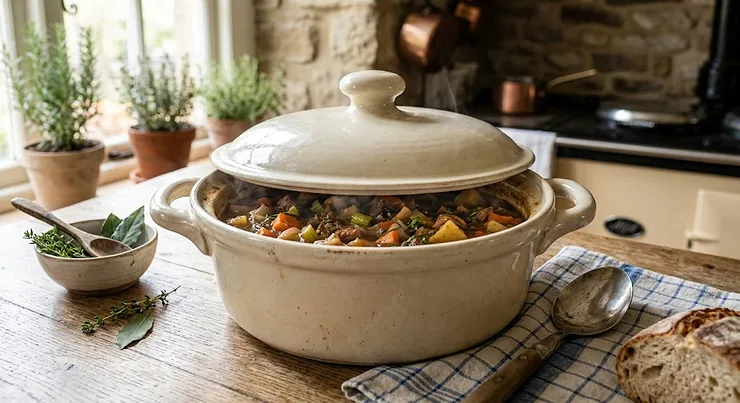
There’s a particular kind of kitchen chaos that only a round casserole dish can solve. You know the one — three pans on the go, something simmering, something else about to catch, and you’re wondering why nobody told you sooner that one good pot could replace half your cupboard. A round casserole dish is a thick-walled, lidded cooking pot — usually cast iron — designed to move seamlessly from hob to oven to table while locking in moisture and heat for stews, braises, roasts and bakes.
Whether you’re feeding a hungry family on a Tuesday or slow-braising a shoulder of lamb for Sunday lunch, the right round casserole dish quietly becomes the hardest-working item in your kitchen. But walk into any cookware aisle, or scroll Amazon for five minutes, and you’ll hit a wall of choices: Le Creuset here, budget cast iron there, sizes ranging from a modest 20cm to a family-sized 28cm, and prices that swing from under £40 to well over £250.
This guide cuts through that noise. We’ve researched seven genuinely good round casserole dishes and round cast iron pots on the UK market, pulled together real spec comparisons and aggregated review sentiment, and worked out exactly who each one suits. As Wikipedia’s entry on the Dutch oven explains, this style of thick-walled, lidded cookware has been in continuous use under one name or another for over 300 years, so you’re buying into a genuinely long tradition of getting dinner right — not just a trend. Let’s get into it.
Quick Comparison Table
| Product | Size | Material | Best For |
|---|---|---|---|
| Le Creuset Signature Round Casserole | 24cm | Enamelled cast iron | Lifetime heirloom buyers |
| Staub Round Cocotte | 24cm | Enamelled cast iron | Serious home cooks & searing |
| ProCook Cast Iron Casserole | 24cm | Enamelled cast iron | Best value premium feel |
| Lodge Enameled Dutch Oven | 26cm (6qt) | Enamelled cast iron | Everyday family stew pot |
| Salter Chester Casserole | 24cm | Enamelled cast iron | Budget lifetime guarantee |
| Tower Round Cast Iron Casserole | 24cm | Enamelled cast iron | First-time cast iron buyers |
| MasterClass Lightweight Casserole | 28cm | Cast aluminium | Lighter lifting, bigger batches |
Looking at the table above, the spread here matters more than any single “winner.” If you cook for a crowd and hate heavy lifting, the MasterClass aluminium pot at 28cm solves a real problem the cast iron options don’t. Meanwhile, anyone treating this as a once-in-a-decade purchase should look hardest at Le Creuset or Staub, since both carry lifetime guarantees that genuinely offset the higher upfront cost. Budget-conscious buyers shouldn’t feel short-changed either — Salter and Tower both borrow the same enamelled cast iron construction principles at a fraction of the price.
💬 Found a size or brand you like already? Jump straight to the full breakdown below to see how it performs in the real world!
Top 7 Round Casserole Dishes: Expert Analysis
1. Le Creuset Signature Round Casserole — the gold-standard heirloom pot
The Le Creuset name alone tells you what you’re getting: a pot designed to outlive the kitchen it’s bought for. This 24cm cast iron casserole holds around 4.2 litres, enough for a family-sized stew or a whole chicken with root vegetables packed round it. The heat-resistant knob (rated to 260°C) and generously wide handles mean it genuinely can go from a roaring hob to a hot oven to the dinner table without a second thought, and the enamel interior means no seasoning faff before first use.
Based on the spec comparison with rival premium brands, Le Creuset’s edge comes down to consistency: the walls are cast thick and even, so there are fewer hot spots than you’ll find in cheaper alternatives, and the tight-fitting lid does a genuinely good job of trapping moisture during long braises. This is the pot for someone who cooks often, cares about longevity, and wants to hand something down eventually — not someone dabbling in their first stew.
Reviewers consistently note the exceptional heat retention and the fact that food stays warm at the table for far longer than in stainless steel alternatives. A recurring theme in aggregated feedback is that the investment “pays for itself” over years of near-daily use, though a smaller number of reviewers mention the significant weight when full, especially for anyone with wrist or grip issues.
Pros:
- ✅ Exceptional, even heat distribution for stews and braises
- ✅ Genuine lifetime guarantee backed by a century of manufacturing
- ✅ Wide, oven-glove-friendly handles for safe hob-to-table transfers
Cons:
- ❌ Among the heaviest options on this list when full
- ❌ Sits at the top of the price range for a 24cm dish
Prices for the Le Creuset Signature Round Casserole typically sit in the £250-£320 range depending on colour, so check current pricing before you commit. For a lifetime piece of cookware, it remains one of the strongest value arguments on this list, even at a premium price point.
2. Staub Round Cocotte — best for serious searing and browning
Staub’s Cocotte has quietly built a cult following among people who actually sear meat before they braise it, and the reason is the interior finish. Unlike the smooth, light enamel found on many rivals, Staub uses a darker, more textured black enamel that’s noticeably better at building fond (the browned bits that make a gravy sing) without the enamel wearing thin over time.
What most buyers overlook about this model is the lid: Staub fits it with small internal spikes that catch condensation and redistribute it evenly back over whatever’s cooking, a self-basting effect that matters most on long, slow cooks like ragù or pulled pork. At 24cm with a roughly 3.8-litre capacity, it’s sized similarly to the Le Creuset above, and the two brands are genuinely close competitors on quality.
Aggregated review sentiment consistently praises the black interior for hiding scorch marks and staining better than pale enamels, which matters if you cook acidic tomato-based dishes often. A common complaint in user reviews is that the exterior enamel, while robust, can chip if the pot is knocked hard against a hob edge or dropped — a risk shared by most enamelled cast iron, but worth noting.
Pros:
- ✅ Black enamel resists staining and scorch marks exceptionally well
- ✅ Self-basting lid spikes genuinely improve moisture retention
- ✅ Excellent for searing meat before slow braising
Cons:
- ❌ Similar high price bracket to Le Creuset
- ❌ Enamel can chip if knocked hard against hard surfaces
Expect to pay in the £220-£280 range for the round Cocotte in this size, with prices varying by colour and retailer promotions. If your cooking style leans towards searing first and braising second, this is arguably the more purpose-built of the two premium options.
3. ProCook Cast Iron Casserole 24cm — the best value premium feel
ProCook has built a genuine reputation as the credible alternative to the French heavyweights, and the 24cm round casserole (4.7-litre capacity) is where that reputation is best earned. It’s individually cast from molten iron just like the premium brands, oven safe to 260°C, and backed by a 25-year guarantee — not quite a lifetime, but far beyond what most cookware in this price bracket offers.
On paper this means you’re getting comparable heat retention and induction compatibility to Le Creuset at roughly a quarter of the price, and independent reviewers have backed that up in side-by-side cooking tests, finding minimal practical difference in everyday performance between the two. The trade-off, as reviewers note, is that ProCook’s matte black interior isn’t quite as non-stick as Le Creuset’s glossier enamel, so it demands slightly closer attention to oil and heat levels.
Reviewers consistently describe the finish as “just as good” as pricier rivals for day-to-day cooking, while acknowledging that the cleanup, though easy, benefits from a bit more elbow grease on stubborn, caramelised bits. This is a strong choice for anyone who wants genuine cast iron performance without the premium branding tax.
Pros:
- ✅ Around a quarter of the price of comparable premium brands
- ✅ 25-year guarantee is unusually generous for the price point
- ✅ Performs comparably to premium rivals in independent testing
Cons:
- ❌ Matte interior is slightly less forgiving with sticking than glossy enamel
- ❌ Fewer colourways than the market leaders
The ProCook 24cm round casserole typically sits in the £60-£70 range, making it one of the strongest value propositions in cast iron cookware right now. For a first “proper” cast iron dish, it’s hard to beat.
4. Lodge Enameled Cast Iron Dutch Oven — the reliable family stew pot
Lodge has been casting iron in Tennessee since 1896, and this enamelled Dutch oven is the brand’s answer to European rivals — built with the same no-nonsense durability Lodge is known for in its raw cast iron skillets. At around 26cm and a 6-quart (roughly 5.7-litre) capacity, this sits slightly larger than most on this list, making it a genuinely practical family stew pot for batch cooking or feeding a crowd.
The dual handles are wide and easy to grip even with oven gloves on, and the porcelain enamel coating means no seasoning is required out of the box — a real advantage for anyone put off by the maintenance reputation of bare cast iron. Reviewers consistently mention the “half the price of similar premium items” value angle, alongside praise for the versatility of using it for everything from sourdough bread to weekend roasts.
What the spec sheet won’t tell you, but user reports suggest, is that Lodge’s enamel is a touch less refined-looking than Le Creuset’s — slightly more matte, slightly less glassy — but performs just as capably for actual cooking. Customers do flag the weight as a genuine consideration, with several noting it’s “heavy but that’s cast iron for you.”
Pros:
- ✅ Larger 6-quart capacity suits bigger family portions
- ✅ No seasoning required thanks to full enamel coating
- ✅ Strong reputation for durability across decades of use
Cons:
- ❌ Noticeably heavier than most 24cm alternatives
- ❌ Enamel finish slightly less polished-looking than European rivals
Prices for the Lodge Enameled Dutch Oven generally fall in the £90-£130 range depending on colour and current stock. For households who batch-cook or regularly feed more than four people, the larger capacity alone can justify the size step up.
5. Salter Chester Cast Iron Casserole Dish — proof budget doesn’t mean flimsy
Salter has positioned the Chester range directly against the premium brands on the strength of one claim: comparable performance without the comparable price. The 24cm round version comes with a self-basting, moisture-locking lid and a lifetime guarantee — a genuinely bold move at this price point, and one that reviewers have tested and largely validated.
The 500W-equivalent heat retention claims aside, what actually matters in practice is that this dish heats evenly enough for risottos and stews alike, is PFAS-free, and works across every hob type including induction. Based on the spec comparison, Salter isn’t cutting corners on the fundamentals — cast iron core, enamel coating inside and out — it’s simply pricing more aggressively than its French counterparts.
Aggregated review sentiment is largely positive on cooking performance, with several reviewers directly comparing it favourably to Le Creuset for a fraction of the outlay. A common thread in feedback is that this is an excellent “first cast iron” purchase for someone unsure whether they’ll use it enough to justify a premium spend.
Pros:
- ✅ Genuine lifetime guarantee at a fraction of premium prices
- ✅ PFAS-free construction with full induction compatibility
- ✅ Reviewers rate performance close to much pricier rivals
Cons:
- ❌ Fewer colour options than established premium brands
- ❌ Enamel durability over decades is less proven than century-old brands
Expect the Salter Chester 24cm round casserole to sit in the £45-£60 range, making it one of the most compelling budget cast iron options currently available in the UK.
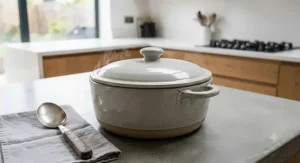
6. Tower Round Cast Iron Casserole Pan — best for first-time cast iron buyers
Tower’s 24cm round cast iron casserole (roughly 4 litres) is a sensible, no-frills entry point for anyone dipping a toe into cast iron cooking for the first time without wanting to commit serious money to the experiment. The domed lid with dimpled underside helps retain moisture, and the enamel interior means straightforward cleaning rather than the seasoning rituals of bare cast iron.
Here’s what most first-time buyers overlook: the ergonomic handle design genuinely does make a difference when the pot’s full and hot, and Tower’s version compares favourably here against similarly priced rivals whose handles can feel thin and awkward under oven gloves. It’s rated safe up to 260°C and works across all hob types, ticking the same fundamental boxes as pricier alternatives.
Reviewers consistently describe this as reliable rather than remarkable — which, for a budget entry point, is exactly the right kind of feedback. It won’t outperform premium brands on fine details like lid-sealing precision, but it does the core job of even heating and moisture retention competently, based on aggregated user sentiment.
Pros:
- ✅ Genuinely affordable route into enamelled cast iron cooking
- ✅ Ergonomic handles hold up well against pricier rivals
- ✅ Suitable for all hob types including induction
Cons:
- ❌ Lid sealing is less precise than premium competitors
- ❌ Smaller colour range and shorter guarantee period
The Tower Round Cast Iron Casserole typically retails in the £35-£45 range, making it one of the most accessible ways to try cast iron cooking without a big financial leap.
7. MasterClass Lightweight Cast Aluminium Casserole Dish — best for lighter lifting
Not everyone wants a pot that strains the wrist every time it comes out of the oven, and this is exactly where the MasterClass 28cm cast aluminium casserole earns its spot on this list. Cast aluminium delivers broadly similar even-heat performance to cast iron at roughly a third of the weight, which matters enormously for anyone with joint pain, limited grip strength, or simply a dislike of hauling a five-kilo pot around a kitchen.
The trade-off, as with all cast aluminium, is slightly less heat retention once you take the lid off compared with true cast iron — food cools faster once serving begins, which matters at a dinner party but less so for a straight-to-plate family meal. At 28cm and roughly 4 litres, it’s sized generously for shallow braises, risottos, and searing where surface area matters more than depth.
Reviewers consistently highlight the size and weight advantage as the main draw, with several specifically mentioning it as the option that finally let them enjoy cooking one-pot meals again after struggling with heavier traditional casseroles. The non-stick coating also earns consistent praise for easy cleanup, a genuine point of difference from bare or lightly enamelled cast iron.
Pros:
- ✅ Roughly a third of the weight of comparable cast iron dishes
- ✅ Generous 28cm surface area suits searing and risottos
- ✅ Easy-clean non-stick coating reduces maintenance effort
Cons:
- ❌ Retains heat for less time once removed from the hob
- ❌ Less durable long-term reputation than cast iron
Prices for the MasterClass 28cm lightweight casserole generally sit in the £45-£65 range. For anyone put off cast iron purely by its weight, this is a genuinely sensible middle ground rather than a compromise.
✨ Don’t Miss These Exclusive Deals!
🔍 Take your kitchen to the next level with these carefully selected round casserole dishes and cast iron pots. Click on any highlighted item to check current pricing and availability. These pots will help you create authentic, comforting family meals for years to come!
Top 7 Products: Specs & Value Comparison
| Product | Capacity | Guarantee | Price Range | Best For |
|---|---|---|---|---|
| Le Creuset Signature | ~4.2L | Lifetime | £250-£320 | Heirloom investment |
| Staub Cocotte | ~3.8L | Lifetime | £220-£280 | Searing & browning |
| ProCook Cast Iron | 4.7L | 25 years | £60-£70 | Value-conscious buyers |
| Lodge Enameled | ~5.7L | Limited | £90-£130 | Big family portions |
| Salter Chester | ~4L | Lifetime | £45-£60 | Budget first purchase |
| Tower Round | ~4L | Limited | £35-£45 | First-time cast iron |
| MasterClass Cast Aluminium | ~4L | Limited | £45-£65 | Lighter lifting |
This table makes the value story pretty clear once you line it up: guarantee length and price don’t always move together, with Salter offering lifetime cover at a fifth of Le Creuset’s cost. If capacity is your priority for feeding a family, the Lodge pulls ahead on sheer volume, while ProCook edges out as the best all-round balance of price, warranty, and genuine cast iron performance.
Practical Usage Guide: Getting the Most from Your Round Dutch Oven Cooking
Buying the pot is the easy part; using it well is where the real payoff happens. For round dutch oven cooking, start by preheating gradually — cast iron holds heat brilliantly but resents being shocked with sudden high heat from cold, which can stress the enamel over years of use. A medium heat for a minute or two before adding oil is enough to get an even cooking surface.
In the first 30 days, the most common mistake is over-scrubbing. Enamelled cast iron doesn’t need seasoning, but it does need gentle treatment: nylon or wooden utensils, warm soapy water, and a soft sponge for cleanup. Metal utensils and abrasive scourers are the fastest route to a scratched, dulled interior. If food does catch on the base, a soak in warm water with a splash of washing-up liquid for twenty minutes will lift most residue without any scrubbing at all.
For the actual cooking, the self-basting lids common to most of these dishes work best when you resist the urge to lift them constantly. Every peek releases trapped steam and moisture, extending cooking time and undermining the exact feature you paid for. Set a timer, trust the pot, and check only near the end. When storing, always keep the lid slightly ajar or use a folded tea towel between pot and lid to prevent trapped moisture causing musty smells over time.
Real-World Scenarios: Matching the Right Family Stew Pot to Your Kitchen
Picture three different households, each shopping for a family stew pot, each needing something slightly different.
First, there’s the young family of four squeezed into a flat with limited storage and a tight budget. For them, the Tower or Salter Chester 24cm makes the most sense: affordable, genuinely capable, and small enough not to dominate a cupboard. They’re cooking simple midweek stews and the occasional Sunday roast, not testing the outer limits of cast iron performance.
Second, consider the household of six with a big kitchen and a habit of batch-cooking for the freezer every weekend. Here, the Lodge Enameled Dutch Oven’s larger 5.7-litre capacity earns its keep, letting them cook double portions in one go rather than running two smaller pots simultaneously. The extra weight matters less when the pot mostly lives on the hob rather than being lifted constantly.
Finally, picture the retired couple who love to cook but have started finding heavier cookware genuinely difficult to manage. For them, the MasterClass lightweight cast aluminium casserole solves a real, practical problem that no amount of premium branding fixes. Matching pot to lifestyle, rather than chasing the “best” pot in the abstract, is the single most useful thing a buyer can do here.
Casserole Size Guide: How to Choose Between 20cm, 24cm and 28cm
- Count your regular diners. A 20cm dish (roughly 2.5-2.7L) suits one to two people; 24cm (around 4-4.8L) comfortably serves a family of four; 28cm (around 3.9-6L depending on shape) suits five-plus or serious batch cooking.
- Think about shape as well as size. Shallow, wider dishes at 24-28cm suit searing and risottos where surface area matters; deeper round pots hold their own for stews and braises where depth counts more than spread.
- Consider your hob size. An oversized casserole dish on a small ring cooks unevenly — match the base diameter roughly to your largest hob ring for the best heat transfer.
- Factor in storage space. A 28cm cast iron pot is a genuinely awkward thing to store in a small kitchen; measure your cupboard before you measure your ambition.
- Weigh up how often you’ll batch-cook. If freezer meal-prep is part of your routine, size up — a 24cm pot filled to the brim leaves no room for expansion as stews reduce and thicken.
- Remember bigger isn’t always better value. A 28cm dish used mostly for two-person meals wastes both cupboard space and heat energy compared with a well-matched 20-24cm option.
- Check the lid fit at your chosen size. Self-basting lids work best when properly sized to the pot — an oversized lid on an undersized base won’t seal moisture in as effectively.
Getting the size right the first time avoids the classic mistake of buying a showpiece 28cm pot that then sits unused because it’s simply too big for a Tuesday night dinner for two.
Common Mistakes When Buying a Round Cast Iron Pot
The single biggest mistake buyers make is chasing brand prestige over practical fit. A stunning Le Creuset casserole that’s too heavy to lift comfortably, or too large for a small hob, delivers less genuine value than a well-matched budget alternative used daily. Similarly, many buyers skip checking induction compatibility, which nearly all enamelled cast iron on this list handles fine, but bare cast iron and some older stock does not — always double-check before assuming.
Another recurring error is underestimating maintenance realities. Cast iron, even enamelled, isn’t entirely maintenance-free: metal utensils, dishwasher use on delicate finishes, and thermal shock from adding cold liquid to a screaming-hot pot can all shorten a dish’s life prematurely. Reading the manufacturer’s specific care notes — rather than assuming all cast iron behaves identically — saves genuine heartbreak down the line.
Finally, buyers frequently overlook lid design as a genuine performance factor, focusing purely on the base material. A poorly fitting or thin lid undermines the moisture retention that’s the entire point of buying cast iron in the first place, so it’s worth checking reviewers’ comments on lid quality specifically, not just overall star ratings. Independent testers such as Which? run consumer cookware through abrasion and even-heating tests before naming a Best Buy, and it’s worth reading that kind of independent methodology alongside Amazon star ratings, since the two don’t always agree.
Round Cast Iron Pot vs Stainless Steel Stew Pot: Which Wins?
Stainless steel stew pots are lighter, dishwasher-friendly without caveat, and typically cheaper upfront — but they lose decisively on heat retention and even cooking, the exact qualities that make a round cast iron pot worth the investment for slow-cooked dishes. A stainless steel pot heats faster but cools faster too, meaning stews can develop uneven hot spots unless constantly stirred, whereas cast iron’s thermal mass does the evening-out work for you.
Where stainless steel does win is versatility for high-heat, quick-turnaround cooking like reducing sauces or boiling pasta water, tasks where cast iron’s slow-to-heat, slow-to-cool nature is actually a disadvantage. The honest verdict: stainless steel earns its place for fast, everyday cooking, while a round cast iron pot is the better tool specifically for stews, braises, and anything that benefits from hours of gentle, even heat. Most well-equipped kitchens genuinely benefit from having both rather than picking one over the other entirely.
What to Expect: Real-World Performance of a Family Stew Pot
On paper, the specs across this list look fairly similar — enamelled cast iron, oven-safe to 260°C, induction compatible. In daily use, the differences show up in smaller ways: how quickly the pot comes to temperature (premium brands tend to edge ahead here due to more consistent wall thickness), how easily it cleans after a burnt-on incident, and how the handles feel when the pot’s genuinely full and heavy, not empty on a showroom shelf.
Expect a properly used family stew pot to develop a gentle patina of staining on the interior over months of tomato-based cooking — this is cosmetic, not a fault, and doesn’t affect performance. Expect, too, that the first few uses may feel slightly slower to heat than a thin aluminium pan, simply because cast iron’s thermal mass takes longer to warm through; this is completely normal and is precisely the property that gives it such steady, even heat once it does.
There’s an unexpected side effect worth knowing about too: a systematic review published via the National Center for Biotechnology Information found that cooking food in iron-containing cookware can meaningfully increase both the iron content of the food itself and, in several studies, blood haemoglobin levels over time. It’s not a reason to buy a casserole dish on its own, but it’s a genuinely pleasant bonus for anyone cooking acidic, moisture-rich stews regularly.
Long-Term Cost & Maintenance: Is Cast Iron Really Worth It?
Run the maths over a decade and the picture shifts considerably from the sticker price alone. A £260 Le Creuset dish used three times a week for ten years works out to roughly 17p per use — genuinely comparable to, or cheaper than, replacing a flimsy £25 non-stick casserole every eighteen months as the coating wears out. Premium cast iron’s lifetime guarantees mean the total cost of ownership can actually undercut cheaper, shorter-lived cookware over the long run.
That said, budget options like the Salter Chester or ProCook narrow this gap considerably by offering long guarantees at a fraction of the purchase price, making the “cost per use” argument for premium brands somewhat less compelling than it first appears unless you specifically value the prestige or exact enamel finish. Maintenance costs, meanwhile, stay low across the board provided you avoid metal utensils and dishwashers — replacement parts are rarely needed for enamelled cast iron beyond the occasional handle cover.
Round Casserole Dishes for Every Kind of Cook
Beginners genuinely benefit most from a budget-to-mid-range enamelled option like Tower or ProCook — forgiving, no seasoning required, and low financial risk while you learn what size and style actually suits your cooking habits. Confident home cooks who braise and sear regularly will get more mileage from Staub’s darker interior, which handles the higher, more frequent heat of searing better over time.
Families juggling batch cooking and freezer meal-prep should prioritise capacity over brand prestige, making the Lodge’s larger size the more sensible pick despite its weight. Meanwhile, anyone cooking primarily for one or two, or managing grip or joint issues, is better served by either a smaller 20-24cm size or the lightweight MasterClass aluminium option, regardless of how tempting the bigger, glossier pots look in photos.
Problem → Solution: Fixing Common Casserole Dish Complaints
Problem: Food sticks despite an enamelled interior. This usually comes down to insufficient preheating or too little oil. Solution: warm the empty pot on medium heat for a minute or two before adding fat, and resist high heat until the enamel has warmed through evenly.
Problem: Staining won’t shift. Solution: a paste of baking soda and water left to sit for twenty minutes, then gently scrubbed with a soft sponge, lifts most staining without damaging the enamel — avoid bleach-based products entirely.
Problem: The lid doesn’t seal as tightly as it used to. Solution: check for tiny chips along the rim, which are usually cosmetic but can occasionally affect the seal; a folded strip of baking paper under the lid during storage prevents further chipping.
Problem: The pot feels too heavy to lift safely when full. Solution: use both handles with oven gloves rather than one, and consider decanting stew into a serving dish before lifting rather than carrying the full pot to the table.
Problem: Rust spots appearing on bare cast iron areas (rims, underside). Solution: dry the pot thoroughly after every wash and apply a very thin layer of neutral cooking oil to any unglazed metal to prevent moisture taking hold.
Frequently Asked Questions
❓ What size round casserole dish do I need for a family of four?
❓ Is a round or oval casserole dish better?
❓ Can I put a round cast iron pot in the dishwasher?
❓ Do I need to season an enamelled round casserole dish?
❓ What's the difference between a casserole dish and a Dutch oven?
Conclusion
A good round casserole dish earns its keep in a way few other kitchen items manage, quietly handling everything from a quick weeknight stew to a slow Sunday braise without complaint. The right choice for you depends less on chasing the priciest name and more on being honest about your household size, your storage space, and how much weight you’re genuinely happy lifting on a Tuesday evening. Whether that lands you on a lifetime Le Creuset, a genuinely capable ProCook, or a lightweight MasterClass alternative, the goal is the same: a pot that disappears into your routine because it simply works, every single time.
And when the day eventually comes to retire an old, worn-out pot, most local authorities — including Worcestershire County Council — confirm that metal pots and pans should go to a household recycling centre’s scrap metal container rather than your regular kerbside recycling bin, since mixed coatings and materials can’t be processed the same way as clean metal.
✨ Ready to upgrade your kitchen? Browse today’s best deals on round casserole dishes and find the perfect stew pot for your family! 🍲👨🍳
Recommended for You
- Oval Casserole Dish 2026: 7 Best Picks for Every Kitchen
- Ceramic Casserole Dish: 7 Ultimate UK Picks for 2026
- Cast Iron Casserole Dish: 7 Best UK Picks for 2026
Disclaimer: This article contains affiliate links. As an Amazon Associate, I earn from qualifying purchases. If you purchase products through these links, we may earn a small commission at no additional cost to you.
✨ Found this helpful? Share it with your friends! 💬🤗
