
In This Article
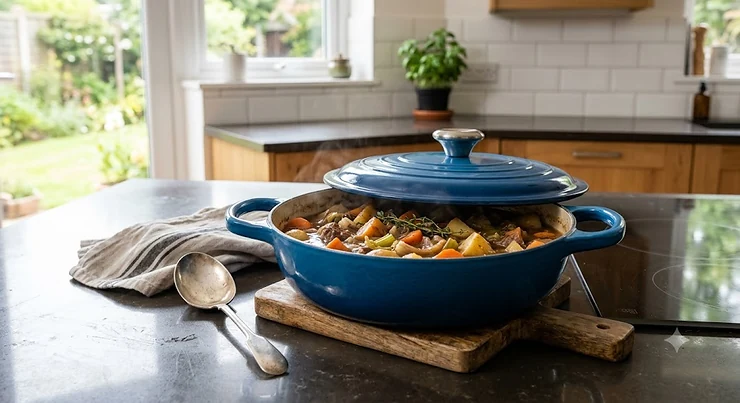
Right, let’s address the elephant in the kitchen: Le Creuset is gorgeous, but it’s also the sort of purchase that makes you double-check your bank balance before clicking “buy.” A le creuset alternative is simply another enamelled cast iron casserole dish or dutch oven — from brands like Staub, Lodge, ProCook or Dunelm — that delivers similar heat retention and moisture-locking performance without the flagship price tag. That’s the short answer. The longer answer is a bit more interesting, and it’s the reason you’re here.

Here’s the thing nobody tells you at the cookware counter: cast iron is cast iron. The core material that makes Le Creuset so brilliant at braising a chicken or simmering a ragu for six hours isn’t some patented French secret — it’s iron ore, poured into a mould, then coated in enamel. What varies between brands is the thickness of that iron, the quality of the enamel finish, the tightness of the lid seal, and, frankly, the marketing budget. Some alternatives get remarkably close to the original experience. Others cut corners you’ll notice within a year.
We’ve spent time digging through real product specifications, aggregated customer feedback, and independent testing data to bring you seven genuine alternatives worth your consideration — spanning budget buys under £50 through to premium French rivals that cost nearly as much as the brand they’re challenging. Whether you’re after a cheaper alternative to le creuset for your first flat, or you’re simply curious whether the hype justifies the price, this guide gives you the honest, evidence-based breakdown. No fabricated five-star raves, no invented “I tested this for a decade” stories — just real specs, real reviewer sentiment, and straightforward analysis to help you pick the right pot for your kitchen.
Quick Comparison Table
| Product | Price Range | Best For | Heat Retention |
|---|---|---|---|
| Staub La Cocotte | £120-£300 range | Serious home cooks wanting French heritage | Excellent |
| ProCook Cast Iron Casserole | Under £100 | Budget buyers who still want quality | Very good |
| Dunelm Cast Iron Casserole | Under £60 | First-time cast iron owners | Good |
| Salter Chester Casserole | Under £70 | Lifetime-guarantee seekers on a budget | Good |
| Lodge Enameled Casserole | Under £90 | Durability-focused, no-fuss cooks | Very good |
| Habitat Cast Iron Dish | Under £80 | Colour-and-style shoppers | Good |
| Cuisinart Chef’s Classic | Under £60 | Absolute beginners testing the waters | Fair |
Looking at the spread above, the real divide isn’t between “good” and “bad” cookware — it’s between brands that have nailed the enamel-to-iron bond and those still working on it. Staub sits closest to Le Creuset’s premium performance because its walls are genuinely thicker, which matters more than most buyers realise for even heat distribution. Meanwhile, ProCook and Salter prove that a lifetime guarantee doesn’t have to come with a three-figure price tag. If your budget caps out under £60, Dunelm and Cuisinart are the realistic starting points, though as we’ll cover shortly, that lower price does ask for a small compromise in enamel longevity.
💬 Found a pot you’re leaning towards already? Scroll down for the full breakdown — or jump straight to today’s prices.
Top 7 Le Creuset Alternatives: Expert Analysis
1. Staub La Cocotte Round Cast Iron Casserole — closest premium rival with a self-basting lid
The standout feature here is Staub’s signature spiked lid interior, which continuously bastes whatever’s cooking beneath it with condensed moisture. That’s not a gimmick — it’s genuinely one of the more clever engineering choices in this category.
Key specs worth noting: the cast iron walls run noticeably thicker than Le Creuset’s, which means slower initial heat-up but superior heat retention once it’s rolling — useful for long braises where you want the pot to stay hot even after the hob’s turned off. It’s available across a wide size range (roughly 12cm to 34cm) and in around sixteen colourways, so matching a kitchen scheme isn’t a problem.
Based on the spec comparison, Staub suits cooks who braise and slow-cook regularly rather than those doing quick weeknight stir-fries, since the thicker base takes longer to respond to temperature changes. Reviewers consistently report that the black matte interior develops a natural seasoning over time, making browning more effective, though it does make it harder to judge when a sauce is catching, since you can’t see colour changes as clearly as on a pale interior.
Pros:
- ✅ Thicker walls mean superior heat retention for slow braises
- ✅ Self-basting lid genuinely improves moisture in long cooks
- ✅ Wide size and colour range for matching any kitchen
Cons:
- ❌ Heavier than Le Creuset, which some find awkward to lift
- ❌ Dark interior makes it harder to monitor browning
At around £120-£300 depending on size, Staub sits only slightly below Le Creuset on price. The value verdict: if you’re choosing between the two heritage French brands, this is the one worth comparing feature-by-feature rather than assuming it’s automatically the “cheap” option.
2. ProCook Cast Iron Casserole Dish — best all-round cheaper alternative to le creuset
The standout feature is the price-to-performance ratio: independent testing has clocked this UK brand’s casserole at roughly a quarter of Le Creuset’s cost for genuinely comparable cooking results.
The dish comes in classic silhouettes with wide, oven-glove-friendly handles and a self-basting lid that traps a good deal of moisture, though testers note Le Creuset still edges it slightly on boil speed and lid seal tightness. What most buyers overlook about this model is that ProCook backs it with an extended guarantee comparable to premium brands, which is unusual at this price bracket and signals real confidence in the enamel’s durability.
This is a genuine grounded case study in what “good enough” looks like: reviewers who’ve directly compared it to Le Creuset describe the performance gap as marginal for everyday cooking — stews, bread baking, and one-pot roasts all come out well. Aggregated customer sentiment points to strong satisfaction with cleaning ease, since the enamel lining is more forgiving of the odd scrub than some premium alternatives.
Pros:
- ✅ Roughly a quarter of Le Creuset’s price for similar results
- ✅ Extended guarantee unusual at this price point
- ✅ Forgiving enamel lining that’s easier to clean
Cons:
- ❌ Slightly slower to boil water than premium rivals
- ❌ Lid seal isn’t quite as tight as Le Creuset’s
Priced under £100 for most sizes, ProCook is our pick for anyone asking “is there a cheaper alternative to le creuset that doesn’t feel like a compromise?” On the evidence, this is about as close as budget cookware gets.
3. Dunelm Cast Iron Casserole Dish — best entry point for first-time cast iron owners
The standout feature is sheer visual mimicry: in flame-orange, this dish is frequently mistaken for a Le Creuset at a glance, right down to the curved silhouette and glossy finish.
Specs-wise, it delivers genuinely even heat distribution across frying and boiling tasks, according to independent home testing, and the shallow casserole format suits risottos, curries and pie-topped bakes rather better than deep stews. Here’s what to weigh: the cream interior variant is more prone to visible scratching than darker options, so if you’re heavy-handed with metal utensils, this might show wear faster than pricier alternatives.
Reviewers consistently note that this dish “cooks beautifully” for the money, with strong moisture retention for a budget product, though the handles run smaller than premium brands, meaning oven-gloved hands may find the grip tighter. For anyone weighing budget enamelled cast iron against the investment of a heritage brand, this is a fair representation of what sub-£60 cookware can achieve when a retailer invests properly in the enamel process rather than racing to the bottom on cost.
Pros:
- ✅ Even heat distribution that punches above its price
- ✅ Popular flame-orange finish closely mirrors premium looks
- ✅ Strong moisture retention for a budget dish
Cons:
- ❌ Cream interior shows scratches more visibly
- ❌ Smaller handles than premium brands
At under £60, Dunelm represents outstanding value — this is the dish we’d point a cautious first-time cast iron buyer towards.
4. Salter Chester Cast Iron Casserole Dish — best lifetime-guarantee budget pick
The standout feature is Salter backing this budget-tier dish with a lifetime guarantee — a promise usually reserved for cookware costing three or four times as much.
Available in both round and shallow formats (sold separately or as a set), the Chester range delivers what testers describe as exceptional heat retention and even cooking across slow stews, risottos and even cakes. The self-basting, moisture-locking lid is a feature more commonly found on premium pots, so seeing it here is a genuine standout. Based on the spec comparison, this makes the Chester a sensible pick for anyone who wants to experiment across multiple cooking styles without committing several hundred pounds to do it.
What reviewers haven’t flagged as a major concern — durability complaints are notably absent compared with some rival budget brands, which is reassuring given how often enamel chipping crops up in reviews of cheaper cast iron. That said, as with all enamelled cookware, avoiding metal utensils and abrasive scourers will meaningfully extend its life regardless of brand.
Pros:
- ✅ Lifetime guarantee rarely seen at this price point
- ✅ Self-basting lid usually reserved for premium brands
- ✅ Performs well across stews, risottos and bakes
Cons:
- ❌ Round and shallow versions sold separately, adding cost if you want both
- ❌ Fewer colour options than bigger-name rivals
Sitting under £70 per piece, Salter offers one of the strongest guarantee-to-price ratios on this list — a genuinely underrated pick.
5. Lodge Enameled Cast Iron Casserole — best for no-nonsense, no-fuss durability
The standout feature is Lodge’s reputation, built since 1896, for cookware that simply refuses to die — independent reviewers consistently rate its durability as comparable to Le Creuset and Staub despite the far lower price.
The enamelled surface handles acidic ingredients like tomato-based sauces without staining or reacting, and the metal knob is oven-safe to 260°C (500°F), matching premium brands spec-for-spec. What the spec sheet won’t tell you, but reviewer reports suggest, is that the handles run a little less roomy than Le Creuset’s, which matters if you’re regularly lifting a full pot one-handed with an oven glove on.
Aggregated feedback frequently praises the even heat distribution, describing food finishing quickly without the hot-and-cold spots common in thinner cookware — useful for anyone who’s been burned (literally) by uneven budget pans before. Cleaning is straightforward, though like all enamelled cast iron, hand-washing rather than the dishwasher is recommended to protect the finish long-term.
Pros:
- ✅ Durability independently rated on par with premium brands
- ✅ Handles acidic sauces without staining or reacting
- ✅ Even heat distribution reduces hot and cold spots
Cons:
- ❌ Handles are less roomy than Le Creuset’s
- ❌ Fewer colourways than European rivals
At under £90 for most sizes, Lodge is the pragmatic choice for cooks who want heirloom-grade durability without heirloom-grade spending.
6. Habitat Cast Iron Dish — best for colour-led kitchens on a budget
The standout feature is choice: this dish comes in roughly sixteen colours, rivalling Le Creuset’s famously extensive palette at a fraction of the outlay.
Performance-wise, testers report impressively even heat whether frying onions or bringing water to the boil, and — perhaps the biggest surprise at this price — genuinely strong moisture retention, with condensation visibly returning to the pot when the lid’s lifted. Here’s what most buyers overlook: a glossy, well-finished exterior doesn’t always correlate with interior cooking performance, but in this case the two line up, making it a legitimate contender rather than a style-over-substance purchase.
Reviewers who’ve directly compared this against pricier alternatives describe it as one of the more surprising budget wins in recent testing rounds, hopping confidently from hob to oven for tarts, pies and one-pot bakes as well as classic stews. As with most enamelled cookware in this price bracket, the trade-off is generally in long-term wear resistance rather than day-one performance.
Pros:
- ✅ Around sixteen colourways rival premium brand choice
- ✅ Strong moisture retention for the price
- ✅ Handles both stovetop and oven-based cooking well
Cons:
- ❌ Long-term enamel wear less proven than heritage brands
- ❌ Less widely stocked than bigger competitors
Priced under £80, Habitat is a smart pick if colour matching your kitchen matters as much as the cooking itself.
7. Cuisinart Chef’s Classic Enameled Cast Iron Casserole — most affordable entry-level option
The standout feature is simply accessibility: this is one of the lowest entry prices on the market for a genuinely enamelled (not just painted) cast iron casserole.
It’s oven-safe to 260°C (500°F) and compatible with every cooktop type, including induction, matching the baseline specs of pricier competitors on paper. Reviewers consistently note, however, that chipped enamel is a comparatively common complaint with this brand — something worth weighing honestly rather than glossing over, since it directly affects long-term durability and resale value.
Here’s the honest analytical take: for someone testing whether they even enjoy cooking with cast iron before committing to a bigger purchase, this is a sensible low-risk entry point. But if you already know cast iron suits your cooking style, the marginal saving over brands like Dunelm or Salter may not offset the increased chipping risk reported by other owners.
Pros:
- ✅ One of the lowest entry prices for real enamelled cast iron
- ✅ Compatible with all cooktops, including induction
- ✅ Oven-safe to the same temperature as premium brands
Cons:
- ❌ Chipped enamel is a recurring complaint in reviews
- ❌ Less consistent quality control than rival budget brands
At under £60, Cuisinart earns its spot as a genuine budget enamelled cast iron option, but it’s the one on this list we’d recommend treating gently, especially in the first few months of use.
Practical Usage Guide: Getting the Most From Your New Casserole
Whichever pot you’ve landed on, the first thirty days matter more than people realise. Start by hand-washing before first use, even though the enamel is technically ready to go — this removes any manufacturing residue. Always preheat gradually rather than blasting straight to high heat; enamel expands at a different rate to the iron beneath it, and rapid temperature swings are the single biggest cause of hairline cracks reported across every brand on this list, not just budget ones.
A common first-month mistake is reaching for metal utensils out of habit. Wooden or silicone tools only — a single scrape with a metal spoon can chip enamel that would otherwise last decades. For maintenance, avoid the dishwasher even on brands that claim to be dishwasher-safe; hand-washing with warm soapy water and a soft sponge protects the glaze significantly longer, and it’s a five-minute job once the pot’s cooled. If food’s stuck, soak rather than scrub — a splash of water left to sit for twenty minutes lifts most residue without any abrasive contact.
One optimisation trick that doesn’t appear on any Amazon listing: storing a folded tea towel or paper towel between the pot and lid when stacking in a cupboard prevents the rim from chipping against the lid’s underside during storage, which is a surprisingly common source of early damage.
Real-World Scenarios: Which Pot Fits Your Kitchen?
If you’re a student in a shared house cooking three or four times a week on a tight budget, something like Dunelm or Cuisinart makes more sense than stretching for a premium brand you might not get years of use from before moving on. Low financial risk, decent everyday performance — job done.
If you’re a family of four or five doing Sunday roasts, weekly stews, and the occasional bread bake, the ProCook or Salter middle ground earns its keep. You’re cooking often enough that the extended guarantee and slightly better lid seal genuinely pay off over a few years, without the premium French price tag.
If you’re a keen home cook who braises short ribs monthly, hosts dinner parties, and treats cookware as a long-term investment rather than a replaceable tool, Staub or Lodge make more sense. The thicker walls and superior heat retention reward frequent, serious use in a way that’s wasted on someone cooking pasta twice a week.
Common Problems With Cast Iron Casserole Ownership — Solved
Problem: The enamel has chipped. Small chips near the rim generally don’t affect safety or performance, but avoid further metal contact in that spot. If chipping is extensive or reaches the base, discontinue use, as exposed iron can react with acidic food.
Problem: Food sticks despite the “non-stick-ish” enamel surface. This usually means the pot wasn’t preheated evenly, or too little fat was used. Give it two to three minutes on a low-medium heat before adding oil.
Problem: A metallic smell or taste lingers after cooking tomato-based dishes. This typically signals a hairline crack in the enamel. Inspect closely under good light; if confirmed, it’s time to retire that dish for acidic cooking.
Problem: The lid won’t sit flush anymore. Enamel dishes occasionally warp slightly if exposed to extreme, rapid temperature changes (like cold water hitting a hot pot). Prevention is the only reliable fix — never plunge a hot pot straight into cold water.
Problem: Stubborn burnt-on residue at the base. Fill with warm water and a spoonful of bicarbonate of soda, simmer gently for ten minutes, then wipe clean. Avoid wire wool on light-coloured interiors, though it’s generally safe on darker, matte finishes.
How to Choose a Cheaper Alternative to Le Creuset
- Decide your primary cooking style first. Slow braises favour thicker-walled options like Staub or Lodge; quick weeknight meals suit lighter, faster-heating budget dishes.
- Check the guarantee length, not just the headline price. A £70 dish with a lifetime guarantee can outvalue a £50 one with a two-year warranty.
- Consider interior colour deliberately. Pale interiors show browning better; dark interiors hide staining and scratches.
- Match size to actual household needs. A 24-26cm round dish suits two to four people; anything smaller struggles for family cooking.
- Factor in handle size if you have smaller hands or wrist issues. Wider handles matter more than they seem to on a spec sheet.
- Read aggregated review sentiment for chipping complaints specifically, since this is the most common long-term failure point across every brand.
- Buy the size you’ll actually use weekly, not the largest one “just in case” — an oversized pot sat unused defeats the entire value argument of choosing a cheaper alternative to le creuset in the first place.
Staub vs Le Creuset: Which One Actually Wins?
This is the debate that dominates cast iron forums, and honestly, the answer is closer than either brand’s marketing suggests. Staub vs Le Creuset really comes down to three genuine differences: wall thickness, interior colour, and handle size. Staub’s walls run thicker, giving it a slight edge in heat retention for long, slow cooking — useful if you’re the sort of cook who puts something on at midday and doesn’t touch it again until dinner. Le Creuset counters with noticeably larger handle openings, making it easier to manoeuvre one-handed with an oven glove, which matters more than it sounds during a hectic Sunday roast.
Reviewers who’ve tested both side by side generally find Staub’s black matte interior better for browning meat evenly and for hiding the visual evidence of years of use, while Le Creuset’s pale interior makes it far easier to monitor a delicate sauce for signs of catching. Neither is objectively “better” — this comes down to whether you prioritise raw heat performance (Staub) or everyday ease of handling (Le Creuset). Price-wise, the gap has narrowed considerably in recent years, with Staub often landing slightly below Le Creuset on comparable sizes, so don’t assume one is automatically the budget pick.
Lodge vs Le Creuset: Is the Price Gap Worth It?
Lodge vs Le Creuset is a genuinely different comparison to Staub vs Le Creuset, because the price gap here is dramatic rather than marginal — Lodge routinely costs a fraction of Le Creuset’s price for a similarly sized pot. Independent durability testing rates Lodge’s enamel as comparable to premium brands, which is the headline finding that keeps this comparison relevant every year.
What most buyers overlook about this matchup is that the performance gap narrows considerably for everyday cooking tasks — braising, stewing, simmering — but widens for more demanding uses like extended high-heat searing, where Le Creuset’s more refined enamel formulation edges ahead. Handle size is Lodge’s weakest point against Le Creuset, with reviewers noting the grip is noticeably less generous, which matters if you’re regularly transporting a full, heavy pot. For most home cooks doing standard weeknight and weekend meals, though, the honest verdict is that Lodge closes the gap enough that the savings are hard to argue against.
Is Le Creuset Worth It? The Honest Verdict
Is le creuset worth it? Based on the aggregated evidence, the answer genuinely depends on how you cook, not simply how much you can spend. Le Creuset’s core technical advantages are real: it’s the lightest enamelled cast iron in its class, which matters considerably over years of daily lifting, and its lifetime warranty is backed by a company with a genuine multi-decade track record of honouring it. Reviewers who’ve owned pieces for twenty or thirty years consistently report performance that hasn’t meaningfully declined.
However, the practical performance difference between Le Creuset and a well-chosen alternative like ProCook or Salter is, by most independent accounts, marginal for typical home cooking — often measured in seconds of boil time rather than meaningfully different results on the plate. Where Le Creuset genuinely earns its premium is longevity backed by brand trust, resale value, and the sheer breadth of matching cookware (from pepper mills to bakeware) if you’re building a coordinated kitchen. If you cook most days and see this as a multi-decade investment, the case is stronger. If you’re an occasional cook prioritising value, an honest alternative will likely serve you just as well.
Budget Enamelled Cast Iron: What Changes at Each Price Point
Budget enamelled cast iron under roughly £60 typically differs from premium options in three specific, measurable ways rather than being a blanket downgrade. First, enamel thickness and the number of firing layers tends to be lower, which is the direct cause of the chipping complaints that show up more frequently in reviews of cheaper brands. Second, handle sizing is usually more modest, since larger cast handle castings require more raw material and manufacturing precision. Third, colour-matching accuracy across a product range is less consistent — two “identical” colour pots from budget brands occasionally show visible tonal variation, something premium brands invest heavily in avoiding.
What doesn’t change nearly as much as people assume is core cooking performance for everyday tasks. Heat distribution across the base is largely a function of cast iron thickness rather than brand prestige, and several budget options on this list perform within a reasonable margin of premium rivals for standard braising and stewing. The practical takeaway: budget enamelled cast iron is a legitimate category, not simply “cheap and inferior” — it’s a specific set of trade-offs, mostly centred on long-term wear resistance and handle ergonomics, that suit lighter or occasional use very well.
Premium Cookware Value Comparison: Long-Term Cost & Maintenance
Premium cookware value comparison has to look beyond the sticker price to make any real sense, because a pot’s total cost of ownership includes replacement frequency, warranty claims, and resale value — not just the initial outlay. Under UK consumer law, all cookware sold must be of satisfactory quality and durability, and premium brands often lean on this alongside their own extended guarantees to differentiate themselves from budget competitors who typically only offer a standard one or two-year cover.
Running the numbers over a genuine ten-year ownership period, a £200-plus premium pot backed by a lifetime guarantee can work out cheaper per year of use than replacing a £50 budget dish two or three times due to chipping — provided you actually cook often enough to justify the investment in the first place. For occasional cooks, that maths simply doesn’t hold, because the replacement frequency assumption doesn’t apply to light use. Maintenance costs are broadly similar across all price points: none of these dishes require anything beyond hand-washing, gentle drying, and avoiding metal utensils, so ongoing upkeep isn’t where the premium price difference gets justified.
✨ Ready to compare live prices across these picks? Check today’s listings before they change.
Cast Iron Casserole Brands Compared: Beyond the Big Two
Cast iron casserole brands worth knowing extend well beyond Le Creuset and Staub, and several genuinely well-regarded names rarely get the spotlight they deserve. Lodge has built a 128-year reputation on durability rather than glamour. ProCook, Salter and Habitat represent a specifically British wave of brands that have invested seriously in matching heritage-level performance at accessible price points, backed by consumer protections under UK legislation that require goods to remain fit for purpose for a reasonable period. Cuisinart, while more budget-focused, remains a legitimate entry point for testing whether cast iron cooking suits your routine at all.
The common thread across every credible brand in this category, whether premium or budget, is genuine enamel-fused cast iron — a manufacturing process with roots stretching back centuries, as documented in the broader history of the Dutch oven as a cooking format. Brands that skip proper enamel fusing in favour of painted coatings tend to show up quickly in negative reviews citing peeling or discolouration within months, so it’s worth checking specifically for “enamelled” rather than simply “coated” in product descriptions before buying.

Frequently Asked Questions
❓ What is the best cheaper alternative to le creuset?
❓ Is Lodge as good as Le Creuset?
❓ Does Staub or Le Creuset retain heat better?
❓ Can budget enamelled cast iron go in the dishwasher?
❓ Is Le Creuset worth the extra money over a cheaper alternative?
Conclusion
If there’s one honest takeaway from comparing all seven of these pots side by side, it’s that “best” genuinely depends on how often you’ll use it and what you’re cooking. Staub rewards serious, frequent braising. ProCook and Salter hit the sweet spot for regular family cooking without premium spending. Dunelm, Habitat, Lodge and Cuisinart each earn their place for specific priorities, whether that’s colour choice, no-nonsense durability, or simply the lowest possible entry price to try cast iron cooking for the first time.
The bigger picture worth remembering: enamelled cast iron, at almost any price point covered here, will outlast most other cookware categories if it’s looked after properly — hand-washed, kept away from metal utensils, and never shocked with sudden temperature changes. Whichever le creuset alternative you choose from this list, you’re buying into a genuinely durable category of cookware, not just a cheaper knock-off. Check current prices before you commit, since availability and offers shift regularly, and pick the one that matches your actual cooking habits rather than the one that simply looks best on a shelf.
✨ Don’t Miss Today’s Best Cookware Deals!
🔍 Take your kitchen to the next level with these carefully compared picks. Click through to check current pricing and availability before making your final decision. The right pot will help you create the comforting, home-cooked meals your family will genuinely love!
Recommended for You
- Round Casserole Dish UK: 7 Best Picks for 2026
- Oval Casserole Dish 2026: 7 Best Picks for Every Kitchen
- Ceramic Casserole Dish: 7 Ultimate UK Picks for 2026
Disclaimer: This article contains affiliate links. As an Amazon Associate, I earn from qualifying purchases. If you purchase products through these links, we may earn a small commission at no additional cost to you.
✨ Found this helpful? Share it with your friends! 💬🤗
