
In This Article
The best tagine pot is a two-part cooking vessel, a shallow base topped with a tall conical lid, that suits your hob, your household size and your tolerance for fuss. The lid catches steam, cools it and drips it back onto the food, so meat and vegetables braise gently in their own juices rather than boiling away.
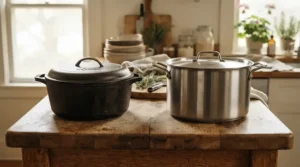
The idea is ancient. Wikipedia’s tagine entry places the cone-lidded earthenware pot in Morocco’s Anti-Atlas region. Its core trick is simple: condensation returns to the food, so you need barely any added water. Frugal. Clever. Delicious.
Here’s the catch for British cooks. Traditional unglazed clay was designed for charcoal braziers, not a fierce gas ring or a glass-top induction hob. Plenty of modern tagines swap the clay for enamelled cast iron, Flame ceramic or cast aluminium. Those choices change everything: how you heat the pot, how you clean it, how long it lasts, and how loudly you sigh when you lift it out of the cupboard.
This guide compares seven real models across budget, mid-range and premium, from French ceramic to a wallet-friendly aluminium pot. One honest note up front: I haven’t cooked in these pots. Everything below rests on manufacturer specs, retailer listings and the review themes I could verify, interpreted for real kitchens. Prices appear as ranges because they move constantly, so always check the current price.
You’ll also find straight answers on tagine pot vs Dutch oven, ceramic vs cast iron cookware, Moroccan spice pairings and slow-cooked lamb recipes. Those are the questions that decide whether your pot becomes a weekly favourite or a very expensive ornament.
Best Tagine Pot at a Glance: Quick Comparison
| Pot | Material | Size | Hob compatibility | Price range | Best For |
|---|---|---|---|---|---|
| Emile Henry Flame Tagine | Flame ceramic | 32 cm, about 3 L usable | Gas, electric, halogen; induction with disc | £125–£150 | Best all-round ceramic |
| Staub Cast Iron Tajine | Enamelled cast iron, ceramic lid | 28 cm, 2 L | All, including induction | £100–£175 | Searing then braising |
| Le Creuset Cast Iron Tagine | Cast iron, stoneware lid | 27 cm, about 2.3 L | All, including induction | £175–£240 | Heirloom buyers |
| SCANPAN Impact Tagine | Stainless steel, aluminium core, ceramic lid | 28 cm, about 2.9 L | All, including induction | £110–£220 | Induction cooks |
| MasterClass Cast Aluminium Tagine | Cast aluminium | 28 cm, 4 L | All, including induction | £30–£60 | Lightweight weeknights |
| INTIGNIS Cast Aluminium Tagine | Aluminium | 28 cm, 4.1–4.2 L | All hob types | Under £65 | Tight budgets |
| Kamsah Handmade Clay Tagine | Glazed clay | 12 in, 5.5 qt | Low heat; diffuser on gas | Check current price | Traditionalists |
Looking at the table, the Emile Henry Flame Tagine is the strongest all-rounder for gas and electric hobs. The Staub Cast Iron Tajine and SCANPAN Impact Tagine make more sense if induction is your reality and you want to brown meat in the same pot. Budget buyers should note that the MasterClass Cast Aluminium Tagine and INTIGNIS Cast Aluminium Tagine trade longevity and oven ceiling for low cost and light weight.
💬 Just one click — help others make better buying decisions too!😊
Top 7 Best Tagine Pot Picks for UK Kitchens: Expert Analysis
Each pick below follows the same logic: what the specs mean in practice, who the pot suits, what reviewers keep repeating, and whether the price range feels fair.
1. Emile Henry Flame Tagine — best all-round ceramic for hob and oven
The headline feature is Flame ceramic, a high-fired French clay body built to sit directly on a hob flame. No diffuser, no separate casserole, no drama. That’s why it leads my shortlist for the best ceramic tagine pot.
The 32 cm pot stands about 23 cm tall and weighs 3.55 kg. The maker lists a maximum capacity near 5 litres, with roughly 3 litres usable, and suggests 8–10 portions. Its own page rates it from -20°C to 290°C, though some retailers print different ceilings, so check your box. In practice, you can soften onions over medium gas, drop to a murmur, then carry the lot to a moderate oven.
Based on the spec comparison, the Emile Henry Flame Tagine suits hosts who cook for six or more and like serving at the table. The catch is induction: you need a separate disc, which dents the “simple” pitch. Retailer reviewers praise gentle, even cooking and the table presence. The recurring cautions are weight and storage space. I couldn’t verify a large block of Amazon UK reviews directly, so treat this as a summary of retailer-review themes.
Pros:
- ✅ Takes direct heat on gas and electric hobs
- ✅ Serves 8–10 people, per the maker
- ✅ Ten-year guarantee, made in France
Cons:
- ❌ Induction hobs need a separate heat disc
- ❌ Heavy and bulky to store
Price: around £125–£150 at the time of research, which is fair value for a pot that doubles as serving dish and centrepiece.
2. Staub Cast Iron Tajine — best for searing and braising in one pot
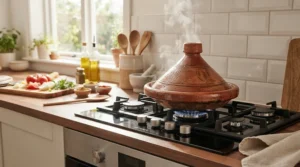
Where the ceramic pots demand gentle starts, this one has a cast iron base with a matte black enamel interior. You can sear lamb hard in the base, then pop on the ceramic lid and let it sulk quietly for hours.
It measures 28 cm across with a 2-litre capacity. Listed weights range from about 3.4 kg to 4.6 kg depending on the retailer, and oven ratings quoted run from 240°C to 260°C, so verify before roasting. It works on every hob, including induction. The 2-litre size is cosy: realistically two to four people. The matte enamel builds a slicker surface with oil use, according to retailer guidance, and several listings advise hand washing even where others claim dishwasher safety.
On the moisture question, woman&home’s head-to-head testing of premium French cast iron casseroles concluded that Staub locks in moisture marginally better for slow cooking. That wasn’t a tagine test, but a tagine is essentially a moisture-management device, so it’s an encouraging sign. Only a handful of reviews surfaced for this model; one retailer reviewer praised the cast iron base for sidestepping the usual weaknesses of pottery bases.
Pros:
- ✅ Sears and braises in a single vessel
- ✅ Works on every hob, including induction
- ✅ Enamel interior improves with regular oiling
Cons:
- ❌ Small 2 L capacity for big gatherings
- ❌ Heavy, with hand washing advised
Price: roughly £100–£175 depending on colour and retailer, which is strong value for cast iron of this pedigree.
3. Le Creuset Cast Iron Tagine — heirloom build with a lifetime guarantee
The standout here is the lifetime manufacturer’s guarantee, a rare promise in a category full of decorative pots.
The 27 cm pot holds around 2.3 litres (some listings say 2 L), stands about 21 cm tall, and is listed at roughly 3.5–4 kg. It’s oven safe to 260°C, works on all hobs including induction, and pairs the cast iron base with a stoneware lid. Retailers pitch it at four to six portions. The brand’s own guidance says cast iron works best at low-to-medium heat, which happens to be exactly how tagines should be cooked. Dishwasher use is permitted by some listings, but one retailer strongly advises against it.
My analytical take: you’re paying for the guarantee and the badge. Performance-wise, the Staub Cast Iron Tajine and SCANPAN Impact Tagine sit in the same neighbourhood for less. Availability also looked patchy at the time of research, with one major UK retailer listing it as no longer available online, so check current stock. Retailer reviewers love the value-for-years angle and the easy cleaning, while warning that it’s very heavy and hogs cupboard space.
Pros:
- ✅ Lifetime manufacturer’s guarantee
- ✅ Suits every heat source, including induction
- ✅ Easy to clean, per retailer reviewers
Cons:
- ❌ The priciest of the seven
- ❌ Heavy, and stock can be patchy
Price: around £175–£240, worthwhile only if you’ll keep it for decades.
4. SCANPAN Impact Tagine — stainless steel base with a ceramic cone
Instead of enamel, this one uses an 18/10 stainless steel body with a bonded aluminium core, topped with a ceramic conical lid.
It’s 28 cm across, holds about 2.9 litres (some listings say 3.2 L), and weighs about 3.24 kg with a 22.5 cm base. Retailers quote oven limits between roughly 220°C and 260°C, so read the care sheet. A retailer says the bonded base is about 6.4 mm thick, which spreads heat evenly for browning. Stainless steel means no enamel to chip and no seasoning ritual, but there’s no non-stick layer either. Rush the browning and lamb will cling like a toddler at nursery drop-off.
Induction cooks will like it, since the SCANPAN Impact Tagine works on every hob. One retailer listing mirroring Amazon data showed about 4.4 out of 5 from a little over 120 reviews. Reviewers describe it as easy to clean, even-cooking and big enough for a family meal.
Pros:
- ✅ No seasoning, no enamel to chip
- ✅ Browns well on any hob, including induction
- ✅ Oven-ready up to roughly 250°C
Cons:
- ❌ No non-stick surface, so use plenty of fat
- ❌ Prices vary widely between retailers
Price: roughly £110–£220, so compare retailers carefully before you commit.
5. MasterClass Cast Aluminium Tagine — lightweight weeknight workhorse
The big selling point is weight, or rather the lack of it. This is the pot you can lift with one hand while stirring with the other.
The 28 cm, 4-litre pot has a self-basting cone lid, a non-stick coating and induction suitability. The wider MasterClass cast aluminium range is rated to 200°C in the oven, a lower ceiling than ceramic or cast iron. The sibling shallow casserole weighs under 2 kg, so expect something similarly light. Care guidance is mixed: this listing says dishwasher safe, while sister products say hand wash only. Wash by hand and the coating will thank you.
Aluminium heats fast, which means quick browning and quick scorching. Keep the flame at medium-low. The MasterClass Cast Aluminium Tagine is a smart first pot for someone who wants a tagine in the rotation without a four-figure commitment to cookware. I couldn’t verify review volume for the tagine version specifically. The wider range scores well on UK deal sites for lightness, but treat that as indirect evidence.
Pros:
- ✅ Light enough to lift one-handed
- ✅ Generous 4 L capacity
- ✅ Works on induction hobs
Cons:
- ❌ Non-stick coatings wear faster than enamel
- ❌ Lower oven ceiling than ceramic or cast iron
Price: around £30–£60, excellent value for casual cooks.
6. INTIGNIS Cast Aluminium Tagine — cheapest route onto an induction hob
It earns its place through sheer pragmatism. Aluminium body, non-stick lining, and a little vent hole in the lid.
The 28 cm pot holds about 4.1–4.2 litres and weighs roughly 2.4 kg. It’s compatible with all hob types. One crucial wrinkle: listings conflict on oven use, with some titles saying oven proof and a retailer saying no. Confirm on the product page before sliding it into any oven. A long-term reviewer, who bought theirs in 2021, called it the best tagine they own. They liked the vent for keeping the hob tidy, found hand washing easy, and admitted it looks less handsome than cast iron.
My view: the INTIGNIS Cast Aluminium Tagine suits students, renters and anyone who wants Moroccan-style stews with minimal outlay. Reviewers also use it for chilli and bolognese, which says something about versatility. It won’t be an heirloom, but it will teach you whether you love tagine cooking before you invest in ceramic.
Pros:
- ✅ Very low cost of entry
- ✅ Light at around 2.4 kg
- ✅ Works on every hob type
Cons:
- ❌ Oven-safety claims conflict between listings
- ❌ Plainer looks than ceramic or cast iron
Price: under £65, a low-risk way to test the tagine habit.
7. Kamsah Handmade Clay Tagine — most authentic clay, most patient cook
This is the romantic option: a handmade glazed clay pot, described by sellers as made by Tunisian artisans, in a large 12-inch, 5.5-quart size (about 5.2 litres). The seller states the clay is lead-free; as always, that’s a claim to check against the compliance guidance later in this guide.
Clay behaves differently. Roundups say it needs seasoning before first use, gentle heat, and a diffuser on gas. Some reviewers praise the glazed interior for releasing food cleanly. Others report cracks after a few uses, so heat discipline matters. If you’ve got the patience, the Kamsah Handmade Clay Tagine rewards you with real centrepiece looks and room for six or more. If you want to cook while checking your phone, skip it.
UK availability and pricing were not verifiable at the time of research, so check amazon.co.uk for current stock, price and delivery before getting attached.
Pros:
- ✅ Authentic porous clay character
- ✅ Huge 5.5 qt capacity
- ✅ Doubles as a serving centrepiece
Cons:
- ❌ Needs seasoning and a heat diffuser on gas
- ❌ Some reviewers report cracking
Price: I couldn’t confirm a reliable UK range, so check the current price and weigh it against the seasoning commitment.
Specs and Care Compared
| Pot | Listed weight | Oven ceiling (listed) | Care | Reviewer theme | Best For |
|---|---|---|---|---|---|
| Emile Henry Flame Tagine | 3.55 kg | Up to 290°C (maker) | Dishwasher safe per maker | Even heat; heavy | Entertainers |
| Staub Cast Iron Tajine | About 3.4–4.6 kg | 240–260°C | Hand wash advised | Few reviews; sturdy | Sear-and-braise fans |
| Le Creuset Cast Iron Tagine | About 3.5–4 kg | 260°C | Hand wash safest | Easy to clean; very heavy | Long-term owners |
| SCANPAN Impact Tagine | About 3.24 kg | About 220–260°C | Easy clean | Cooks evenly | Induction households |
| MasterClass Cast Aluminium Tagine | Light (sibling under 2 kg) | About 200°C (range) | Hand wash safest | Unverified for tagine | Weeknight cooks |
| INTIGNIS Cast Aluminium Tagine | About 2.4 kg | Conflicting | Hand wash | Versatile, plain looks | Budget buyers |
| Kamsah Handmade Clay Tagine | Not verified | Oven use, low heat | Not dishwasher safe | Beautiful; cracking reports | Clay purists |
The table shows a clear split. Ceramic and cast iron give you the highest oven ceilings and longest lives, while aluminium wins on weight and price. If you routinely finish stews in a hot oven, the Emile Henry Flame Tagine, Staub Cast Iron Tajine or Le Creuset Cast Iron Tagine are safer bets than the aluminium pair. If you mostly cook on the hob and hate heavy lifting, the MasterClass Cast Aluminium Tagine is the pragmatic choice.
How to Season, Heat and Care for Your New Tagine Pot
Unboxing day decides whether your pot lasts one winter or twenty. Start with the maker’s leaflet, then layer on these habits.
- Know your material. Raw or glazed clay such as the Kamsah Handmade Clay Tagine usually wants seasoning. A common routine is soaking, rubbing the inside with olive oil and warming it slowly in a low oven. Enamelled cast iron, Flame ceramic and aluminium typically need only a wash.
- Warm it up slowly. Give the pot ten minutes on low heat before adding food. Never start a cold pot on high.
- Avoid thermal shock. Add warm stock rather than icy liquid to a hot base. Never plunge a hot pot under a cold tap or place it on a cold, wet worktop.
- Go easy on liquid. Because the lid returns condensation, you need much less water than in an ordinary casserole.
- Wash with care. Let the pot cool fully. Hand-wash non-stick aluminium like the MasterClass Cast Aluminium Tagine and INTIGNIS Cast Aluminium Tagine with a soft sponge, and keep metal utensils away from the coating.
A simple maintenance schedule: after every use, wash and dry thoroughly; monthly, check the glaze or coating for chips and test the lid fit. The classic first-month mistakes are cranking the heat to hurry things along, adding too much liquid and storing a pot that’s still damp. Slow and steady genuinely wins this race.
Real-World Scenarios: Which Best Tagine Pot Fits Your Kitchen?
Specs only matter when matched to a real life. Here are three profiles.
The induction renter. Budget around £50, a small flat, a glass-top hob and a plan to cook tagines roughly weekly. The MasterClass Cast Aluminium Tagine or INTIGNIS Cast Aluminium Tagine fits: light for tiny cupboards, induction-friendly and cheap enough to forgive if it doesn’t become a habit. Wash by hand and keep the heat moderate.
The Saturday host. You’ve got a gas hob, a dining table that seats eight and a monthly dinner-party habit. The Emile Henry Flame Tagine is the logical choice. It takes direct flame, handles big batches and goes straight to the table looking the part. Budget £125–£150 and clear some shelf space.
The slow-Sunday cast iron devotee. You already own heavy pans, love browning meat properly and plan to cook slow-cooked lamb recipes most weekends. A Staub Cast Iron Tajine or Le Creuset Cast Iron Tagine suits you, one for the sear-then-braise convenience and the other for the lifetime guarantee. Expect £100–£240 depending on which you choose.
If you’re torn, ask two questions: which hob do I have, and how many people do I cook for? Those answers eliminate half the field in seconds.
Problem and Solution Guide: Cracks, Sticking and Watery Stews
Even the best tagine pot can misbehave if you treat it like a frying pan. These are the five most common pain points.
- Cracking. The usual culprit is thermal shock or direct flame on clay. Use a diffuser with the Kamsah Handmade Clay Tagine, heat gradually and never place a hot pot on a cold surface.
- Sticking. Aluminium and stainless steel can grab meat. Use plenty of fat, keep the heat at medium for browning, and don’t try to turn meat until it releases naturally. The SCANPAN Impact Tagine has no non-stick layer, so this applies doubly.
- Watery sauce. You’ve probably added too much liquid. Remove the lid for the last 15 minutes to reduce the sauce, or stir in a spoonful of honey or tomato purée.
- Scorched base. Your heat is too high. Drop to the lowest setting, check liquid levels and consider an oven finish at a moderate temperature instead.
- Steam mess. Check the lid vent. The INTIGNIS Cast Aluminium Tagine has a small steam hole that reviewers say keeps the hob tidy.
Most tagine disasters trace back to impatience. Slow heat is the whole point of the pot.
How to Choose the Best Tagine Pot (5 Steps)
Here’s a quick, snippet-friendly checklist for picking the best tagine pot for your kitchen.
- Match your hob first. Gas tolerates almost everything. Electric rings can run hot and punish clay. Induction needs a magnetic base or a disc, so check the listing before falling for the glaze.
- Pick a material to suit your patience. Ceramic and enamelled cast iron are low-maintenance; clay demands seasoning and care; aluminium is light but wears faster.
- Size for your table. A 27–28 cm pot suits two to six people, while 32 cm models are pitched at bigger groups. Remember the cone lid needs headroom, so don’t fill to the brim.
- Be honest about weight and storage. A 3.5–4.6 kg cast iron pot is wonderful until you have to lift it from a high shelf.
- Check the lid and the care label. A snug lid with a vent keeps steam working properly. Confirm dishwasher and oven limits, because listings often disagree.
- Weigh the guarantee against the price. Lifetime and ten-year promises add real value if you’ll keep the pot for years.
Best Tagine Pot for Stovetop Use: Gas, Electric and Induction
The best tagine pot for stovetop use depends almost entirely on what’s under it.
Gas. Flame-rated ceramic like the Emile Henry Flame Tagine is built for it. Clay needs a diffuser, and cast iron simply needs patience. Keep the flame small enough that it doesn’t lick up the sides.
Electric and halogen. Coils and plates can run intensely hot in one spot. Ceramic and cast iron cope; thin aluminium can scorch. Pre-warm slowly and keep to low settings.
Induction. This is where cast iron and steel shine. The Staub Cast Iron Tajine, Le Creuset Cast Iron Tagine and SCANPAN Impact Tagine all suit induction. The MasterClass Cast Aluminium Tagine and INTIGNIS Cast Aluminium Tagine work too, thanks to their hob-compatible bases. The Emile Henry Flame Tagine needs an induction disc, which works but adds a step.
A practical tip: match the burner to the base, not the rim. The SCANPAN Impact Tagine has a 22.5 cm base under a 28 cm body, so a small ring wastes less energy. Always lift rather than slide any pot across a glass hob.
Best Ceramic Tagine Pot: What to Look For (and UK Safety Rules)
A genuine best ceramic tagine pot isn’t just a pretty shape. Look first for a clay body designed for heat, such as Flame ceramic, rather than a decorative piece that happens to be pot-shaped. Check that the glaze is smooth and unbroken, the lid sits snugly on the rim, and the maker clearly states hob and oven limits.
Safety deserves a moment. UK law sets limits on how much lead and cadmium can transfer from ceramic articles into food. According to UK food-contact legislation, manufacturers or importers must be able to supply compliance documentation on request. Practically, that means you should favour sellers who state their pots are food-safe, avoid pieces labelled decorative-only, and retire any pot whose glaze is badly chipped or crazed. Worn glaze is where problems usually start.
Between the two ceramic options here, the Emile Henry Flame Tagine is the low-hassle choice. The Kamsah Handmade Clay Tagine is the characterful one, but it asks for a seasoning routine and a gentler hand. Match the pot to your temperament as well as your hob.
Ceramic vs Cast Iron Cookware: Which Suits a Tagine Better?
The ceramic vs cast iron cookware debate boils down to heat behaviour and hassle.
| Material | Heat behaviour | Weight | Hob fit | Upkeep | Best For |
|---|---|---|---|---|---|
| Flame ceramic (Emile Henry Flame Tagine) | Gentle, even; slow to change | Heavy (3.55 kg) | Gas, electric; disc for induction | Low | Hosts and serving at table |
| Enamelled cast iron (Staub Cast Iron Tajine, Le Creuset Cast Iron Tagine) | Strong retention; sears well | Heaviest (about 3.4–4.6 kg) | All, including induction | Low to moderate | Browning plus braising |
| Cast aluminium (MasterClass Cast Aluminium Tagine, INTIGNIS Cast Aluminium Tagine) | Heats fast; scorches easily | Light | All hobs | Moderate (coating care) | Budget, easy handling |
| Glazed clay (Kamsah Handmade Clay Tagine) | Slow, porous, moisture-rich | Heavy | Low heat; diffuser | High | Ritual cooks |
Ceramic wins on gentle, forgiving heat and serving looks, while cast iron wins when you want to brown meat hard in the same pot. For a typical UK home with an induction hob, cast iron or steel is easier. For a gas hob and a love of presentation, ceramic is sweeter. Aluminium is the practical outsider, light and cheap but less durable.
Tagine Pot vs Dutch Oven: Which Do You Actually Need?
The tagine pot vs Dutch oven question comes up constantly, and it deserves a straight answer: you can make tagine-style stews in either, but they’re not identical.
A Dutch oven has a flat, heavy lid and a deep body, which suits big stews, bread and braises. A tagine’s cone lid encourages condensation to run back down, so you need little added liquid, and the wide, shallow base makes layering and serving easier. woman&home’s testing puts premium cast iron casseroles at several kilograms heavier than a tagine, with a 28 cm Dutch oven reaching 6–7 kg.
| Feature | Tagine pot | Dutch oven |
|---|---|---|
| Lid design | Conical, returns condensation | Flat, tight seal |
| Capacity | Wide and shallow; 2–5 L typical | Deep; often 4–8 L |
| Weight | About 2.4–4.6 kg (listed) | Often 6 kg plus for premium cast iron |
| Versatility | Stews, serving, some oven use | Stews, bread, roasts, frying |
| Price | Under £65 to £240 | Premium models start around £150 |
| Best For | Moroccan-style braises and presentation | All-round heavy cooking |
If you cook one or two Moroccan-style dishes a month, a tagine is a treat; if you want one workhorse, a Dutch oven wins. If you already own a Dutch oven and love slow-cooked lamb recipes, you can use it for the same stew, but you’ll lose the serving theatre. Many cooks end up with both.
Moroccan Spice Pairings for Slow-Cooked Tagines
Moroccan spice pairings are less about heat and more about balance: warm, sweet, bright and earthy, all in one pot.
The classic warm base is cumin, coriander, cinnamon and ginger, which Mary Berry’s lamb tagine uses with tomatoes, harissa and honey. For sweetness, apricots, raisins, prunes or dried cherries cut through rich lamb. For brightness, preserved lemon, orange zest and lemon juice lift the whole pot, as Stevie Parle’s version shows. Saffron and ras el hanout add perfume. Blends vary widely between brands, so taste before adding extra salt.
Here are a few reliable pairings:
- Lamb: cinnamon, apricots, saffron and almonds.
- Chicken: preserved lemon, olives, ginger and fresh coriander.
- Chickpeas and vegetables: cumin, paprika, a touch of harissa.
One technique tip: toast whole spices briefly in the pot, then bloom ground spices in fat before adding liquid. It takes a minute and transforms the depth. Pair that with the gentle heat of the Emile Henry Flame Tagine or Staub Cast Iron Tajine, and the spices have time to marry properly.
Slow-Cooked Lamb Recipes to Try in Your Tagine Pot
Slow-cooked lamb recipes are where a tagine pot earns its cupboard space. Here are three approaches, all easy to adapt.
The sweet classic. Brown lamb shoulder, then cook it covered over gentle heat for around two hours with onion, garlic, cinnamon, ras el hanout, saffron and stock. Add apricots, almonds and honey for the last ten minutes. This is a classic Moroccan-style balance of savoury and sweet.
The store-cupboard version. Mary Berry uses lamb neck fillet in modest pieces with cumin, coriander, cinnamon, tomatoes, honey, apricots, preserved lemon and chickpeas, cooked until tender. It’s a forgiving recipe for first-time tagine cooks.
The oven finish. Great British Chefs’ lamb tagine browns the meat in a wide pan, builds the spiced base, then moves the pot to a low oven at 150°C (Gas 2) for two to three hours. Chickpeas and honey go in at the end. Ovenproof pots like the Staub Cast Iron Tajine or Le Creuset Cast Iron Tagine suit this approach.
My analytical take: lamb shoulder and neck need time, not heat. If your lamb is still chewy, it simply hasn’t had long enough.
FAQ
❓ Is a tagine pot worth buying if I already own a casserole dish?
❓ What size tagine pot do I need for four people?
❓ Where can I buy a tagine pot in the UK?
❓ Can a tagine pot go in the dishwasher?
❓ Is an expensive tagine pot better than a cheap one?
Conclusion
Here’s the short version. For most gas or electric kitchens, the Emile Henry Flame Tagine is the best tagine pot: forgiving, handsome and large enough for a crowd. If you cook on induction and love browning meat properly, the Staub Cast Iron Tajine or SCANPAN Impact Tagine is the smarter fit. If you want to buy once and keep it for life, the Le Creuset Cast Iron Tagine brings a lifetime guarantee, as long as stock and budget cooperate.
On a tighter budget, the MasterClass Cast Aluminium Tagine and INTIGNIS Cast Aluminium Tagine open the door to tagine cooking for very little, with the trade-offs we’ve covered. And if you’re a patient traditionalist, the Kamsah Handmade Clay Tagine offers authentic clay character, provided you respect its seasoning and low-heat rules.
Whichever you choose, remember the real secret isn’t the pot. It’s time, gentle heat and a well-balanced spice mix. Prices and availability change often, so check the current price before you decide.
✨ Ready to Cook Something Slow and Spectacular?
🔍 Take your Sunday cooking to the next level with these carefully selected pots. Click any highlighted product name to check current pricing and availability, then fill your kitchen with cinnamon, saffron and the smell of slow-cooked lamb. 🥘
Recommended for You
- Speciality Cookware Pieces: 7 Best UK Picks To Buy In 2026
- Best Tagine Pots: 7 Proven Picks For UK Kitchens (2026)
- Pressure Cooker Under £30: 7 Honest Picks For UK Kitchens (2026)
Disclaimer: This article contains affiliate links. As an Amazon Associate, I earn from qualifying purchases. If you purchase products through these links, we may earn a small commission at no additional cost to you.
✨ Found this helpful? Share it with your friends! 💬🤗
