In This Article
Here is an awkward truth most roundups bury: a genuine pressure cooker under £30 is a moving target in UK shops. Prices wobble weekly, discounts come and go, and the line between “bargain” and “false economy” is thinner than the lid gasket on a cheap pot. This guide is built around that reality, so you can spot a pressure cooker under £30 that is actually worth owning.
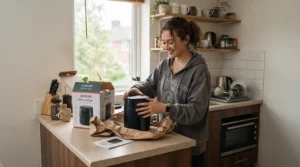
Why bother? Because the payoff is real. Great British Chefs notes that a pressure cooker can turn tough cuts into tender dishes in around a third of the usual time, and that it can trim your gas and electricity use once you’ve bought it. For anyone cooking on a tight budget, that is a rare double win.
What is a pressure cooker under £30?
A pressure cooker under £30 is a sealed stovetop pot, usually aluminium or thin-based steel, that traps steam so food cooks above 100°C. At this price you get manual controls, a basic locking lid and a pressure indicator, but rarely the polished finishes or long warranties of premium models.
Below, you’ll find seven real models, honest notes on what rock-bottom pricing costs you, and plain-English guidance for beginner cooking appliances. Where a model sits just above the £30 line, I say so rather than pretending otherwise. Think of the threshold as a compass, not a cliff edge.
Quick Comparison Table: Pressure Cooker Under £30 and Near-Miss Options
Prices below are approximate ranges from the time of research and will move, so check current price before you buy.
| Product | Capacity | Material | Approx. price range | Review theme | Best For |
|---|---|---|---|---|---|
| Prestige Aluminium Pressure Cooker 4L | 4L | Aluminium, steel base | Around £30 on deal; higher otherwise | Rated 4.2/5 across 684 reviews on Amazon (per a deal tracker) | Couples, first-timers |
| Tower T80245 3L Pressure Cooker | 3L | Stainless steel | Mid-£30s to mid-£40s | Easy to use, ideal for one or two | Solo cooks |
| Tower T80244 6L Pressure Cooker | 6L | Stainless steel | Around £40 | Popular with people replacing old cookers | Batch cooking |
| Tower Hi Dome 6L Aluminium Pressure Cooker (T80213) | 6L | Aluminium | Check current price | Works on induction; one valve complaint | Big pots, tall joints |
| Prestige Smart Plus 6L Hard Anodised Pressure Cooker | 6L | Hard anodised aluminium | Check current price | Long-lived, light but solid | Families on gas or induction |
| Tower One-Touch Ultima 4L (T920002) | 4L | Steel | Around £70 | Premium reference point | Comfort-first buyers |
| Prestige 6L High Dome Aluminium Pressure Cooker | 6L | Aluminium | Around £100 on one reseller | Decades-long loyalty | Long-term investors |
Looking at the table, the Prestige Aluminium Pressure Cooker 4L is the only model here that has been logged at around £30, and only on a discount. The Tower T80245 3L Pressure Cooker is the better-built small option, but it often sits a few pounds above the line. The final two models exist to show what happens when you spend two to three times more.
💬 Just one click — help others make better buying decisions too!😊
Top 7 Pressure Cooker Under £30 and Near-Budget Picks: Expert Analysis
1. Prestige Aluminium Pressure Cooker 4L — the one that actually dips to £30
The headline here is price: a deal tracker logged this pot at around £30 against a normal price in the high £30s, making it the closest thing to a true pressure cooker under £30 in this list.
It is a 4-litre aluminium pot with a stainless-steel base, which is what lets it work on induction as well as gas and electric hobs, though the listing notes you need a correctly sized induction zone. It runs at 15lb high pressure, which is what delivers the “up to 70% faster” claim Prestige makes. The locking handle and visual pressure indicator cover the basic safety needs.
On paper, 4 litres feeds two to four people, so this suits couples and the best budget pressure cooker for beginners shortlist. Based on the spec comparison, the single pressure setting is both a limitation and a gift: fewer dials means fewer ways to get it wrong. The catch is that no recipe book is included, so you’ll need to follow a trusted guide for timings.
Reviewer sentiment, as aggregated by a deal tracker, sits at 4.2/5 across 684 Amazon reviews. That is solid for a cheap pot, though I couldn’t verify individual review themes.
Pros:
- ✅ Closest to the £30 line on discount
- ✅ Works on induction with the right zone
- ✅ Simple single-pressure operation for beginners
Cons:
- ❌ Aluminium needs gentler cleaning than steel
- ❌ No recipe book supplied
Price range: around £30 on deal, high-£30s otherwise. Verdict: the best-value entry point if you catch the discount.
2. Tower T80245 3L Pressure Cooker — compact stainless steel for one or two
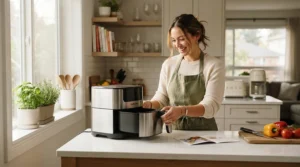
Its standout feature is the steel build at a small size, a rare combination when you’re hunting rock-bottom pricing.
The 3-litre pot is 20cm across, with two cooking pressures (70 and 100kPa, roughly 10lb and 14.5lb) and a steamer basket with stand. Those two settings matter in practice: the lower one is gentler on vegetables and fish, while the higher one suits stews and pulses. Tower says the body is dishwasher safe but the lid should be washed by hand to protect the valves and seals, which is the right call.
Who is it for? Based on the specs, it suits single cooks, students and couples making modest portions, and anyone who wants steel rather than aluminium. It is less suited to batch cooking, and at least one reviewer noted that the recipe booklet doesn’t scale to the 3L size.
Reviewers consistently describe it as easy to use, a good size for two, and a big step up from older weighted-valve designs. Some report using it several times a week.
Pros:
- ✅ Two pressure settings add versatility
- ✅ Steel body with induction-ready base
- ✅ Steamer basket and stand included
Cons:
- ❌ Too small for family batch cooking
- ❌ Often sits above the £30 line
Price range: mid-£30s to mid-£40s. Verdict: worth stretching for if you want steel and small portions.
3. Tower T80244 6L Pressure Cooker — the big-pot stretch pick
Its edge is capacity: six litres in stainless steel for around the £40 mark.
At 22cm wide and about 2.48kg, it has inner capacity markings (which stop you breaching the two-thirds-full rule), phenolic handles and a satin interior. Two pressures let you tailor cooking. Be aware that the retailer listing says hand wash only.
Here’s what the spec sheet won’t tell you: six litres is a batch-cooking pot, so it earns its keep when you’re cooking for four to six or filling the freezer. If you cook for one, this is overkill and the Tower T80245 3L Pressure Cooker makes more sense.
Reviewers frequently mention replacing a 20 to 40-year-old cooker that no longer worked on induction, which suggests buyers trust the brand. One reviewer on another platform raised concerns about the pressure dial feeling flimsy. A single review isn’t a trend, but read recent feedback before buying and test the dial carefully on first use.
Pros:
- ✅ Generous 6L capacity for batch cooking
- ✅ Inner markings guard against overfilling
- ✅ Induction-compatible steel construction
Cons:
- ❌ Hand wash only
- ❌ Clearly above the £30 threshold
Price range: around £40. Verdict: a good value jump if you cook for a crowd.
4. Tower Hi Dome 6L Aluminium Pressure Cooker (T80213) — tall dome for big joints
The high dome is the hook, giving extra headroom for joints and tall stockpots.
The aluminium body is lighter than steel and heats fast, and the listing states compatibility with all hob types including induction, plus a steam basket and stand. One reviewer’s comment is useful: on gas, the flame needs to be set much lower to hold pressure, which is typical of fast-heating aluminium.
Based on the design, this suits people who cook whole chickens, gammon or large batches of stock. The trade-off is that aluminium pots are less forgiving of harsh scourers and dishwashers.
Reviewer sentiment is mixed in a useful way. One long-time Tower user was delighted it worked on their new induction hob. Another was disappointed that the pressure valve didn’t rise high enough to gauge timings, relegating it to soup. That’s a single report, but it shows why you should watch the indicator closely on first use. I couldn’t verify a current price, so treat it as a check-before-buying option.
Pros:
- ✅ Tall dome suits joints and stock
- ✅ Light aluminium heats quickly
- ✅ Works on induction per the listing
Cons:
- ❌ Aluminium marks easily if scrubbed hard
- ❌ One reviewer reported a hard-to-read valve
Price range: check current price. Verdict: a sensible pick if you need height rather than width.
5. Prestige Smart Plus 6L Hard Anodised Pressure Cooker — hard anodised durability
Its angle is the hard anodised finish, which is tougher than bare aluminium.
Marks & Spencer describes this 6L model as cooking up to 70% faster than conventional methods. Hard anodising creates a harder, darker surface that resists scratching better than plain aluminium, which matters for a pot you’ll scrub regularly. Reviewers also describe it as light but solid.
On paper, that makes it a good fit for families on gas or induction who want longevity without paying premium prices. The black finish also hides staining better than shiny aluminium.
Reviewer sentiment on M&S is encouraging: one owner reported an earlier Smart Plus lasting eleven years before the pressure housing snapped, and then happily bought another. Others praise its performance on an induction hob. That tells you the design is long-lived, though it also hints that plastic parts are the likely failure point, so keep spares in mind. I couldn’t verify a current price, so check before committing.
Pros:
- ✅ Hard anodised surface resists scratches
- ✅ Light yet solid in the hand
- ✅ Owners report very long service lives
Cons:
- ❌ Pressure housing can eventually fail
- ❌ Price may exceed the £30 line
Price range: check current price. Verdict: a durable choice if you can stretch.
6. Tower One-Touch Ultima 4L (T920002) — twist-and-turn lid convenience
The standout is the twist-and-turn lid, a genuine usability upgrade.
Lakeland lists it at around £70 (it was out of stock when I checked). Features include two pressure settings, a 4L capacity for four or five portions, and suitability for all hobs including induction. Another listing mentions a detachable 60-minute timer.
Here’s the premium-versus-budget logic: you are paying roughly double or more for easier lid handling and extra polish. Whether that’s worth it depends on how often you’ll use it and how confident you feel around hot steam. For nervous beginners, easier locking can be worth real money.
I couldn’t verify aggregated review data for this specific model, so treat it as a reference point rather than a recommendation.
Pros:
- ✅ Twist-and-turn lid is easier to operate
- ✅ Two pressure settings add flexibility
- ✅ Suits all hob types
Cons:
- ❌ Roughly double the budget ceiling
- ❌ Availability can be patchy
Price range: around £70. Verdict: a comfort upgrade, not a bargain.
7. Prestige 6L High Dome Aluminium Pressure Cooker — three pressures, decades of loyalty
Its distinction is three pressure settings, 5lb, 10lb and 15lb, according to the retailer listing.
One reseller listing shows it at around £100 and describes it as a British-made unit with a mechanical lock, a steamer basket and a trivet. That extra range lets you cook delicate vegetables gently and push tough beef hard, which fixed-pressure budget pots cannot do.
On M&S, owners describe replacing cookers that had lasted 35, 40 and even 55 years. That longevity is the real argument here: spread over decades, a pricey pot can cost less per use than a flimsy one replaced every few years.
Pros:
- ✅ Three pressure settings for precision
- ✅ Long ownership histories reported
- ✅ Steamer basket and trivet included
Cons:
- ❌ Roughly three times the £30 budget
- ❌ Heavy outlay for a first purchase
Price range: around £100 on one reseller. Verdict: a buy-it-for-life option, not a rock-bottom one.
How to Choose a Pressure Cooker Under £30
Choosing well is mostly about avoiding regret. Pressure cooking works because a sealed pot raises the boiling point of water, a principle explained in the Wikipedia entry on pressure cooking. Keep that in mind as you work through these steps.
- Decide your portion size first. Three litres suits one or two people; four litres covers a small family; six litres is for batch cooking. Buying too big wastes hob space and energy.
- Check your hob. Induction needs a magnetic base, so confirm compatibility in the listing rather than assuming.
- Pick your material. Aluminium is cheaper and lighter; stainless steel is tougher and easier to clean.
- Look for a visible pressure indicator and locking handle. These are your basic safety net.
- Check spare-part availability. Gaskets and valves wear out, so a pot with replaceable parts lasts longer.
- Read the warranty. Tower advertises a long guarantee on registration, which can tip a close decision.
- Set a stretch budget. Accept that a few pounds above £30 can buy meaningfully better build quality.

Pressure Cooker Under £30 vs Premium: Budget Pressure Cooker vs Premium Pressure Cooker Compared
The budget pressure cooker vs premium pressure cooker question is really about what extra money buys.
| Feature | Budget (e.g. Prestige Aluminium Pressure Cooker 4L) | Premium (e.g. Tower One-Touch Ultima 4L) | Best For |
|---|---|---|---|
| Price range | Around £30 to high £30s | Around £70 | Budget vs comfort |
| Lid system | Standard locking handle | Twist-and-turn lid | Ease of use |
| Pressure settings | Often one | Two or three | Cooking range |
| Build | Thinner aluminium | Heavier construction | Longevity |
| Warranty | Shorter | Typically longer | Peace of mind |
The honest read: both models cook the same stew in roughly the same time. Premium models win on convenience, finish and flexibility, while a pressure cooker under £30 wins on cost per meal. For the first year of ownership, the cheap pot delivers almost everything the expensive one does.
Rock-Bottom Pricing: What You Really Give Up
Rock-bottom pricing always comes from somewhere. In pressure cookers, it usually comes from four places.
Thinner bases. Cheap aluminium pots heat fast but can scorch sauces, so you’ll stir more and brown less. Fewer pressure settings. One pressure setting is fine for stews and pulses but crude for fish. Plainer handles and valves. These are the parts most likely to fail first. Shorter guarantees. A cheaper pot often carries a shorter warranty, so you carry more risk.
The sensible response is not to avoid cheap cookers but to buy with eyes open. A pressure cooker under £30 can do 90% of what you need for stews, soups, rice and pulses. The remaining 10% (delicate fish, heavy browning, effortless lid handling) is where premium models earn their money. Great British Chefs suggests thick bases and stainless steel are signs of a long-lasting cooker, and that matches the trade-offs here: at the bottom of the market, you’re often buying thinner metal.
Best Budget Pressure Cooker for Beginners: What to Look For
The best budget pressure cooker for beginners isn’t the cheapest. It is the one that makes first-time mistakes survivable.
Look for a visual pressure indicator, a locking handle that physically prevents opening under pressure, and a simple control layout. The Prestige Aluminium Pressure Cooker 4L suits this brief because it has one pressure setting and fewer choices to fumble. The Tower T80245 3L Pressure Cooker works too, with two pressures and a more forgiving steel body.
Beginners should also size down rather than up. A smaller pot reaches pressure faster, is easier to lift and teaches you the rhythm of heat control without drama. Start with rice, lentil soup and chicken thighs, all forgiving recipes with generous timing windows.
Avoid the temptation to buy an electric multi-cooker purely because it looks friendlier. The electric models I found sit well above £30, so for a true pressure cooker under £30, stovetop is where the choices live.
Best Affordable Pressure Cooker for Basic Meals
For the best affordable pressure cooker for basic meals, think about what you’ll cook weekly rather than occasionally. Basic meals (chilli, bolognese, dal, soup, risotto, a batch of beans) all rely on the same two things: reliable pressure and decent heat distribution.
The Tower T80244 6L Pressure Cooker handles basic family meals most comfortably thanks to its capacity and inner markings. The Tower Hi Dome 6L Aluminium Pressure Cooker (T80213) suits those who cook bigger cuts, thanks to its height. If you want the lowest outlay, the Prestige Aluminium Pressure Cooker 4L covers couples and small families.
| Product | Typical range | Rough cost per use* | Best For |
|---|---|---|---|
| Prestige Aluminium Pressure Cooker 4L | Around £30-£38 | Roughly 6p-7p | Lowest outlay |
| Tower T80245 3L Pressure Cooker | Mid-£30s to mid-£40s | Roughly 7p-9p | Small portions |
| Tower T80244 6L Pressure Cooker | Around £40 | Roughly 8p | Batch cooking |
| Tower One-Touch Ultima 4L | Around £70 | Roughly 13p | Convenience |
| Prestige 6L High Dome Aluminium Pressure Cooker | Around £100 | Roughly 19p | Decades of use |
*Assumes two uses a week over five years, about 520 uses.
Spread across 520 uses, even the dearest model costs pennies per meal, so the real decision is about durability and comfort. A pot that lasts a decade quickly beats one replaced every three years, which is why a slightly higher outlay can still be rational.
Beginner Cooking Appliances: Where a Pressure Cooker Fits
Among beginner cooking appliances, a pressure cooker is the odd one out: cheap, mechanical and slightly intimidating. Compared with a slow cooker, it demands attention; compared with an air fryer, it needs a hob. What it offers is speed and tenderness that nothing else at this price can match.
Slow cookers are forgiving but take hours. Air fryers are brilliant for crisp food but poor at braising. A pressure cooker fills the gap: tough, cheap cuts and dried pulses become tender in under an hour. That makes it a smart second or third appliance for anyone building a basic kitchen on a budget.
The learning curve is real but short. After two or three meals, the rhythm of reaching pressure, lowering the heat and timing the cook becomes routine. Think of it like learning to drive a manual: awkward for a week, then automatic.
Practical Usage Guide: Your First 30 Days with a Pressure Cooker
Day 1: water test. Add water, lock the lid and bring it to pressure. Learn how the indicator behaves before any food goes in.
Week 1: forgiving foods. Try rice, lentils or chicken thighs. Fill the pot no more than two-thirds full, as Great British Chefs advises, and never less than the minimum liquid in your manual.
Week 2: heat control. Once the indicator rises and steam hisses, turn the heat down. Gas needs a much lower flame than you’d expect, as one Tower Hi Dome reviewer noted. Induction users report medium settings, often around six out of nine, to hold pressure.
Week 3: release methods. Use natural release for beans and soups, and quick release for vegetables. Always release steam away from your face.
Week 4: maintenance. Remove the gasket, wash the lid by hand and check the valve is clear. Tower specifically advises hand washing the lid to protect the seals.
Common first-month mistakes: overfilling, forgetting liquid, opening too early and scrubbing aluminium with abrasive pads.
Basic Meal Prep with a Pressure Cooker
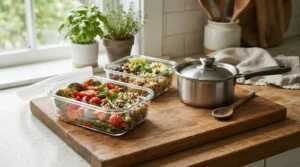
Basic meal prep is where a pressure cooker quietly pays for itself. Cook a big batch on Sunday and the week looks different.
A 6L pot such as the Tower T80244 6L Pressure Cooker handles a batch of chilli, a pot of dal or a whole tray’s worth of pulled chicken in one go. Dried beans, which normally need long soaking and simmering, become manageable in a fraction of the time. Portion the results into tubs, cool them promptly and refrigerate or freeze.
Smaller pots suit smaller plans. With the Tower T80245 3L Pressure Cooker, you can batch two or three lunches, which suits a single-person household. The Prestige Aluminium Pressure Cooker 4L sits comfortably between the two.
A smart prep rhythm: cook a base (beans, lentils or stock) on Sunday, then vary flavours through the week. One pot of cooked chickpeas becomes hummus on Monday, curry on Tuesday and salad topping on Wednesday. That’s the real efficiency of basic meal prep.
Real-World Scenarios: Matching Cookers to Cooks
These are illustrative profiles, not personal anecdotes.
The student on a tight budget. Picture someone cooking for one in a shared kitchen, three or four times a week. The Tower T80245 3L Pressure Cooker or the Prestige Aluminium Pressure Cooker 4L (on a good day for price) suits this profile, since small portions and low outlay matter most.
The couple replacing an old pot. They want something reliable for stews and soups twice a week. The Prestige Smart Plus 6L Hard Anodised Pressure Cooker or the Tower T80244 6L Pressure Cooker gives room for leftovers, with owners reporting long service lives.
The parent batch cooking for four. Frequent use and larger portions demand capacity and durability. The Tower Hi Dome 6L Aluminium Pressure Cooker (T80213) or the Tower T80244 6L Pressure Cooker fits, and the extra few pounds above £30 is easily absorbed across years of use.
The pattern is clear: the smaller your household, the closer you can stay to the £30 line.
Common Mistakes When Buying a Pressure Cooker Under £30
Chasing the lowest price at any cost. An unbranded pot with no spare parts is a risk, because a gasket that can’t be replaced turns the whole pot into scrap.
Ignoring your hob. Induction compatibility is not universal, so verify it.
Buying too large. A big pot on a small hob is awkward and inefficient.
Skipping the manual. Pressure cookers differ in valve behaviour, and a ten-minute read prevents most problems.
Confusing “deal” with “value”. A tracker might show a discount from a high list price, but what matters is whether the price is low compared with similar pots. The Prestige Aluminium Pressure Cooker 4L was flagged by one tracker as below its recent average price, which is a better signal than a headline “save” figure.
Forgetting spare parts. Check that replacement gaskets and valves exist for your model. One reviewer replacing an old Tower noted they couldn’t find a sealing ring for it, which is exactly the problem to avoid.
Long-Term Cost and Maintenance
Over the long term, a pressure cooker under £30 can still be a bargain if it’s looked after.
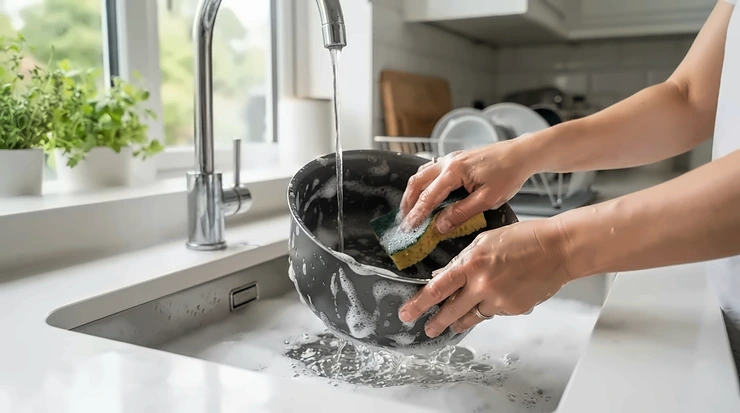
Maintenance is simple: wash the lid by hand, remove and clean the gasket, keep the valve clear and store with the lid inverted or loosely placed so the seal can breathe. Replace the gasket when it hardens or stretches, usually every couple of years with regular use.
On energy, Tower claims its cookers cost around 18p an hour to run, though that is the manufacturer’s own figure and your cost will depend on your fuel and tariff. What is better supported is the general principle from Great British Chefs: shorter cook times mean less fuel burned.
Total cost of ownership is price plus replacement parts plus the cost of replacing the pot sooner than planned. A pot that costs £30 and lasts three years costs roughly £10 a year. A pot that costs £70 and lasts fifteen costs under £5. Premium isn’t always wasteful; sometimes it’s simply cheaper over time.
Safety, Regulations and Compliance Guide
Pressure cookers store energy, so safety isn’t optional. In the UK, pressure-bearing products sit within a wider regulatory framework, including the Pressure Equipment (Safety) Regulations 2016. I’m not a lawyer, and the exact rules that apply to domestic cookers depend on the product, so treat this as orientation rather than legal advice.
Practical steps are simpler. Buy from established retailers, check the product carries UKCA or CE marking and that a manual is included. Avoid unbranded imports with no traceable seller.
Operational safety matters most: never fill beyond two-thirds, always use the minimum liquid, never force a lid, release steam away from your face and never leave the cooker unattended. Inspect valves and gaskets before every use.
If a valve seems stuck, a lid won’t unlock or the indicator behaves oddly, stop cooking, remove from heat and let it cool fully. Contact the manufacturer before using it again.
FAQ
❓ Is a pressure cooker under £30 safe to use?
❓ Can I use a budget pressure cooker on an induction hob?
❓ What size pressure cooker should a beginner buy?
❓ Is an electric multi-cooker better than a stovetop model under £30?
❓ How much can a budget pressure cooker save on energy?
Conclusion
A pressure cooker under £30 is possible, but it’s a narrow target. The Prestige Aluminium Pressure Cooker 4L is the closest to the line, dipping to around £30 on deal, and it suits couples and beginners. Stretch a little and the Tower T80245 3L Pressure Cooker or the Tower T80244 6L Pressure Cooker offer sturdier steel builds. The Tower Hi Dome 6L Aluminium Pressure Cooker (T80213) and the Prestige Smart Plus 6L Hard Anodised Pressure Cooker suit bigger cooks, though you should check current price. The Tower One-Touch Ultima 4L and Prestige 6L High Dome Aluminium Pressure Cooker show what two to three times the budget buys: easier handling and decades of potential use.
Whatever you pick, the best budget pressure cooker for beginners is the one you’ll actually use. Start small, read the manual, practise with forgiving recipes and respect the two-thirds rule.
✨ Ready to Cook Smarter on a Budget?
🔍 Pick the size that matches your household, click through to check current pricing and availability, and start with a simple lentil soup this weekend. Your future self, and your gas bill, will thank you!
Recommended for You
- Budget Pressure Cooker: 7 Proven Picks For UK Kitchens (2026)
- Stainless Steel Pressure Cookers: 7 Best Picks For UK Kitchens (2026)
- Stainless Steel Pressure Cooker: 7 Proven Picks That Last (2026)
Disclaimer: This article contains affiliate links. As an Amazon Associate, I earn from qualifying purchases. If you purchase products through these links, we may earn a small commission at no additional cost to you.
✨ Found this helpful? Share it with your friends! 💬🤗
