
In This Article
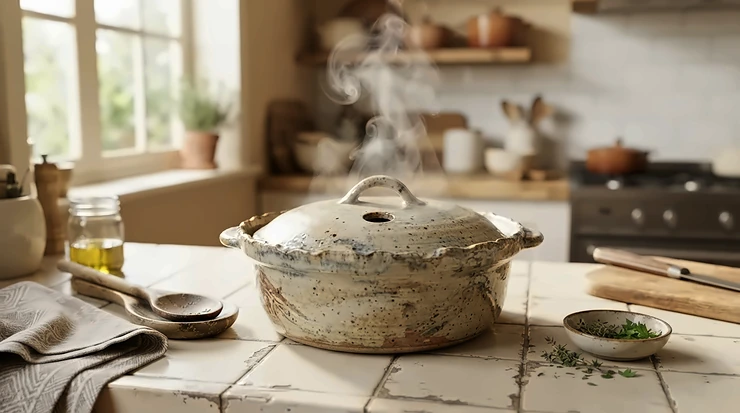
Around the ninety-minute mark of a good tagine, your kitchen stops smelling of dinner and starts smelling of a Marrakech side street. Cumin, ginger, cinnamon and a whisper of saffron roll out from under a clay cone the second you lift the lid. That’s the magic, and choosing the best tagine pots is how you bring it home.

The catch is that the market is a minefield. Some tagines are gorgeous but crack if you look at a hob sideways. Others are indestructible but weigh about as much as a toddler. A few look lovely on a shelf and are useless on the stove. If you want the history, Wikipedia’s entry on the tajine is a handy starting point. What you need here is a practical, UK-focused shortlist.
So here it is: seven real options across clay, ceramic and cast iron, from budget terracotta to heirloom-grade French cast iron. We weigh what each means for induction hobs, weeknight stews and Sunday feasts. Along the way we’ll settle tagine vs slow cooker, look at the best speciality cookware for Moroccan food, and cover speciality cookware gifting, because a tagine makes a cracking present if you pick the right one.
A note on method: this guide is built from manufacturer specifications, UK retailer listings and aggregated review themes found during research. It is not based on hands-on testing. Where I couldn’t verify real reviews for a product, I say so rather than papering over the gap. Prices are ranges only and change often, so check the current price before buying.
What Are the Best Tagine Pots? A Quick Comparison
The best tagine pots are wide, shallow cooking dishes topped with a tall conical lid that traps steam and drips it back onto the food. The right one matches your hob, your tolerance for maintenance and your budget: clay for tradition, ceramic for everyday ease, cast iron for searing and induction.
| Product | Material | Capacity | Induction | Price range | Best For |
|---|---|---|---|---|---|
| Emile Henry Flame Tagine | Flame ceramic | About 3 L usable | With a disc | £125-£150 | Everyday cooking and serving |
| Le Creuset Cast Iron Tagine | Cast iron base, stoneware lid | 2.3 L (3.7 L size also made) | Yes | £225-£250 | Heirloom buyers |
| Staub Cast Iron Tajine | Cast iron base, ceramic lid | 2 L | Yes | £150-£190 | Cooks who sear first |
| Baumalu Tagine 30 cm | Stainless steel base, ceramic lid | Not consistently listed | Yes | Budget-to-mid; check current price | Induction homes on a budget |
| KooK Moroccan Tagine | Enamelled cast iron, ceramic lid | About 3.1 L | Yes | Value cast iron; check current price | First-time cast iron buyers |
| Graupera Terracotta Tagine | Terracotta | About 29 cm wide | No | £50-£60 | Traditionalists on a budget |
| Verve Culture Moroccan Tagine | Moroccan red clay, lead-free glaze | About 10-11 in wide | No (diffuser) | Check current price | Gifting and authenticity |
Looking at the table, the Emile Henry Flame Tagine gives the broadest mix of capacity, convenience and price. If induction is non-negotiable, the cast iron trio and the Baumalu Tagine 30 cm are the straightforward routes. Budget buyers should note that the Graupera Terracotta Tagine is the cheapest entry, but it comes with a soaking-and-sulking routine the others skip.
💬 Just one click — help others make better buying decisions too!😊
Top 7 Best Tagine Pots: Expert Analysis
Each pick below gets the same treatment: what the specs mean in practice, who it suits, and what aggregated review sentiment can honestly be verified.
1. Emile Henry Flame Tagine 32 cm — best all-round ceramic for sharing
The standout here is the Flame ceramic body, a high-fired Burgundy clay designed to take direct heat, so it behaves like proper pottery without the fuss. The 32.5 cm pot stands 23 cm tall, weighs about 3.55 kg, comes with a ten-year guarantee, and is declared free of lead, cadmium and nickel. Maximum capacity is 5 litres, but usable capacity is 3 litres. The maker pitches it at eight to ten portions. Treat three litres as a generous meal for four to six, with lunch sorted for tomorrow. On induction hobs you’ll need a diffuser disc.
Based on the spec comparison, this suits cooks who want one pot for hob, oven, table and dishwasher without ritual. The roomy interior also lets you arrange meat and vegetables in the classic spiral rather than a crowded heap.
On review sentiment, a UK test that analysed more than 1,200 reviews from Currys, John Lewis, Argos and Amazon UK ranked a red 32 cm version top for UK homes. That is the strongest aggregated signal in this guide, though it’s one publisher’s analysis rather than a lab test.
Pros:
- ✅ Goes from hob to oven to table
- ✅ Generous 3-litre usable capacity
- ✅ Ten-year guarantee and lead-free declaration
Cons:
- ❌ Needs a diffuser disc on induction
- ❌ Ceramic still dislikes sudden temperature shocks
Price: around £125-£150, which is strong value for a pot built to last a decade.
2. Le Creuset Cast Iron Tagine 27 cm — heirloom-grade heat control
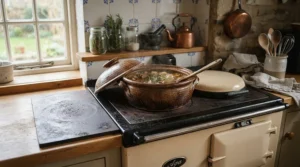
The standout is the cast iron base, which does what no clay pot can: browns your lamb properly before the braise begins. It holds about 2.3 litres, weighs roughly 4 kg, suits all heat sources including induction, is oven safe to 260°C, and carries a lifetime guarantee. A larger 31 cm, 3.7-litre size is also made. The maker recommends medium or low heat for best results.
What the spec sheet won’t tell you is that 4 kg of cast iron and stoneware feels every gram when you’re lifting it from a hot oven. Retailers suggest four to six portions, which I’d read as four generously. This is the pick for people who see cookware as a long-term relationship, and for anyone who wants searing, braising and serving from one vessel.
On reviews, the verifiable pool is small. A UK retailer review praised it for lamb tagine, but that is far too thin to call an aggregate. Treat the Le Creuset name as the real reassurance here.
Pros:
- ✅ Sears meat in the same pot
- ✅ Works on every hob, including induction
- ✅ Lifetime guarantee backs the price
Cons:
- ❌ Heavy at around 4 kg
- ❌ Premium price for a 2.3-litre pot
Price: around £225-£250. It’s expensive, but the cost-per-use maths improves every winter.
3. Staub Cast Iron Tajine 28 cm — best for deep, dark flavour
The standout is the matt black enamel interior. It’s described as a 2-litre, 28 cm cast iron pot, suitable for all hobs including induction and oven-safe up to 240°C, with a smooth base that’s gentle on sensitive cooktops. One retailer advises heating gradually over moderate heat, and says cooking oils soak into the matt enamel to build a natural non-stick surface over time.
In practice, that means the pot rewards regular use. Browned onions and spiced lamb leave a flavour foundation that a glossy pale interior tends to wash out. It’s a smaller pot, so think two to four diners. Care guidance is also inconsistent across listings, with some saying hand wash only and others dishwasher-safe, so check the paperwork that arrives with yours.
On reviews, I could verify only a single five-star retailer review. It praised the cast iron base for avoiding two drawbacks of traditional pottery, which is encouraging but anecdotal.
Pros:
- ✅ Sears and braises in one pot
- ✅ Matt enamel improves with oil and use
- ✅ Induction-ready with a smooth base
Cons:
- ❌ Modest 2-litre capacity
- ❌ Care instructions vary between listings
Price: around £150-£190, making it the more affordable of the two premium cast iron options.
4. Baumalu Tagine 30 cm — stainless-steel base for induction on a budget
The standout is the stainless steel base, which makes this an induction-friendly tagine with no seasoning or curing. It pairs a ceramic lid with a stainless steel base and a stone-effect non-stick interior, and it’s rated for induction and oven use up to 250°C. It also appeared in a UK test line-up of nine tagines, which at least confirms it’s a genuine UK-market product.
On paper, stainless steel heats quickly but typically holds heat less stubbornly than thick cast iron, so keep the heat low and steady. The non-stick interior is convenient, but non-stick surfaces have a finite life, so follow the maker’s guidance on utensils. It suits households with an induction hob who want Moroccan cuisine on weeknights without a heavyweight commitment.
On reviews, I couldn’t verify enough genuine feedback to summarise, and listings differ on capacity. So check the exact specification of the version you’re buying.
Pros:
- ✅ Induction-ready straight out of the box
- ✅ Oven-safe up to 250°C
- ✅ No curing, soaking or seasoning
Cons:
- ❌ Non-stick lining won’t last forever
- ❌ Capacity details inconsistent across listings
Price: sits in the budget-to-mid bracket, so check the current price for your retailer.
5. KooK Moroccan Tagine — value-minded cast iron option
The standout is cast iron convenience at a friendlier price than the French names. It has an enamelled cast iron base that works on induction, gas and in the oven, topped with a ceramic lid, and it doubles as a serving dish. It’s listed at 3.3 US quarts (about 3.1 litres), roughly 10.7 inches across, with a listed weight of about 5.5 kg. That weight may include packaging, but expect a hefty pot. One buying guide notes the base doesn’t need seasoning.
Here’s what to weigh: the roughly 3-litre size sits between the two premium cast iron pots, so it works for four people. The brand is more prominent abroad, so confirm UK stock and delivery before you fall in love.
On review themes, a retailer reviewer said it’s heavy but worthwhile, praised searing and simmering in one pot, and noted that an earlier lid lacked a vent hole, which the maker appears to have fixed.
Pros:
- ✅ Sear and simmer in a single pot
- ✅ No seasoning needed
- ✅ Roughly 3-litre family-friendly size
Cons:
- ❌ Heavy for its size
- ❌ Older lids reportedly lacked a vent hole
Price: positioned as value cast iron, so check current price against the premium brands.
6. Graupera Terracotta Tagine 30 cm — best budget traditional clay
The standout is its honesty: a lightweight, no-nonsense Spanish terracotta pot that costs less than a decent frying pan. It measures 24 cm high by 29 cm across, weighs 2.5 kg, is hob-safe but not induction-compatible, and is oven-safe to 250°C without the lid. It should be soaked in water before first use on direct heat and washed by hand.
At 2.5 kg, this is the lightest pot in the guide, and a low price makes it a sensible way to learn tagine cooking before investing more. The compromises are real, though. You’ll need a gas or electric hob, a diffuser if you’re cautious, and patience with soaking and gentle heating.
On reviews, I couldn’t verify enough genuine feedback for a fair summary, so treat durability as unproven. Availability on amazon.co.uk may also vary, so check before you plan around it.
Pros:
- ✅ Lightest pot in this guide
- ✅ Very low cost of entry
- ✅ Oven- and freezer-friendly
Cons:
- ❌ Not suitable for induction hobs
- ❌ Hand wash and soaking required
Price: around £50-£60, which is excellent value as a first tagine.
7. Verve Culture Moroccan Tagine — handmade in Morocco, gift-worthy
The standout is provenance. It’s handmade in Morocco from red clay from Wadi Lan and finished with a lead-free glaze. One design is about 10 inches wide and 7 inches tall, while other colours are around 11 inches wide and 9 inches tall. The maker recommends hand washing, says fine feathering cracks in the glaze are normal, advises low heat, suggests a diffuser, and includes curing instructions.
What this means for you: the pot is the closest thing here to the vessel used in Moroccan homes, and every piece is slightly different. That makes it a standout for speciality cookware gifting, though it demands the most care. Use a diffuser, heat slowly and never rinse it hot.
On reviews, I couldn’t verify genuine aggregated feedback, and UK availability and pricing vary by seller. So confirm both before buying.
Pros:
- ✅ Handmade, individual, and visibly authentic
- ✅ Lead-free glaze stated by the maker
- ✅ Doubles as a striking serving dish
Cons:
- ❌ Needs a diffuser and gentle heat
- ❌ Hand wash only, with cosmetic cracking expected
Price: check current price, as UK availability and cost vary by seller.
Best Speciality Cookware for Moroccan Food: Beyond the Pot
The pot gets the glory, but the best speciality cookware for Moroccan food is really a small cast of supporting players. If your tagine is clay or Flame ceramic, a diffuser disc is the quiet hero. It spreads heat and, as the Emile Henry Flame Tagine listings show, it’s what lets ceramic work on induction.
Next comes a couscoussier. Baumalu, for example, makes a stainless steel couscoussier rated for induction. If couscous is a regular on your table, steaming it above the stew is the classic move. Good utensils matter too: Le Creuset recommends silicone, wooden or heat-resistant plastic tools for its cast iron tagine, and that advice is sensible for any enamelled or non-stick pot.
Here’s the honest filter. If you cook one tagine a month, you don’t need a full Moroccan kitchen. A single versatile pot like the Staub Cast Iron Tajine or Le Creuset Cast Iron Tagine will outperform a cupboard of gimmicks. If you’re building a collection for entertaining, add a clay or ceramic tagine for the table and keep the cast iron for midweek cooking.

How to Choose the Best Tagine Pots
Picking from the best tagine pots is easier with a short checklist:
- Check your hob first. Induction hobs need magnetic bases, so cast iron or stainless steel suit them. Clay and ceramic need diffusers.
- Be honest about maintenance. Clay wants soaking, curing and gentle heat. Cast iron and enamel are far more forgiving.
- Match capacity to your table. About 2-2.3 litres suits two or three people, while 3 litres or more suits four to six.
- Weigh the weight. A pot of around 4-5.5 kg is wonderful on the hob and tiresome to lift from the oven if you have wrist problems.
- Inspect the lid. A tight lid with a small vent helps manage pressure and seepage.
- Ask about food safety. Check lead-free glaze claims, especially on handmade imports.
- Read the guarantee. A ten-year or lifetime guarantee tells you what the maker expects.
Tagine vs Slow Cooker: Which Wins for Slow-Cooked Stews?
The real question behind tagine vs slow cooker is whether you want an appliance or a performance. A tagine’s dome traps steam and returns the condensed liquid to the pot, so only a minimal amount of water is needed. A slow cooker, by contrast, is a set-and-forget machine. Which?’s slow cooker testing is worth reading if you’re weighing one up. Which? assessed 22 slow cookers on energy use, stew quality, ease of use and durability.
| Feature | Tagine pot | Slow cooker |
|---|---|---|
| Heat source | Hob and oven | Mains electricity |
| Browning | Excellent in cast iron pots | Usually needs a separate pan |
| Attention needed | Occasional check | Almost none |
| Serving | Table-ready | Usually not |
| Best For | Cooks who enjoy the process, such as owners of the Le Creuset Cast Iron Tagine | People who want dinner ready after a long day out |
The table shows a slow cooker wins on convenience, and a tagine wins on browning, flavour concentration and presentation. If you’re out for ten hours, buy the slow cooker. If you cook Moroccan cuisine on weekends and enjoy the ritual, a tagine pays you back in flavour and theatre. Many keen cooks end up owning both, for different days.
Best Speciality Pot Review: Clay, Ceramic, Cast Iron or Stainless?
A best speciality pot review comes down to materials, so here’s each at a glance.
Traditional clay (the Graupera Terracotta Tagine, Verve Culture Moroccan Tagine) is the most authentic and the most delicate. It wants curing, diffusers and patience, and rewards you with that earthy, gentle cooking.
Flame ceramic (Emile Henry Flame Tagine) is the diplomatic middle ground: direct-heat capable, dishwasher-friendly and attractive, though not induction-ready without a disc.
Enamelled cast iron (Le Creuset Cast Iron Tagine, Staub Cast Iron Tajine, KooK Moroccan Tagine) is the workhorse. It browns, braises and survives accidents, at the cost of weight.
Stainless steel with a ceramic lid (Baumalu Tagine 30 cm) is lighter and induction-friendly, but without the thermal mass of cast iron.
My verdict: if you’re only buying one, choose cast iron or Flame ceramic. Choose clay for the experience, and stainless for convenience.
What to Expect: Real-World Performance in Moroccan Cuisine
Moroccan cuisine runs on patience. Spices are layered, onions are softened properly, and the lid does the rest. A sensible tagine method is to gently cook aromatics such as onion, garlic and spices in the base with olive oil, then cover and cook slowly over low to medium heat.
In practice, cast iron pots reward that first stage. You can brown meat hard, then simmer gently, and the pot holds its temperature steadily. Ceramic and clay need gentler starts, because they dislike harsh flames, but they excel at the long, quiet simmer.
As a rule of thumb, plan on a couple of hours for lamb, and less for chicken and vegetables. Expect a stew that’s thicker and more concentrated than one from an open pot, because very little steam escapes. If it looks too saucy at the end, lift the lid and let it reduce for ten minutes. If it seems dry, a splash of stock fixes it. The right pot makes Moroccan cuisine feel almost effortless, while the wrong one makes it feel like a chore.
Practical Usage Guide: Setting Up, Seasoning and Caring for Your Tagine
Sous Chef’s guide to cooking with a tagine covers the fundamentals well. Here’s the condensed version.
Clay and terracotta setup. One US speciality retailer advises submerging the pot and lid in water for six hours, air-drying, rubbing oil inside, then baking in a cold oven at 350°F for two hours and letting it cool inside. Soaking times vary by maker, so follow your pot’s own instructions. The Graupera Terracotta Tagine is far gentler, with a short soak recommended.
Cast iron and ceramic setup. The Le Creuset Cast Iron Tagine, Staub Cast Iron Tajine and KooK Moroccan Tagine need no curing. Just wash and start low.
Common mistakes in the first 30 days:
- Setting a cold pot on high heat
- Placing a hot pot on a cold, wet surface
- Using a burner much smaller than the base. One retailer warns that the heat source should be as large as or larger than the base to avoid temperature differences that could break the pot.
Maintenance schedule: wash by hand after every use if clay, dry thoroughly, and store with the lid slightly ajar.
Problem → Solution Guide for Slow-Cooked Stews
Even the best tagine pots can’t fix a bad method, but they make most problems easy to solve.
Problem: the stew is watery. Remove the lid for the last 15-20 minutes and let it reduce. Cast iron pots like the Staub Cast Iron Tajine handle this well.
Problem: food sticks or catches. Lower the heat, use a diffuser with clay or ceramic, and add a splash of oil or stock.
Problem: flavours taste flat. Brown the meat first and bloom your spices in oil. This is where the Le Creuset Cast Iron Tagine earns its keep.
Problem: a clay pot cracks. Almost always thermal shock. Heat slowly, avoid cold surfaces, and never rinse a hot pot. Consider moving to a more forgiving Emile Henry Flame Tagine.
Problem: the lid weeps at the rim. Reduce the heat, use a little less liquid, and check for a vent hole, which is the complaint reviewers raised about older KooK Moroccan Tagine lids.
These problems nearly always come down to heat, not recipe, so slow down and the stew usually sorts itself out.
Real-World Scenarios: Which Tagine Fits Your Kitchen?
The induction flat. Two people, a glass hob, limited cupboard space. The Baumalu Tagine 30 cm or a 2-litre cast iron pot is the sensible choice. If budget allows, the Staub Cast Iron Tajine is compact, induction-ready and sears.
The weekend host. Six guests, Saturday cooking, and a table that deserves a showpiece. The Emile Henry Flame Tagine, with about 3 litres usable, goes from hob to table and then to the dishwasher. For a bigger cast iron option, the larger Le Creuset Cast Iron Tagine size is worth considering.
The curious beginner. Low budget, gas hob, unsure whether tagines will stick. The Graupera Terracotta Tagine lets you try the method without a big outlay. If you like it, upgrade later and keep the clay one for the table.
Notice what matters most is hob type and how often you’ll cook, not brand prestige.
✨ Don’t Miss These Exclusive Deals!
🔍 Take your Moroccan cuisine to the next level with these carefully selected tagine pots. Click on any highlighted item to check current pricing and availability. These tools will help you create authentic slow-cooked stews your family will love!
Speciality Cookware Gifting: How to Pick a Tagine as a Present
Speciality cookware gifting is a tricky art. A tagine is a lovely gift, but only if the recipient can use it. So start with their hob. Induction households need cast iron or stainless, which points towards the Le Creuset Cast Iron Tagine or Staub Cast Iron Tajine.
For a wedding or milestone gift, the Le Creuset Cast Iron Tagine carries lifetime-guarantee reassurance. For a foodie friend who loves visible craft, the Verve Culture Moroccan Tagine is a conversation piece. For a housewarming, the Emile Henry Flame Tagine is a dependable, good-looking middle path. And for a modest budget, the Graupera Terracotta Tagine works, as long as you warn the recipient about the hand-washing and soaking.
Three gifting tips: include a simple recipe card, keep a gift receipt, and avoid assuming the recipient owns a diffuser. A diffuser disc tucked into the box is the kind of thoughtful touch that turns a nice present into a useful one.
Long-Term Cost & Maintenance
Cost-per-use is where tagines surprise people. If you cook a tagine twice a month for ten years, that’s about 240 meals. Even a pot at the top of the price range works out to roughly £1 per use. A budget terracotta pot used for five years at the same pace lands at around 50p per use, though clay is less forgiving.
| Product | Price band | Guarantee (as stated) | Maintenance level | Best For |
|---|---|---|---|---|
| Emile Henry Flame Tagine | £125-£150 | Ten years | Low | Everyday use |
| Le Creuset Cast Iron Tagine | £225-£250 | Lifetime | Low | Long-term investment |
| Staub Cast Iron Tajine | £150-£190 | Check listing | Low-moderate | Flavour-focused cooks |
| Graupera Terracotta Tagine | £50-£60 | Not stated | High | Trial and tradition |
This table shows that price and guarantee track each other closely. The Le Creuset Cast Iron Tagine costs the most upfront but promises the longest cover, while the Graupera Terracotta Tagine offers the lowest outlay with the highest upkeep. If you value convenience, the middle of the table gives the best balance.
Safety, Regulations and Compliance Guide
Ceramic cookware has a quiet safety rule behind it: lead and cadmium must not leach into food. Under UK regulations, quantities of lead and cadmium transferred from ceramic articles must stay within set limits, and testing is required unless it’s shown the materials contained neither. You can read the details in the Materials and Articles in Contact with Food (Amendment) (EU Exit) Regulations 2019. Where a vessel has a ceramic lid, the limits that apply are those for the vessel alone.
Practically, this means mainstream makers like Emile Henry Flame Tagine (which declares its ceramic free of lead, cadmium and nickel) are easy to trust. With handmade imports like the Verve Culture Moroccan Tagine, check the lead-free glaze claim and the seller’s documentation. As a sensible habit, stop using any glazed pot with deep crazing, chips or flaking, and never cook acidic stews in damaged ceramic.
This is general guidance, not legal advice. If a seller can’t tell you whether a pot is food-safe, buy elsewhere.
FAQ
❓ Is a tagine pot worth buying if I already own a casserole dish?
❓ Can I use a tagine pot on an induction hob?
❓ How much should I spend on a tagine pot in the UK?
❓ What size tagine pot do I need for four people?
❓ Are tagine pots dishwasher safe?
Conclusion
Choosing among the best tagine pots comes down to three honest questions: what hob do you own, how much upkeep will you tolerate, and who’s eating? Answer those and the shortlist almost writes itself.
For most UK kitchens, the Emile Henry Flame Tagine is the easiest all-round recommendation: generous, attractive, dishwasher-friendly and backed by the strongest aggregated review signal I could verify. If you want to sear, simmer and serve from one pot on any hob, the Le Creuset Cast Iron Tagine and Staub Cast Iron Tajine are the long-term investments. The KooK Moroccan Tagine is the value cast iron alternative, and the Baumalu Tagine 30 cm suits induction households on a budget. For tradition, the Graupera Terracotta Tagine is the cheapest way in, and the Verve Culture Moroccan Tagine is the one that makes a gift feel special.
Whichever you choose, give it low heat and time. That is the real secret behind great slow-cooked stews, and it costs nothing.
✨ Ready to bring Moroccan cuisine home?
🍲 Compare the tagine pots above, click any highlighted name to check current pricing and availability, and start your own slow-cooked tradition tonight!
Recommended for You
- Pressure Cooker Under £30: 7 Honest Picks For UK Kitchens (2026)
- Budget Pressure Cooker: 7 Proven Picks For UK Kitchens (2026)
- Stainless Steel Pressure Cookers: 7 Best Picks For UK Kitchens (2026)
Disclaimer: This article contains affiliate links. As an Amazon Associate, I earn from qualifying purchases. If you purchase products through these links, we may earn a small commission at no additional cost to you.
✨ Found this helpful? Share it with your friends! 💬🤗
