In This Article
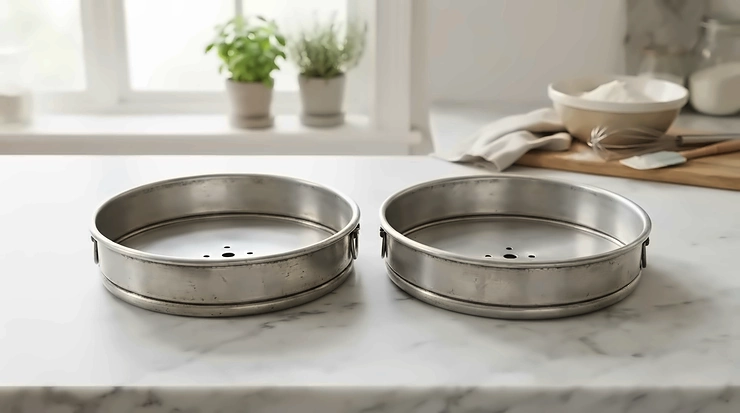
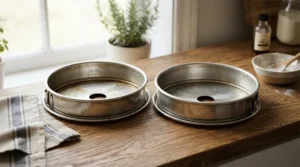
Sandwich tins for Victoria sponge with removable base are shallow, round baking tins, usually 20cm across, with a push-up bottom that lifts clear of the rim. You bake two matching layers, release them without flipping, then sandwich them with jam and cream. The loose base protects the delicate crumb.
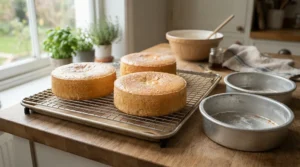
A Victoria sponge is the cake equivalent of a driving test. Four ingredients, no frills, nowhere to hide. Even oven manufacturers have been known to use the recipe as a benchmark, because small changes in heat and tin behaviour show up straight away in the crumb. So the tin matters far more than its modest price suggests.
Here’s the problem. Search for a 20cm sandwich tin and you’ll drown in near-identical grey circles. Some are 0.8mm aluminised steel, some are 1mm carbon steel, and a few are uncoated anodised aluminium. Depths vary from about 3.5cm to nearly 5cm. Some release a sponge like a magician pulling a rabbit out of a hat, while others hold on like a limpet.
This guide cuts through that. I’ve compared seven real, widely sold 20cm loose base options using published specifications, independent testing from Which?, and the review sentiment visible on retailer pages. Where reviews couldn’t be verified, I say so rather than inventing anything. You’ll also get practical advice on shallow sandwich tins for even sponge layers, buying a pair of 20cm tins, non stick bakeware liners, and building the perfect jam and cream filling.
Quick Comparison: 7 Loose Base Sandwich Tins at a Glance
Here’s the short version before the detail. Depths come from retailer listings, so treat them as approximate and check the current listing before ordering.
| Product | Material and finish | Approx. depth | Best For |
|---|---|---|---|
| MasterClass Non-Stick 20cm Loose Base Sandwich Pan | Carbon steel, double non-stick | 3.5cm | Shallow, even layers and long guarantees |
| Tala Performance Loose Base Sandwich Tin | 1mm carbon steel, Eclipse non-stick | 4.5–5cm | Everyday British baking |
| Mary Berry At Home Sandwich Tin | Carbon steel, 2-layer non-stick | 4cm | Gift buyers and new bakers |
| Prestige Inspire Loose Based Sandwich Pan | Heavy-gauge carbon steel | About 5cm | Frequent, heavy-duty use |
| Tower Precision Plus Loose Base Sandwich Tin | 0.8mm aluminised steel | 4.9cm | Tight budgets |
| Silverwood Silver Anodised Sandwich Tin with Loose Base | Uncoated anodised aluminium | About 3.8cm | Coating-free purists |
| Samuel Groves Mermaid Silver Anodised Sandwich Tin | Uncoated anodised aluminium | Check listing | Aga and range-cooker owners |
Looking at the table, the MasterClass Non-Stick 20cm Loose Base Sandwich Pan is the shallowest of the group, which helps when you want tidy, even layers. The Tower Precision Plus Loose Base Sandwich Tin has the most room for rise at the lowest cost. The two anodised options trade a dishwasher-friendly coating for a metal that develops its own natural release over time.
💬 Just one click — help others make better buying decisions too!😊
Top 7 Sandwich Tins for Victoria Sponge with Removable Base: Expert Analysis
A note on method. I haven’t baked in any of these tins, so there are no invented “I tested it” claims here. What follows is analysis based on real specifications, Which? findings, and the review sentiment that was actually visible. Price ranges reflect UK retailers at the time of research, so check the current price on Amazon before buying.
1. MasterClass Non-Stick 20cm Loose Base Sandwich Pan — shallow layers with a 20-year guarantee
The MasterClass Non-Stick 20cm Loose Base Sandwich Pan is the one to look at first if even layers are your obsession. Retailer listings describe a 20cm tin about 3.5cm deep, made from carbon steel with a double Quantum II non-stick coating. Some listings describe it as free of PTFE, PFOA and BPA, and some retailers sell it as a set of 2.
On paper, 3.5cm is shallow enough that a standard four-egg mix spreads thinly and bakes through quickly. That limits the doming you get in deeper tins. Retailers also quote a 20-year guarantee with a 5-year non-stick guarantee, which suggests the maker expects it to last.
Review sentiment is mixed, and you should know that. When Which? tested 20cm cake tins, it found that a MasterClass tin needed greasing and lining, or cakes stuck. I couldn’t verify a large pool of Amazon reviews, so treat this as a tin to line properly rather than trust blindly.
Pros:
- ✅ Shallow profile suits thin, even sponge layers
- ✅ Long guarantee backs up the build
- ✅ Often sold as a ready-made pair
Cons:
- ❌ Which? found a MasterClass tin needed lining
- ❌ Shallow sides leave little room for heavy batters
Pricing is around £12–£15 for a single tin and in the mid-£20s for a pair. For anyone baking classic four-egg sponges, that’s good value as long as you line the base.
2. Tala Performance Loose Base Sandwich Tin — British heritage with a double-layer coating
Tala is one of Britain’s longest-established bakeware names, and the Tala Performance Loose Base Sandwich Tin is its mainstream option. It’s made from 1mm carbon steel with a double-layered Eclipse non-stick coating. Retailer listings put the height at about 4.5cm, with Argos listing 5cm.
Thicker steel resists warping, which matters because a warped tin lets batter creep under the base. The extra depth gives a sponge room to rise without spilling over the edge. One Amazon listing shows the tin as 21.6cm, which reads like an outer-rim measurement, so confirm the internal 20cm before ordering.
For review sentiment, the Argos page showed a five-out-of-five rating, but from only two reviews. That’s too thin to draw firm conclusions. Tala’s own care advice is to hand wash and avoid metal utensils, which is sensible for any coated tin.
Pros:
- ✅ Thicker 1mm steel resists warping
- ✅ Extra depth handles generous batters
- ✅ Size is embossed for easy identification
Cons:
- ❌ Hand washing is recommended for longevity
- ❌ Few verifiable reviews to lean on
Expect roughly £8–£15 depending on retailer. It’s a sound everyday pick if you value British heritage and a sturdier build over the shallowest profile.
3. Mary Berry At Home Sandwich Tin — the new-baker gift with a famous name
The Mary Berry At Home Sandwich Tin is the “my first proper bakeware” tin. It’s a 20cm carbon steel tin about 4cm high, with a two-layer Quantum 2 non-stick finish and a loose base. Listings say it’s oven safe to 240°C and fridge, freezer and dishwasher safe.
That 4cm depth sits in a useful middle ground, neither as shallow as the MasterClass Non-Stick 20cm Loose Base Sandwich Pan nor as roomy as the Prestige Inspire Loose Based Sandwich Pan. Mary Berry’s own Victoria sandwich recipes call for two 20cm loose-bottomed sandwich tins, so this tin matches the format the recipe expects. Dishwasher safety is a genuine convenience if you bake often.
I couldn’t find enough verifiable review text to summarise customer sentiment, so I won’t pretend otherwise. The 1-year guarantee quoted by one retailer is shorter than the guarantees on some rivals.
Pros:
- ✅ Dishwasher safe, fridge and freezer safe
- ✅ Oven safe to 240°C for hotter recipes
- ✅ Matches the format Mary Berry’s recipes call for
Cons:
- ❌ Short 1-year guarantee on one retailer’s listing
- ❌ Little verified review data available
Prices sit around £10–£14. It’s a lovely gift, and a decent tin, but you’re partly paying for the name.
4. Prestige Inspire Loose Based Sandwich Pan — heavy-gauge steel built for busy kitchens
The Prestige Inspire Loose Based Sandwich Pan is the tin for people who bake every weekend. It’s heavy-gauge carbon steel at about 500g, with a CushionSmart non-stick interior and oven safety up to 240°C. Retailers list it at roughly 20.4cm across.
Heavy steel evens out heat spikes, so you’re less likely to see burnt edges and pale centres. That matters in a domestic oven that runs hot at the back. It’s also sold into catering, which suggests the maker designed it for repeated use.
For sentiment, Which? named a different tin in the same range, the Prestige Inspire springform, as its top performer, with cakes releasing whether greased or not. That’s encouraging for the range, but it isn’t proof this loose-base tin behaves identically. A handful of retailer reviews I saw were positive, though the sample was small.
Pros:
- ✅ Heavy-gauge steel spreads heat evenly
- ✅ Oven safe to 240°C
- ✅ Range earned Which? Editor’s Choice for a springform
Cons:
- ❌ Heavier to handle than thin aluminium tins
- ❌ Slightly over 20cm, so check recipe fit
Expect about £12–£18. For heavy users it’s a strong value verdict, given how long a sturdy tin lasts.
5. Tower Precision Plus Loose Base Sandwich Tin — the budget pick with real depth
The Tower Precision Plus Loose Base Sandwich Tin proves a cheap tin needn’t be a poor one. It’s 0.8mm aluminised steel with an Eclipse non-stick interior, about 4.9cm high, and listings quote oven safety up to 260°C. It’s dishwasher safe, though the retailer page recommends hand washing, and the coating is described as metal-utensil safe.
That 4.9cm depth is a real advantage on a budget. Sponges rise freely without spilling, and the high temperature rating covers everything a domestic oven will throw at it. The trade-off is thinner steel than the Tala Performance Loose Base Sandwich Tin, so expect it to be a little more prone to warping if you abuse it.
Review sentiment is too sparse to summarise. The one reviews site I found showed a single five-star rating, which proves very little. The retailer page also didn’t state a guarantee.
Pros:
- ✅ Deep sides handle generous batters
- ✅ Very high 260°C oven rating
- ✅ Low price for a coated loose base tin
Cons:
- ❌ Thinner 0.8mm steel than premium rivals
- ❌ No guarantee stated on the retailer page
Pricing runs about £6–£12. For students, first flats and occasional bakers, it’s the sensible value pick.
6. Silverwood Silver Anodised Sandwich Tin with Loose Base — handmade, coating-free and built to last
The Silverwood Silver Anodised Sandwich Tin with Loose Base is the odd one out, and I mean that kindly. It’s handmade in Birmingham from silver anodised aluminium, 8 inches by 1.5 inches, with straight vertical sides. There’s no non-stick coating at all, so there’s nothing to peel or blister.
Aluminium conducts heat quickly and evenly, which suits a sponge because it tends to bake through without pale centres or scorched edges. Retailers say the surface becomes more naturally non-stick as it builds a patina with use. The catch is that it isn’t dishwasher safe, and a light grease is still wise.
Verifiable customer reviews were thin on the pages I checked, so I’m relying on retailer descriptions and maker details here. That makes it a considered purchase rather than an impulse buy.
Pros:
- ✅ Uncoated surface can’t flake or peel
- ✅ Even, quick heat distribution from aluminium
- ✅ Handmade British construction
Cons:
- ❌ Not dishwasher safe
- ❌ Needs greasing and lining, especially when new
Expect roughly £15–£25 at specialist retailers, as an indicative range, so check the current Amazon price. It’s a good long-term investment if you hate coatings.
7. Samuel Groves Mermaid Silver Anodised Sandwich Tin — made for Aga and range-cooker baking
The Samuel Groves Mermaid Silver Anodised Sandwich Tin earns its place for a specific audience. It’s an 8-inch silver anodised round tin with a loose bottom. The retailer describes it as made for home and commercial Aga baking.
Anodised aluminium handles the fierce, steady heat of a range cooker well, where some coated steel tins can brown too quickly. Like the Silverwood Silver Anodised Sandwich Tin with Loose Base, it’s uncoated, so expect to grease and line it. The depth wasn’t stated on the page I saw, so check the listing.
I found no verifiable review text, and the specifications were limited. That’s why I rank it seventh, as a niche choice rather than a general recommendation. The brand’s springform tin appears in Mumsnet’s best cake tin round-up as a budget pick, but that’s a different product.
Pros:
- ✅ Anodised aluminium suits Aga and range cookers
- ✅ No coating to wear out
- ✅ Loose bottom for gentle release
Cons:
- ❌ Depth and care details need checking
- ❌ Little verifiable review data
Pricing sits around £16–£20. It’s worth it if you cook on an Aga, but otherwise the Tower Precision Plus Loose Base Sandwich Tin or Tala Performance Loose Base Sandwich Tin offers easier ownership.
Top 7 Comparison: Care, Price and Best Fit
| Product | Dishwasher | Price range | Best For |
|---|---|---|---|
| MasterClass Non-Stick 20cm Loose Base Sandwich Pan | Yes | £12–£15 (single) | Even layers |
| Tala Performance Loose Base Sandwich Tin | Hand wash advised | £8–£15 | Everyday baking |
| Mary Berry At Home Sandwich Tin | Yes | £10–£14 | Gifts |
| Prestige Inspire Loose Based Sandwich Pan | Check listing | £12–£18 | Heavy use |
| Tower Precision Plus Loose Base Sandwich Tin | Yes (hand wash advised) | £6–£12 | Budget |
| Silverwood Silver Anodised Sandwich Tin with Loose Base | No | £15–£25 | Coating-free |
| Samuel Groves Mermaid Silver Anodised Sandwich Tin | Check listing | £16–£20 | Aga cooking |
The pattern is clear. Coated steel tins are cheaper and dishwasher-friendly, while anodised aluminium costs more and demands a little care. If you only want one recommendation for most households, the Tala Performance Loose Base Sandwich Tin balances build, depth and price best, with the Tower Precision Plus Loose Base Sandwich Tin as the budget alternative.
How to Choose Sandwich Tins for Victoria Sponge with Removable Base
Choosing well takes about five minutes. Work through these steps in order.
- Check the true internal size. Most Victoria sponge recipes assume 20cm (8 inch) tins. Some listings quote outer rim measurements, so a “21.6cm” tin may still be 20cm inside.
- Pick a depth that suits your batter. Around 3.5–4cm suits thin, even layers. Closer to 5cm gives room for generous or deeper “Mary Berry style” batters.
- Decide coated or uncoated. Coated steel releases easily and goes in the dishwasher. Uncoated anodised aluminium lasts longer but needs grease, lining and hand washing.
- Look at the steel gauge. Roughly 1mm steel resists warping better than 0.8mm. Warped tins let batter creep under the base.
- Confirm the oven rating. 230–240°C covers every sponge recipe, though higher ratings add headroom.
- Read the care instructions. Which? tested 20cm round tins and found that several coated tins still needed greasing and lining, so don’t skip that step.
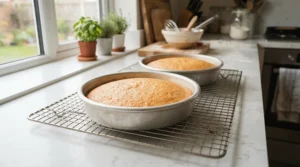
- Buy two. A recipe needs two layers baked together for matching colour and rise.
Shallow Sandwich Tins for Even Sponge Layers
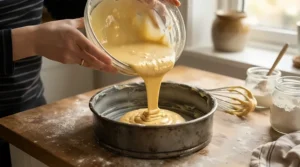
“Sandwich tin” means a shallow tin, and there’s a good reason. Shallow sandwich tins for even sponge layers let heat reach the middle of each cake before the edges overbake. A deep tin forces the batter to climb, and the centre domes while the rim sets first.
Depth is the quiet differentiator between these tins. The MasterClass Non-Stick 20cm Loose Base Sandwich Pan is the shallowest at about 3.5cm, and the Silverwood Silver Anodised Sandwich Tin with Loose Base is about 3.8cm. The Tower Precision Plus Loose Base Sandwich Tin at roughly 4.9cm is the deepest of the group.
That doesn’t make deeper tins worse. If you follow a recipe that calls for “deep” 20cm loose-bottomed tins, as some Mary Berry recipes do, a 3.5cm tin may be too shallow for the larger batter quantity. Match the tin to the recipe.
The metal matters as well. Which? noticed crisper edges from several non-stick tins, and darker finishes absorb more heat. If you want pale, tender sides, consider lowering the oven by 10°C or moving the tins to the middle shelf. Always bake both tins on the same shelf where possible, so the layers match.
Loose Base Sandwich Tin Set for Sponge: Why a Pair of 20cm Tins Wins
A loose base sandwich tin set for sponge solves a problem that single tins can’t: matching layers. Baking both sponges at the same time means identical heat, identical timing and identical rise. Bake them one after another and the second batter sits waiting, losing air.
Buying a pair of 20cm tins also halves the washing-up drama of a bake day. Retailers sell pairs of the MasterClass Non-Stick 20cm Loose Base Sandwich Pan, and some sellers pair tins with piping bags or other kit. If you buy singles, buy the same model twice. Mixing the Tala Performance Loose Base Sandwich Tin with a thinner tin means one sponge browns faster than the other.
There’s also a case for keeping a spare. A third tin lets you bake a three-layer celebration cake, or lets you bake a second batch while the first cools. For most households, though, two tins covers nearly every Victoria sponge you’ll make.
When comparing pair prices, look at the cost per tin. A pair can cost slightly more than two budget singles, but you’re getting guaranteed matching dimensions and finish. For a baker who values symmetry (and who doesn’t, after the second layer comes out lopsided), that’s worth paying for.
Jam and Cream Filling: Building the Cake Once the Sponges Cool
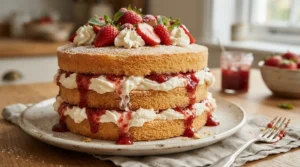
The tin gets you two perfect layers, and the filling decides whether the cake is memorable. A jam and cream filling is the classic: raspberry or strawberry jam, then whipped double cream. Purists note that jam alone makes a “jam sponge” rather than a Victoria sponge.
Quantities from published recipes give a useful guide. One community recipe uses about 6 tablespoons of jam and 250ml of double cream for a 200g sponge mix. Mary Berry’s classic uses around half a 370g jar of strawberry jam and 300ml of whipped double cream for a 225g mix. Both are generous, and both work.
Here’s the order that protects your layers:
- Cool both sponges completely on a wire rack first
- Place the bottom layer on your plate and spread jam first
- Pipe or spoon the whipped cream over the jam
- Set the second sponge on top and dust with caster or icing sugar
Why jam first? It acts as a thin barrier that stops cream soaking into the crumb. If you whip cream to soft peaks rather than stiff, it spreads without tearing the delicate sponge. A flat-bottomed, evenly baked layer from a good tin makes all of this much easier, because you aren’t compensating for domes with extra cream.
Non Stick Bakeware Liners: Do You Still Need Them?
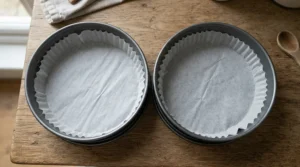
Non stick bakeware liners are the cheap insurance policy of baking. Even with a non-stick tin, the safest approach is to line the base. Which? found that some coated tins still needed greasing and lining, so a liner removes the guesswork.
There are two main routes. Silicone-coated parchment circles come ready-cut, so you skip the pencil and scissors. Lakeland, for example, sells 20cm silicone paper circles that are oven safe to 230°C and described as non-stick without greasing. Reusable PTFE-coated fabric liners are the second option. Lakeland describes its reusable 20cm liners as reusable hundreds of times, with a base circle and side strip.
Which suits you? Parchment is cheapest per bake and brilliant for sticky or delicate sponges. Reusable liners suit frequent bakers who want less waste. Whichever you choose, liners and a loose base work together. The liner protects the underside while the removable base lets you lift the cake out without a flip.
One caution. Don’t use liners to fix a badly warped tin, because batter can still slip underneath. Also, with uncoated anodised tins such as the Silverwood Silver Anodised Sandwich Tin with Loose Base, lining the base and lightly greasing the sides is the sensible routine. Follow each product’s own temperature limits, too.
Practical Usage Guide: From First Wash to Perfect Release
Most sponge disasters happen before the oven door closes. This routine covers the first 30 days and beyond.
Before the first bake. Wash the tin and base in warm soapy water and dry thoroughly. For coated tins, avoid metal utensils, which can scratch the finish.
Preparing the tin. Grease the sides lightly, drop in a lining circle, and tap out any excess flour. BBC Good Food’s classic Victoria sandwich recipe heats the oven to 190°C (170°C fan) and uses butter and non-stick baking paper in two 20cm sandwich tins. Other published recipes use 180°C (160°C fan), so follow the recipe you trust.
Filling. Weigh the batter into both tins for matching layers, and level the tops. Bake for roughly 20–30 minutes, depending on the recipe and your oven.
Releasing. Lakeland’s tip is the best one. Rest the cooked cake in its tin over a mug or can, then press the rim down gently so the base lifts clear. Slide a palette knife around the edge first if the sponge clings.
Cooling and cleaning. Move layers to a wire rack, peel the liner, and cool completely before filling. Wash coated tins gently, and hand wash anodised tins.
Common first-month mistakes. Skipping the liner, overfilling a shallow tin, and opening the oven door early. Resist all three.
Real-World Scenarios: Which Tin for Which Baker?
Specifications mean little until you place them in a real kitchen. Here are three profiles.
The weekend baker on a budget. You bake a sponge once a month and want reliability, not a heirloom. The Tower Precision Plus Loose Base Sandwich Tin at the lower end of the price range, bought as a pair, covers it. Line the base and you’re set.
The family baker. You bake for school fêtes, birthdays and Sunday teas, often twice a week. Go for the Prestige Inspire Loose Based Sandwich Pan or the Tala Performance Loose Base Sandwich Tin. The thicker steel handles frequent use, and the extra depth copes with generous batters.
The gift buyer or new baker. You want something attractive that works first time. The Mary Berry At Home Sandwich Tin is dishwasher safe and well matched to the recipes new bakers follow.
The Aga or coating-averse baker. You’d rather avoid non-stick finishes altogether. The Silverwood Silver Anodised Sandwich Tin with Loose Base or Samuel Groves Mermaid Silver Anodised Sandwich Tin fits. Accept the routine of greasing, lining and hand washing.
Frequency of use, kitchen type and cleaning habits do most of the deciding. Be honest about which one you are.
Loose Base vs Springform vs Fixed Base: Which Release Method Wins?
Three designs dominate the shelves, and each has a place. A loose base tin lifts the cake upward through the rim. A springform uses a clip to open the whole side. A fixed base tin has no moving parts, so you invert the cake to release it.
| Design | Release | Leak risk | Best For |
|---|---|---|---|
| Loose base sandwich tin | Push-up base | Low with a liner | Delicate sponges |
| Springform | Clip opens side | Lowest | Cheesecakes, tall cakes |
| Fixed base sandwich tin | Invert and tap | None | Robust, well-greased bakes |
For Victoria sponge, loose base wins on simplicity. You skip the flipping that can crack a fragile top. Springforms suit deep or wet bakes, and they’re more watertight, but the clip and seam are harder to clean. A fixed base tin, like the British-made twin packs sold on Amazon, avoids any leaking, though it relies entirely on the non-stick finish and your greasing.
The Which? test is a useful reality check. It found that the Argos two-pack of sandwich tins released cakes without greasing, but with crispier sides. So fixed base tins can work well. If you struggle with turning cakes out, loose base is the kinder design, and it’s why it suits sponge so well.
✨ Time to Pick Your Pair!
🔍 Take your Victoria sponge to the next level with these carefully selected tins. Click on any highlighted product name to check current pricing and availability. These tins will help you create light, even sponge layers your family will love! 🎂
Features That Actually Matter (And Those That Don’t)
Marketing copy loves a long feature list. Most of it is noise.
What matters: a true 20cm internal size, a base that sits flush without gaps, steel at around 1mm for stability, and a depth that suits your usual recipes. A decent oven rating of at least 230°C also matters, since it covers every sponge recipe.
What matters a little: dishwasher safety. It’s convenient, but hand washing extends the life of coated tins anyway, and Tala itself advises it. A long guarantee, such as the 20-year cover quoted for the MasterClass Non-Stick 20cm Loose Base Sandwich Pan, is reassuring, though guarantees rarely cover wear from normal use.
What barely matters: celebrity branding, fancy colour coatings and “professional” claims. The Mary Berry At Home Sandwich Tin is perfectly capable, but you aren’t baking with Mary herself. Judge by spec and care routine rather than by label.
One more point. A non-stick claim isn’t a promise. Which? found several coated tins still needed lining, so treat the coating as a bonus rather than a guarantee, and line the base anyway.
Common Mistakes When Buying Sandwich Tins for Victoria Sponge with Removable Base
After years of reading what goes wrong in kitchens, a few mistakes keep reappearing.
Buying the wrong size. An 18cm tin has only about 81% of the surface area of a 20cm tin, so a recipe written for 20cm bakes taller and needs longer. Check the recipe before swapping.
Ignoring the rim measurement. Listings sometimes quote the outer diameter, as with the 21.6cm figure on one Tala Performance Loose Base Sandwich Tin title. Confirm the internal measurement.
Assuming non-stick means no lining. The Which? findings say otherwise.
Mixing two different tins. Different metals and depths bake at different speeds, so the layers won’t match.
Choosing a tin that is too thin. A flimsy tin warps, and warped bases leak batter.
Forgetting the base lip. If you drop the loose base in upside down on some designs, the cake can stick at the rim.
Overlooking Victoria sponge sensitivity. The Open University’s Victoria sponge activity notes that even the kind of tin used can make a difference. Treat the tin as part of the recipe, not an afterthought.
Long-Term Cost and Maintenance
A £6 tin and a £20 tin can cost the same per bake once you account for lifespan. Cost per use is the honest maths.
Say you bake a sponge once a month. A Tower Precision Plus Loose Base Sandwich Tin that lasts three years costs pennies per bake. A Silverwood Silver Anodised Sandwich Tin with Loose Base that lasts decades costs even less per bake in the long run, if you accept the hand washing.
Coated tins degrade through scratching and harsh cleaning. To extend their lives, avoid metal utensils, skip abrasive scourers and don’t cut the cake in the tin. Dry the base and rim thoroughly so rust never starts.
Anodised aluminium is easier on the finish front, but it doesn’t like the dishwasher. Wash by hand, dry, and store with the base in place.
Guarantees matter more than they seem. The long cover quoted for the MasterClass Non-Stick 20cm Loose Base Sandwich Pan suggests the maker stands behind it, while the Mary Berry At Home Sandwich Tin was listed with a shorter cover at one retailer. Read the terms before you buy.
FAQs About Sandwich Tins for Victoria Sponge with Removable Base
❓ Do I still need to grease a non-stick loose base sandwich tin?
❓ Can I use 18cm tins for a 20cm Victoria sponge recipe?
❓ Will batter leak from a loose bottom tin?
❓ Can you put sandwich tins with a removable base in the dishwasher?
❓ How long does a Victoria sponge with jam and cream filling keep?
Conclusion: Which Tin Should You Buy?
The right sandwich tins for Victoria sponge with removable base come down to how you bake. For most households, the Tala Performance Loose Base Sandwich Tin balances build, depth and value. If layers matter most, the shallow MasterClass Non-Stick 20cm Loose Base Sandwich Pan is the one to buy as a pair.
On a tight budget, the Tower Precision Plus Loose Base Sandwich Tin gets you started for very little. Heavy users should consider the Prestige Inspire Loose Based Sandwich Pan, while the Mary Berry At Home Sandwich Tin makes a thoughtful gift. If coatings bother you, the Silverwood Silver Anodised Sandwich Tin with Loose Base and the Samuel Groves Mermaid Silver Anodised Sandwich Tin are the coating-free routes.
Whatever you pick, buy two, line the bases, bake both layers together, and cool them fully before the jam and cream filling goes on. Do that and even a modest tin will give you a sponge worth pouring the tea for.
Recommended for You
- Loose Bottom Tin For Carrot Cake Layers: 7 Foolproof Picks (2026)
- Springform Tin For Baking Cheesecake In A Small Oven: 7 Best (2026)
- Deep Square Tin For Brownies And Traybakes: 7 Best Picks (2026)
Disclaimer: This article contains affiliate links. As an Amazon Associate, I earn from qualifying purchases. If you purchase products through these links, we may earn a small commission at no additional cost to you.
✨ Found this helpful? Share it with your friends! 💬🤗
